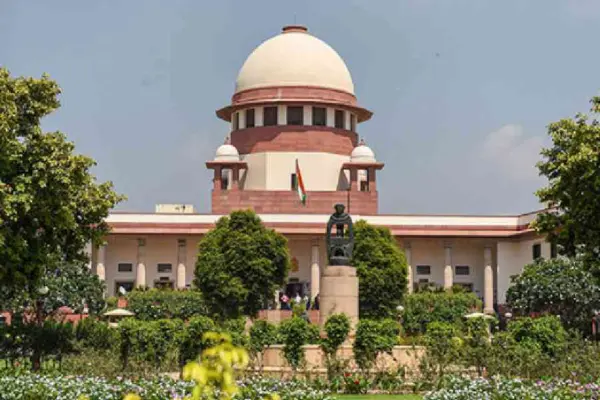
The Supreme Court on Monday declined to entertain a plea for urgent hearing of a petition seeking action against a YouTuber for her alleged derogatory remarks against Prophet Mohammed, asking the petitioner to explore other legal options first.
YouTuber Nazia Elahi Khan has often courted controversy for her anti-Muslim rhetoric. Multiple FIRs are stated to have been registered against her in Mumbai last month over her alleged comments about the Prophet.
“The police are there. Have faith in our system… we are here to monitor. If a litigant starts short-circuiting the system, the other functionaries would simply raise their hands and do nothing…. Give them a chance to act or decide on your complaint. It would be an eye-opener for us, and we would also be able to see if these functionaries are working or not,” Justice Amanullah Ahsanuddin told the counsel appearing for petitioner Ansar Ahmad.
The bench, which also had Justice Sheel Nagu, made the oral observation when the counsel sought urgent listing of the PIL seeking a direction to the Centre and its instrumentalities to identify and delete the objectionable materials uploaded by Nazia on social media.
The court asked the petitioner why he did not file a formal police complaint instead of directly approaching the apex court. “In such sensitive matters, you should understand the implications. You know the ramifications. It is a localised issue. Don’t sensationalise these things unnecessarily,” the bench said.
According to the petitioner, Nazia’s alleged remarks were highly provocative and had the potential to cause serious unrest and communal disharmony, making it imperative for the court to direct the Centre, YouTube, Facebook, X and other intermediaries to take down the objectionable content.
Acknowledging that such remarks were “grave and sensitive”, Justice Amanullah said the top court could not interfere in every such matter, and the petitioner should ensure that localised incidents were not generalised. “It is a grave thing, I agree. Speaking for myself, I am sensitive. But then there is a procedure to follow. If that doesn’t work, you come back to us,” he said.
The PIL had pleaded that the fundamental right to freedom of speech was subject to reasonable restrictions and, therefore, no citizen could misuse it to disturb public tranquillity through objectionable comments against any religion, caste or individuals.