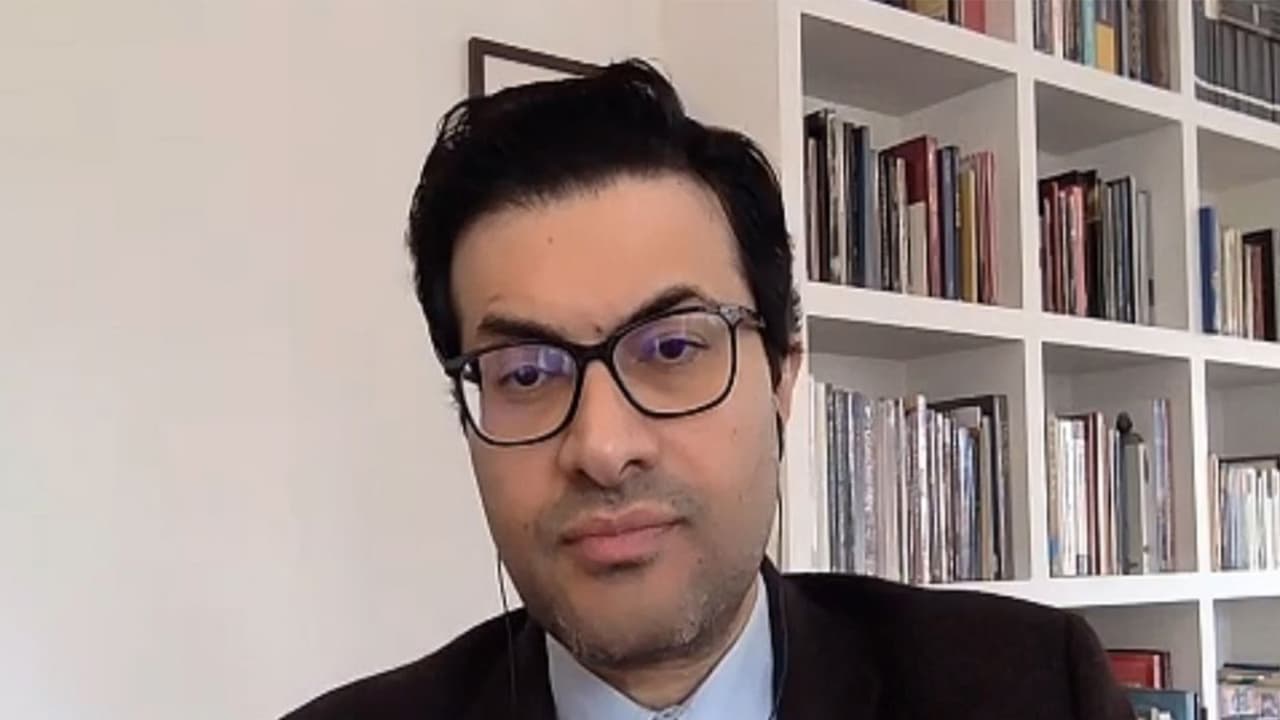
A five-day pause on US strikes against Iran provides a tactical window for de-escalation, says expert Burzine Waghmar. He suggests back-channel talks preceded the move, but notes its long-term impact on regional stability is uncertain.
A five-day pause on strikes against Iranian infrastructure by US President Donald Trump could provide a critical tactical window for de-escalation, according to a leading academic. While the move offers a brief reprieve in the ongoing conflict, its long-term impact on regional stability remains uncertain, says University of London’s Iran expert Burzine Waghmar.
Back-Channel Communications Preceded Pause
In an interview with ANI, Waghmar noted that while the lull provides a brief reprieve, it must be viewed against the backdrop of conflicting claims regarding diplomatic engagement. “The lull in question that has been proposed by Mr Trump must be foregrounded against this fact: that Iranian Foreign Minister Araghchi only a week or so ago was bluntly declaring that we are in communication with Washington and clearly had nothing to do with them since the war started on 28th February. But that is not true. A tacit channel of communication between him and Steve did open last week for the first time,” he stated.
Explaining the nature of these interactions, Waghmar highlighted that “back-channel talks” likely paved the way for the President’s announcement. “So, there was some communication going on between Tehran and D.C., and perhaps this would explain why President Trump has gone ahead and announced it, the lull in question for five days. And it’s not a full-fledged formal ceasefire,” he remarked.
Trump’s Unpredictability a Key Factor
He added that such pauses allow military planners “to take stock of the situation of a very fast-evolving scenario playing out and to check their arsenal logistics”. This strategic shift in US policy followed only a day after Washington had issued a 48-hour ultimatum regarding the Strait of Hormuz. Waghmar attributed this rapid transition from coercion to a pause to the inherent unpredictability of the US President. “Well, the only thing consistent is that Mr Trump can be unpredictable. That is something which all Middle Easterners know, not just the Iranians, but even his GCC allies,” he said.
Regional Pressures and Strategic Pauses
Waghmar further elaborated that regional partners are increasingly concerned about the endgame of the conflict. “The Arab GCC partners are asking Mr Trump to finish the job with Iran because they cannot afford to have him just hastily pull out, leaving things as they are, because a wounded Iran is a greater risk to their medium- and long-term stability and threat,” he explained.
The expert suggested that threats to regional resources, specifically water security, may have influenced the decision to stay the military’s hand. “Tehran threatened to obliterate desalination plants across the Middle East, not just the oil installations… I think it was the water desalination plants that could have partly led him, I repeat, only partly, to stay his hand for a moment. But it isn’t over,” Waghmar warned.
Addressing the role of traditional mediators like Qatar, Waghmar mentioned unconfirmed reports of financial incentives being discussed to halt the violence. “There are unconfirmed reports that have been circulating, and I repeat, unconfirmed, that Qatar offered Tehran $6 billion with immediate effect to stop firing at it. Not the other GCC, but just at the state of Qatar,” he noted, though he clarified that the funds in question have not yet been dispersed.
Israel’s Stance and Military Realities
Looking ahead, Waghmar pointed out that Israel’s objectives align with the desire for a definitive conclusion to the current regime. “Israel’s position concurs with that of the GCC allies in seeing the job done and finished. Israel makes no bones about the fact that it wants this regime to be completely obliterated,” he stated.
However, he cautioned that aerial supremacy alone may not achieve a total transition of power. “Even Netanyahu himself conceded that despite decapitating so many top brass individuals, you can’t bring regime change simply from the air. It has to be done on the ground. And for that to happen, you need some kinetic action, terrestrially, not just aerially,” Waghmar said. (ANI)
(Except for the headline, this story has not been edited by Asianet Newsable English staff and is published from a syndicated feed.)