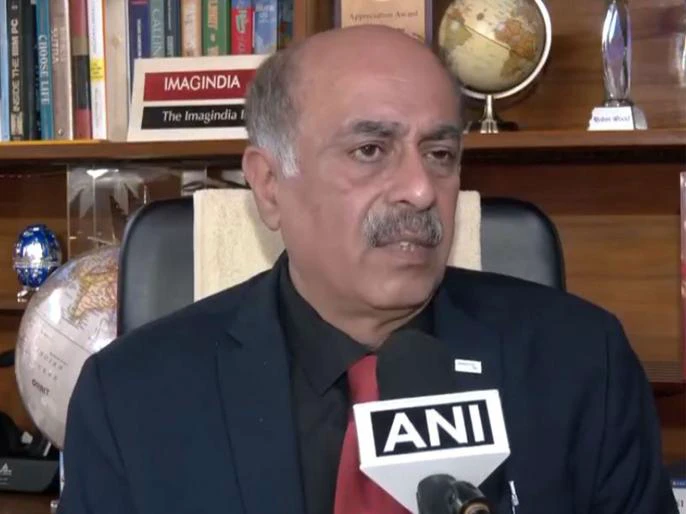
Foreign affairs expert Robinder Sachdev commented on US President Donald Trump’s recent statement regarding Prime Minister Narendra Modi.
Sachdev highlighted Trump’s admiration for strong leadership, stating, “Trump respects strength, quick decision-making, and leaders who follow through. He sees similar qualities in Prime Minister Modi, who takes firm decisions and ensures they are executed.”
Trump’s remarks followed a phone call between the two leaders, where they discussed global issues and the ongoing Gulf conflict. According to Sachdev, Trump’s expectations from India are clear: in trade, he seeks the best deal for the United States once the current interim tariff period concludes.
On energy, Sachdev pointed out that Trump is urging India to increase its purchases of American crude oil and liquefied natural gas (LNG). At the same time, Trump expects India to diversify its energy imports by including Russian supplies, aligning with broader geopolitical considerations.
Sachdev’s analysis sheds light on the evolving dynamics of the US-India relationship, with a focus on trade and energy concerns that are shaping future engagements between the two countries.
Earlier, Robinder Sachdev said that the ongoing tensions in the Gulf and the wider Middle East have prompted significant shifts in military and diplomatic strategies. In a detailed commentary, Sachdev highlighted the evolving role of the Gulf Cooperation Council (GCC) countries, US involvement, and Israel’s stance amid rising concerns over Iran.
“Armed sales by the United States to the Gulf countries is but logical, the Gulf countries do need weapons to save themselves,” Sachdev said, emphasising the defensive rationale behind arms deals. However, he noted the broader implications, stating, “But it again reinforces the narrative that when wars are created, it’s the defence industrial complex which benefits and especially the American defence contractors. So it kind of underwrites that narrative, that’s one.”
Sachdev further speculated that the GCC, historically an economic bloc, might transition into a military alliance. “Secondly, I have been speculating that the GCC countries will soon transform themselves into a military alliance. So far, the Gulf Cooperation Council founded way back many, many years was only for economic cooperation and know cooperation per se and even strategic somewhat but now with this Iran war I think they all the members must be individually realizing that they may be better served by consolidating themselves into a military alliance and pull in whatever they have because they don’t have much. UAE has only 2 million Emiratis, right, out of the 10 million who live there total. So populations are very small, so the manpower is very small, so the standing armies will be very small, but at the same time they can get high-tech weapons and pull that in.”