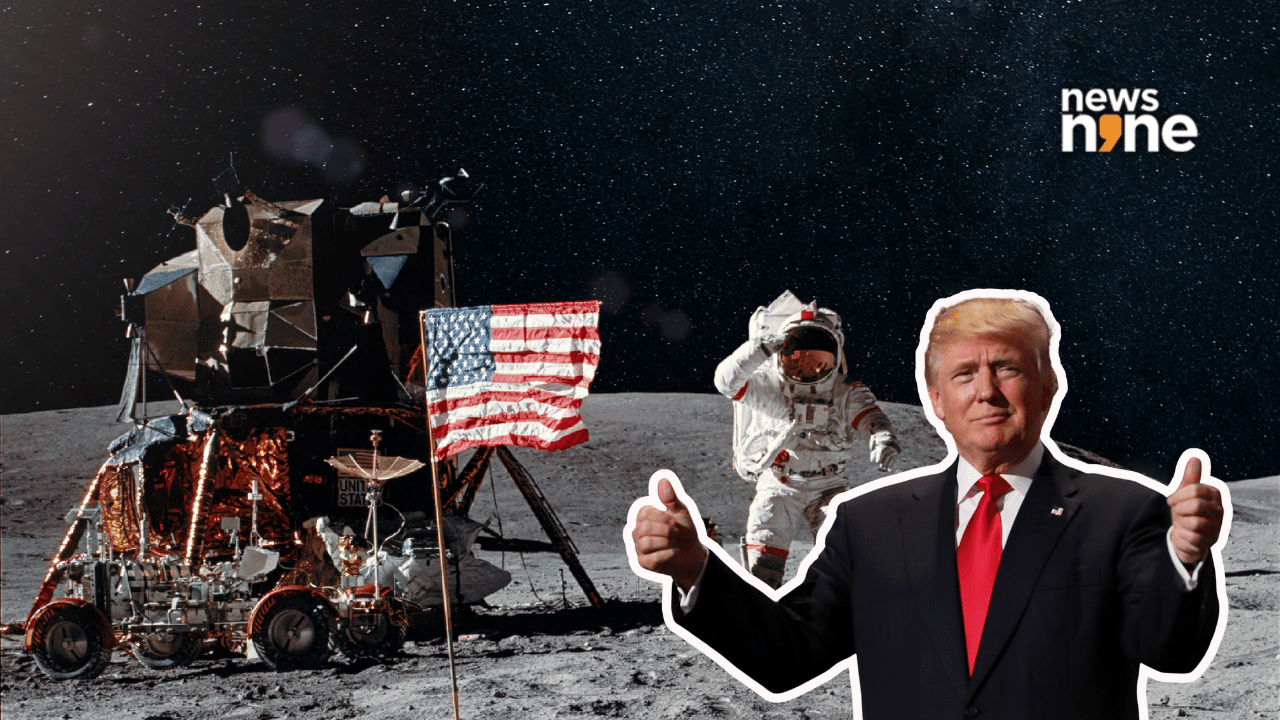
New Delhi: The United States has set itself a bold new space deadline, and it feels like one of those moments where science, politics and ambition suddenly crash into each other. President Donald J. Trump has signed a new Executive Order that puts an official clock on America’s return to the Moon, promising to send astronauts back by 2028 and begin work toward a permanent human outpost soon after.
The White House confirmed the order on December 18, 2025, and it has already sparked a mix of excitement, curiosity and debate inside science circles. The order talks about space exploration, national security, and even nuclear power in space as part of a much larger strategy. Reading it honestly felt like a mix of sci fi dream and real world policy.
What the executive order actually says and why it matters
The order states that the United States will lead space exploration by “returning Americans to the Moon by 2028 through the Artemis Program, to assert American leadership in space, lay the foundations for lunar economic development, prepare for the journey to Mars, and inspire the next generation of American explorers.” It goes a step further by saying the U.S. will “establishing initial elements of a permanent lunar outpost by 2030.” These lines basically lock timelines into national policy, which means agencies like NASA and other departments now have to plan around it.
There is another striking line in the order that caught my attention. It talks about space security and warns about threats, saying the U.S. must “ensure the ability to detect, characterize, and counter threats to United States space interests from very low-Earth orbit and through cislunar space, including any placement of nuclear weapons in space.” Reading that, you can sense how space is no longer just science, it is now strategy, defence and economics wrapped together.
Nuclear reactors, Mars dreams and a strong focus on private space industry
The executive order also pushes a surprising but important idea. It says the United States will work on “enabling near-term utilization of space nuclear power by deploying nuclear reactors on the Moon and in orbit, including a lunar surface reactor ready for launch by 2030.” That sounds intense at first, but nuclear systems are seen as powerful and steady energy sources for long missions and permanent bases where solar power may not always be enough.
The Fact Sheet from the White House repeats that this policy wants to “spur private sector innovation and investment” and even create “a commercial pathway to replace the International Space Station by 2030.” This means companies could play a bigger role in future space stations and missions. The announcement also links everyday benefits, talking about better weather forecasts, stronger navigation systems, and improved communication networks as spin offs of advanced space work.
A big political bet on space leadership
The White House calls this a vision to ensure “American space superiority” and frames it as part of national strength, economic growth, and scientific leadership. It also reminds everyone that Trump earlier said, “We will lead humanity back to the moon, and the United States will be the first nation to land an astronaut on Mars.” Whether you agree with his politics or not, the ambition in this order is clear and loud.
The next few years are going to be very busy for global space agencies. India, the U.S., Europe, China and others are all pushing deeper into space.