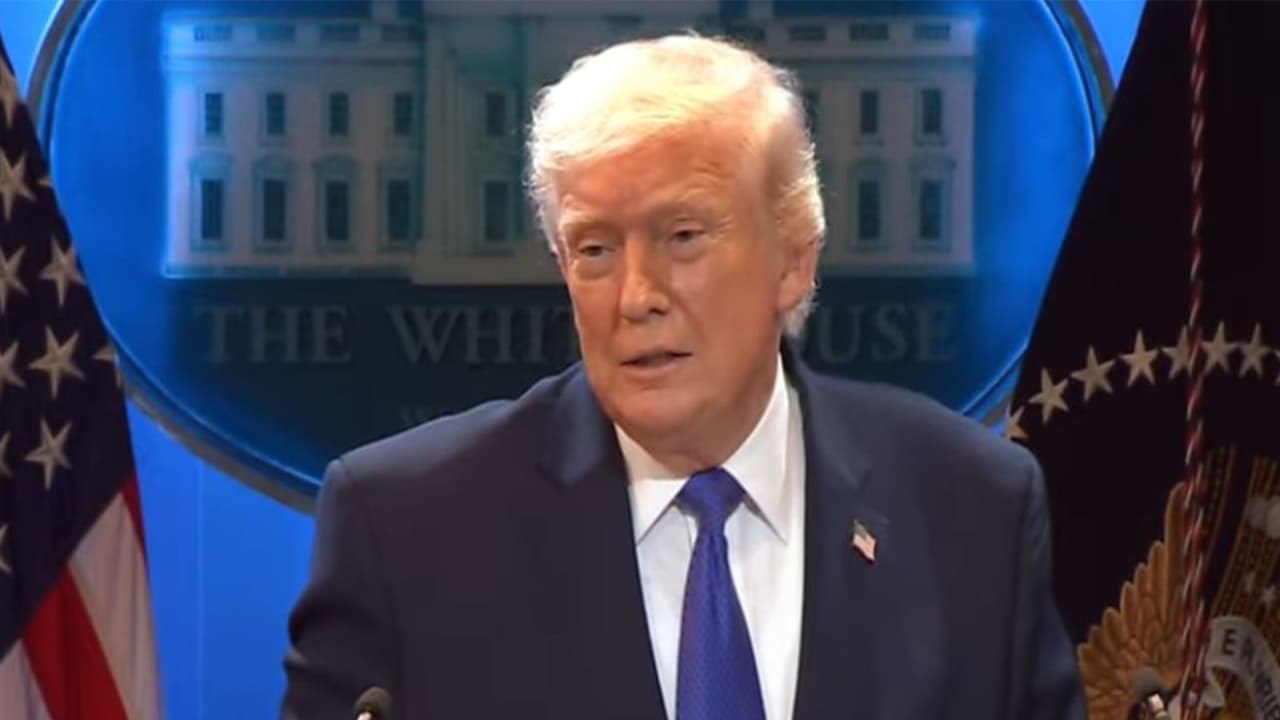
US President Trump says India will continue paying 18% tariffs under a new trade deal, despite a Supreme Court ruling that invalidated such tariffs. Trump insisted ‘nothing changes,’ calling the new arrangement a ‘fair deal’ for the US.
US President Donald Trump said that India will continue to pay the 18 per cent tariffs, despite the Supreme Court ruling to invalidate the reciprocal tariffs. US-India have struck an interim trade agreement under which Washington decreased tariffs to 18 per cent from the previous 50 per cent. New Delhi, on the other hand, agreed to impose zero tariffs on US goods. However, the Supreme Court ruled 6-3 that Trump’s sweeping tariffs on goods from nearly all partner countries had violated the federal law.
Trump: ‘Nothing Changes’
Trump, who called SC’s decision “deeply disappointing”, said “nothing changes,” while responding to an ANI question about the impact the ruling is going to make on the India-US trade deal. The deal is expected to be signed by the end of March. “Nothing changes. They’ll be paying tariffs, and we will not be paying tariffs. This is a reversal of what used to be. PM Modi is a great gentelman a great man. He was much smarter than the people he was against. In terms of the US, He was ripping us off. So we made a deal with India. A fair deal now. We are not paying tariffs to them, and they are. We did a little flip,” Trump said.
Interim Agreement Framework
United States and India announced a framework for an Interim Agreement on reciprocal, mutually beneficial trade, reaffirming their commitment to a broader Bilateral Trade Agreement (BTA) launched by President Donald Trump and Prime Minister Narendra Modi on February 13, 2025. As part of the framework, India has agreed to eliminate or reduce tariffs on all US industrial goods and a wide range of US agricultural and food products, including dried distillers’ grains (DDGs), red sorghum for animal feed, tree nuts, fresh and processed fruit, soybean oil, wine and spirits, and additional products. On the other hand, the United States will impose a reciprocal tariff of 18 per cent on goods originating in India, including textiles and apparel, leather and footwear, plastic and rubber products, organic chemicals, home decor, artisanal goods and certain machinery.
Supreme Court Ruling and Implications
However, the US Supreme Court held that the US President did not possess the authority under the 1977 International Emergency Economic Powers Act (IEEPA) to impose extensive import duties on goods from nearly all US trading partners. The ruling is expected to have wide-ranging consequences for global trade, businesses, consumers, inflation trends and household finances across the country. (ANI)
(Except for the headline, this story has not been edited by Asianet Newsable English staff and is published from a syndicated feed.)