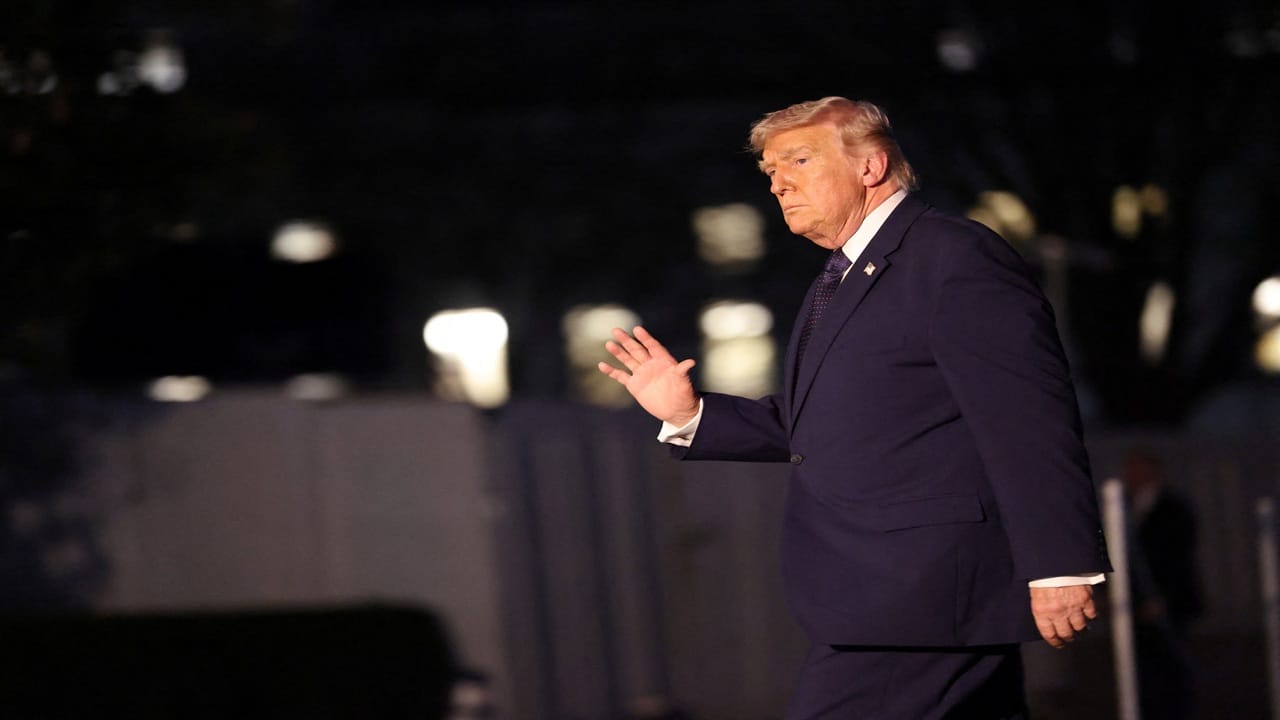
New Delhi: US President Donald Trump has suggested that the war involving the United States, Israel and Iran may be nearing its end, declaring that the campaign is “very complete, pretty much.” The comments by the US President come at a time when the conflict has already triggered sharp economic consequences, be it surging oil prices to fears of disruption in global shipping. They also come amidst uncertainties as to how long the war will last, and how severe the regional consequences will be.
“I think the war is very complete, pretty much,” he said in a phone call with CBS News. “They have no navy, no communications, they’ve got no air force.” Addressing Republicans on Monday afternoon, he said: “We took a little excursion because we felt we had to do that to get rid of some evil. I think you’ll see it’s going to be a short-term excursion.”
After Trump’s comments, there was a brief calm in markets, with oil prices falling as expectations that the conflict may wind down sooner than expected were rife. Meanwhile on the ground the picture remains far more complicated, with Iran continuing retaliatory attacks as the region remains on edge.
What Trump said?
Trump made the remarks during a media interview, claiming that the military campaign against Iran had progressed faster than initially expected. He suggested that key Iranian capabilities had been significantly weakened, and that key Iranian military and related infrastructural assets have been highly damaged in a short period of time. Trump further added that the war had moved “far ahead of schedule.”
Trump also described the military campaign as a “short-term excursion” carried out jointly with Israel to target military infrastructure as well as senior leadership positions within Iran. Nonetheless the US President also cautioned that if Iran attempted to block oil shipments through the Strait of Hormuz, the United States would respond “much harder.”
How do Trump’s comments fare?
While there certainly is cause for optimism following Trump’s comments of the war’s completion, on ground developments in the region are not so positive. Iran has continued launching missile and drone strikes in response to the US–Israeli campaign. It continues to target Israeli territory and military facilities linked to the US across the Middle East. The continued retaliatory attacks by Iran show that its capability to sustain damage through varying military engagements, prominently through missile and drone attacks, remains intact.
At the same time Iran’s domestic situation also remains tumultuous after the death of the country’s Supreme Leader, Ali Khamenei, and post the appointment of the new one. Leadership transitions during times of war are not easy, and while Iran’s system of succession looks solid, it can still create openings for uncertainties and compromise. At such a time, it would not be easy for the US to bring Iran to a table of negotiations, something that Iran’s military establishment is also not looking keen on pursuing.
Economic pressures are also building rapidly. Fighting around the Gulf has already disrupted energy markets, pushing global oil prices sharply higher. It was only after Trump’s remarks of possibilities of the war calming down that a temporary slowdown was observed. While Trump’s comments may project confidence about the war’s progress internally in the US and calm financial markets, without a ceasefire or diplomatic settlement the chances of the war evolving into a larger regional conflict remain ever present, especially as Iran does not look to be placated after the US-Israel attack on its Supreme Leader and recent ones on its oil units and territory. Trump’s declaration that the war is “very complete” may thus be only political messaging at the time and remain far removed from current battlefield reality.