The proposal is likely tied to a Treasury Department initiative, and industry groups have been on high alert.
- U.S. Defense Secretary Pete Hegseth criticized major defense contractors last month, saying the Pentagon plans to shift away from a system dominated by limited competition.
- The U.S. House of Representatives approved a sweeping defense policy bill last week, authorizing a record $901 billion in annual military funding.
- Lockheed Martin, the top defense contractor, returned approximately $1.8 billion to shareholders through dividends and share repurchases.
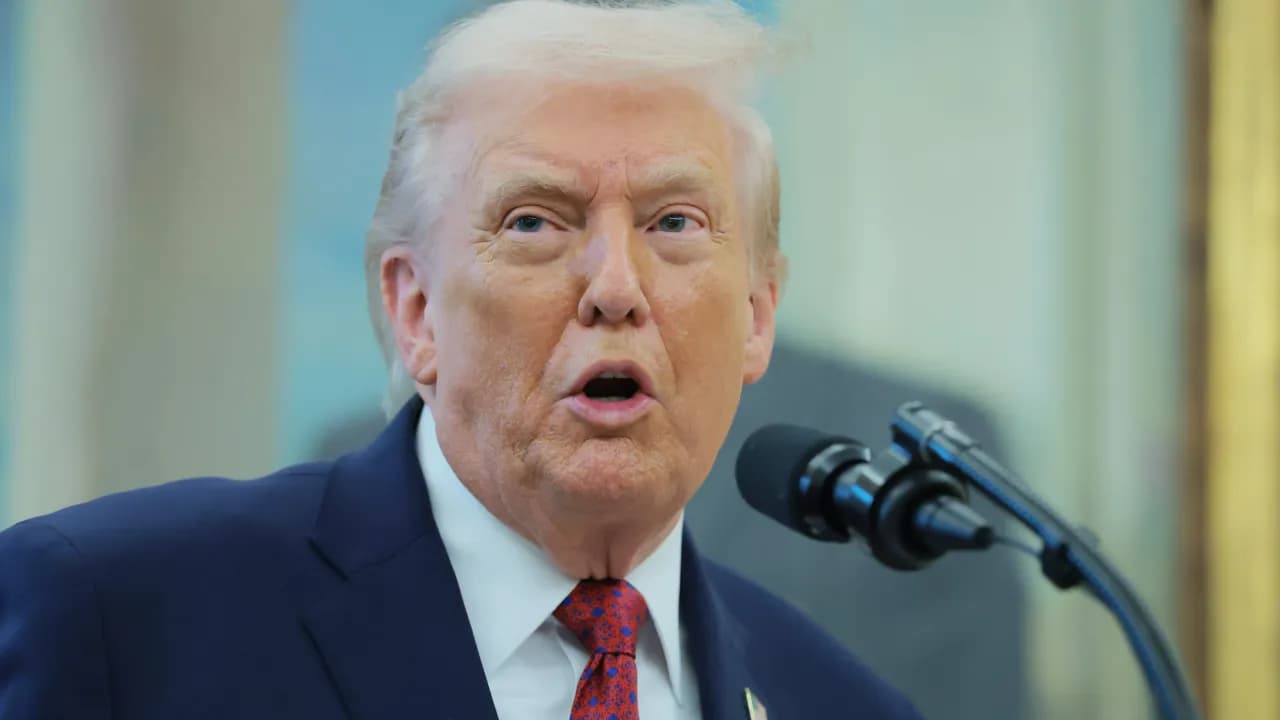
U.S. President Donald Trump is planning to issue an executive order that would limit dividends, buybacks, and executive pay for defense contractors, whose projects are facing cost overruns and delays.
Reuters News reported, citing two sources, that the proposal will likely be tied to a Treasury Department initiative, and industry groups have been on high alert about it. The news agency added that it could not determine precisely how the order would compel defense firms to enact any restrictions. The report stated that the order’s language could still change.
Delivery Delays
Trump, his allies, and the Pentagon have repeatedly aired their grievances about delays and cost overruns in defense projects.
“They’re brilliant, but they make it too slow, and we have to step them up and let them make it at a much higher rate,” Trump said in July, about defense contractors. U.S. Defense Secretary Pete Hegseth also criticized major defense contractors last month, saying the Pentagon plans to shift away from a system dominated by limited competition and instead tap into a broader range of startups.
The reports come as the U.S. House of Representatives approved a sweeping defense policy bill last week, authorizing a record $901 billion in annual military funding. Trump and his allies want to hasten military equipment procurement amid a rise in tensions with Venezuela, the threats posed by China in the Asia-Pacific region, and the ongoing war in Ukraine.
Top 5 Defense Firms’ Shareholder Returns
Lockheed Martin, the top defense contractor, returned approximately $1.8 billion to shareholders through dividends and share repurchases, bringing the year-to-date total to $4.6 billion, or 110% of free cash flow. The firm also boosted its dividend for the 23rd consecutive year, raising it to $3.45 per share in October, while simultaneously approving a share buyback program of up to $2 billion.
Lockheed’s F-35 fighter jet program is one of the costliest in military history and has often been cited by Trump’s allies as a challenge to on-time deliveries. The firm also lost out to Boeing earlier this year in a competition for a new sixth-generation fighter jet for the U.S. military.
Another defense contractor, RTX, deployed $900 million in dividends in the third quarter ended Sept. 30, after two consecutive quarters of shareholder returns at similar levels. The company has prioritized debt paydown over buybacks this year, but analysts expect the pace of share repurchases to increase next year.
The Arlington, Virginia-based company has faced production challenges with the U.S. Navy’s leading air-defense missile SM-6, a system viewed as critical to countering a Chinese weapon often described as an “aircraft carrier killer.”
Northrop Grumman, which is in charge of the Sentinel intercontinental ballistic missile program that will replace aging Minuteman III missiles, paid a total of $2.13 billion in buybacks and dividends till Sept. 30. However, the U.S. military noted last year that the Minuteman program will be years behind schedule and 81% over budget.
Another contractor, General Dynamics, has spent nearly $1.79 billion on dividends and buybacks through Sept. 28. The company is working to develop the Navy’s Virginia-class attack submarines and the new Columbia-class ballistic missile submarines, both of which have faced supply chain issues and workforce shortages.
Boeing, which has grappled with its own problems in its commercial division, has also faced delays with its Air Force One replacement jets. However, the planemaker has paused dividends and buybacks since 2020 and aims to resume shareholder returns once cash flow is positive.
For updates and corrections, email newsroom[at]stocktwits[dot]com.<