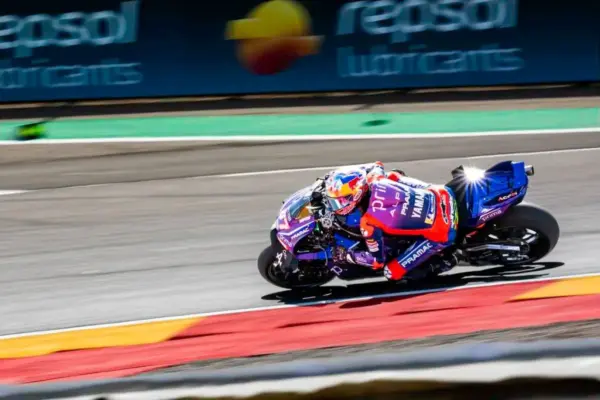
Toprak Razgatlioglu Faces Harsh Reality: Pirelli Tyres Alone Won’t Rescue His Struggles
Toprak Razgatlioglu’s anticipated rebound with Pirelli tyres in won’t materialize unless he conquers a critical weakness in his riding.
The Pramac Ducati rider, who has found the leap from World Superbike (WSBK) to MotoGP fraught with challenges, recently acknowledged that tyre degradation continues to hinder his race performance, particularly highlighted during last weekend’s Aragon . Despite his proven dominance on Pirelli rubber in WSBK, Razgatlioglu insists that mere tyre familiarity won’t suffice to elevate his results.
The Turkish rider, now deep into his debut season, has struggled to produce consistent finishes for Pramac, far removed from the blistering pace he once commanded in WSBK. With ‘s switch from Michelin to Pirelli tyres scheduled for 2027, many pundits expected Razgatlioglu’s prior experience with Pirelli to give him a leg up. However, speaking to Speedweek, the rider himself tempered expectations by pinpointing a fundamental flaw: his lack of cornering speed.
“Cornering speed isn’t my style. If I learn that this year, I might need it next year,” Razgatlioglu admitted, directly addressing the core of his performance issues. “Of course, the Pirelli tyre might suit my style better. But I also need cornering speed. Maybe that will help me next year and in the future.” This candid confession lays bare the reality that tyre compatibility alone cannot mask the underlying skill gaps in his riding technique.
The transition to has exposed Razgatlioglu to a steep learning curve, where even his exceptional talent has yet to translate into podium finishes or race wins. The disparity between his WSBK success and struggles underscores the complexity of adapting to new machinery, tyres, and competition levels. Moreover, concerns linger about whether and Pramac will provide the package he requires to unlock his potential fully.
Despite these hurdles, Razgatlioglu is focusing his efforts on intensive learning throughout the current campaign. Industry insiders stress that his priority must be to absorb as much knowledge as possible about dynamics, racecraft, and bike setup rather than obsessing over immediate results. Finishing races, collecting data, and refining his approach remain paramount for the 26-year-old, who must endure the growing pains of adapting to the premier class.
This pragmatic approach reflects a long-term vision: by embracing a developmental mindset now, Razgatlioglu aims to emerge stronger when the tyre landscape shifts in 2027. Until then, he must confront his cornering deficiencies head-on if he hopes to convert the anticipated Pirelli advantage into tangible race success.
Razgatlioglu’s admission is a stark reminder that even proven champions cannot rely solely on equipment changes to overcome fundamental riding challenges. His journey this season is as much about mastering ‘s demands as it is about waiting for a new tyre era – a battle that demands patience, resilience, and relentless self-improvement.