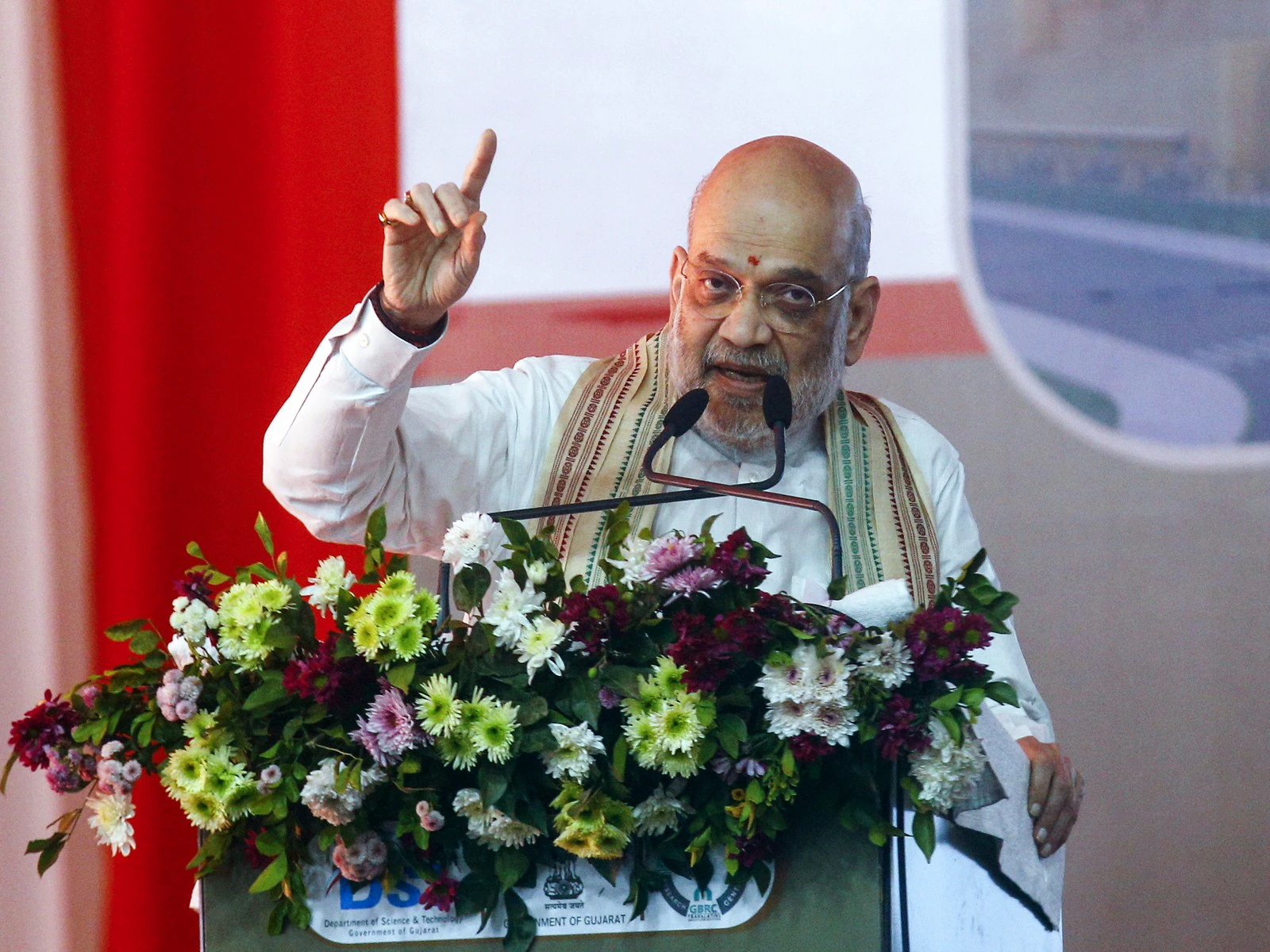
Union Home Minister Amit Shah on Thursday said that the ongoing joint operation by the Central Reserve Police Force (CRPF) and Jharkhand Police in West Singhbhum has achieved a major success in the campaign to make the region free of Naxalism, with the neutralisation of a top Central Committee member carrying a bounty of Rs 1 crore.
He identified the Naxal Central Committee member as Patiram Manjhi.
Taking to X, Amit Shah said, “Today, in West Singhbhum, the ongoing joint operation by CRPF and Jharkhand Police has achieved a major success in the campaign to make the region free of Naxals through encounters, with the neutralization of the notorious bounty-wanted Naxal Central Committee member ‘Anal alias Patiram Manjhi’ worth ₹1 crore and 15 other Naxals so far.”Reiterating the Centre’s resolve to end Left Wing Extremism, the Home Minister added, “We are committed to eradicating Naxalism, which has been synonymous with fear and terror for decades, before March 31, 2026.”
Shah said, “I once again appeal to the remaining Naxals to abandon the ideology that connects to violence, terror, and arms, and join the mainstream of development and trust.”Meanwhile, Inspector General of Operations and Jharkhand Police spokesperson Michaelraj S said, “Chaibasa encounter update: Top naxal Anal Da, having a reward of Rs 1 cr declared against him, was killed. Total number of neutralised naxals is being ascertained.”
In an earlier statement, the Deputy Chief Minister had said that four Naxals were killed, one of whom was a prominent operative, Dilip Bedja, who had been active in the national park area for a long time.On January 20, Prime Minister Narendra Modi, while addressing BJP party workers at the BJP national headquarters, raised concerns over the growing influence of urban Naxalism.
Highlighting the alleged methods used, the Prime Minister added, “They are silenced so they can never speak again. This is the method of Urban Naxalism.”
He also stated, “Infiltrators pose a very serious threat to the country; identifying them and sending them back to their countries is extremely important.”