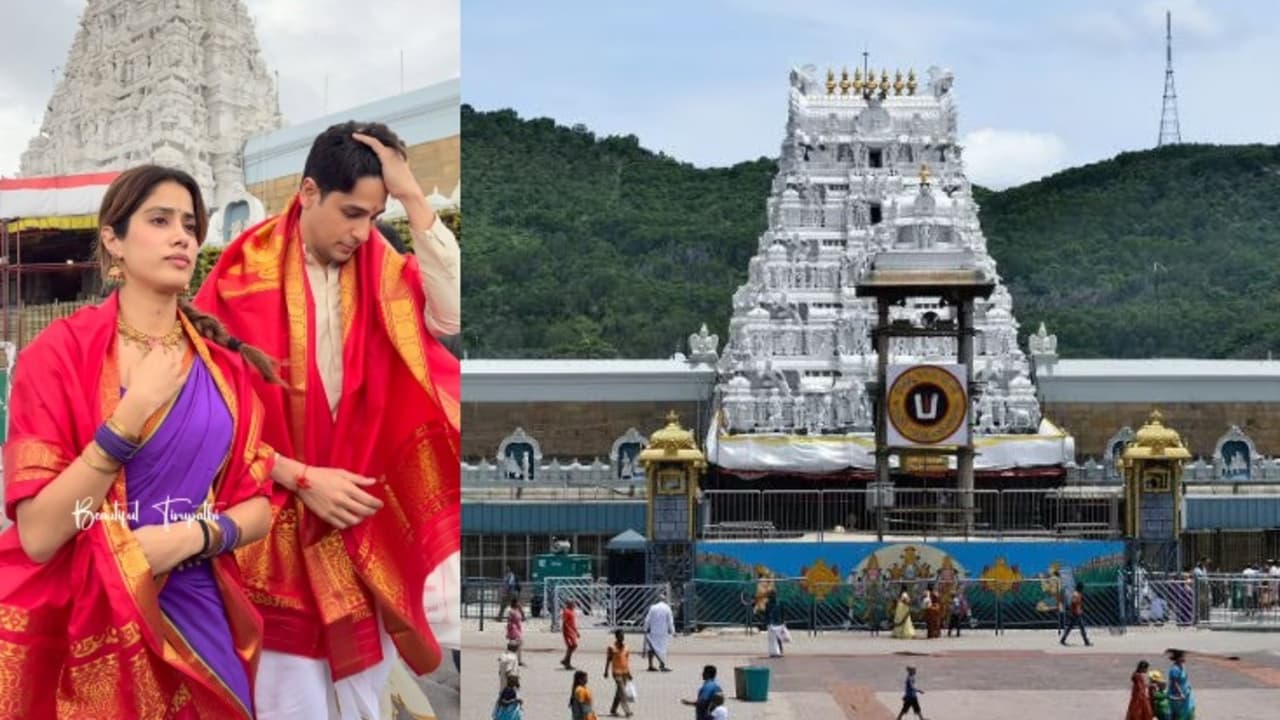
Tirupati TTD’s sacred silk dupattas found to be polyester, ACB starts investigation on supplier VRS Exports. This revelation is shaking the religious sentiments of devotees, especially after a year of the laddu-ghee controversy.
New Delhi. Tirupati Tirumala Devasthanams (TTD) is caught in the middle of a new controversy. Last year, the issue of adulteration in laddu-ghee had not stopped but now a big scam has come to light regarding the sacred silk dupattas of the temple. It is alleged that the main supplier of TTD supplied fake silk dupattas to earn lakhs of rupees in the last ten years. TTD has now called the Anti-Corruption Bureau (ACB) to take action in this matter. The devotees are angry over the fact that the sacred things of the temple have been tampered with. Now this silk scarf controversy has further increased the anger of the devotees.
What are Tirupati Silk Dupatta and why are they important?
This silk dupatta is not just a cloth, but is a part of the tradition of the temple of Tirupati. Silk dupattas are given to donors and VIPs during Vedashiravachanam at TTD Ranganayakula Mandapam. The specialty of these dupattas is:-
- These should be made of pure mulberry silk with 20/22 denier yarn.
- “Om Namo Venkateshaya” must be printed on the dupatta in Sanskrit and Telugu.
- There should be Shanka, Chakra and Namam symbols and silk hologram mark.
- All dupattas should be as per the stated size, weight and border design.
- These dupattas are considered as sacred as the temple laddus, hence devotees are extremely sensitive about their quality and purity.
- Every year TTD spends several crores of rupees on these dupattas, as lakhs of devotees become a part of this ritual.
Fake Silk Dupatta: How Revealed?
TTD Chairman BR Naidu asked the temple’s vigilance and security team to investigate the dupattas supplied by VRS Exports. In the investigation, samples were taken from Tirupati Warehouse and Vaibhavotsava Mandapam. These were sent to the Central Silk Board Labs in Bengaluru and Dharmavaram. The result was shocking:
- All the dupattas turned out to be polyester.
- None of the dupatta had the required silk hologram mark.
- This revelation is a direct attack on religious faith for the devotees.
VRS Export and scam worth crores: How much money is the matter?
Between 2015 and 2025, VRS Exports and its sister firms supplied goods worth Rs 54.95 crore to TTD. Apart from this, the vendor also won a new contract for 15,000 dupattas at Rs 1,389 per piece. Devotees raised questions like “Have we been using fake silk all these years?” This is not just a matter of money, but an attack on religious sentiments. After last year’s Laddoo-Ghee scam, this matter has become more sensitive.
Will TTD be reliable now?
TTD immediately contacted the Anti-Corruption Bureau (ACB). Now ACB is identifying the supplier and responsible officials. TTD has asked the Anti-Corruption Bureau to identify those responsible and save the sanctity of the temple. This matter not only challenges religious belief, but also raises questions about the sentiments of the devotees and the honesty of the trust.
Devotees’ resentment: Just a matter of money or faith?
Silk scarfs are part of the religious experience of the temple. When they were revealed to be fake, the faith of the devotees was shaken. Many people are considering it a religious insult. TTD is now facing the challenge of showing transparency and accountability at every step.