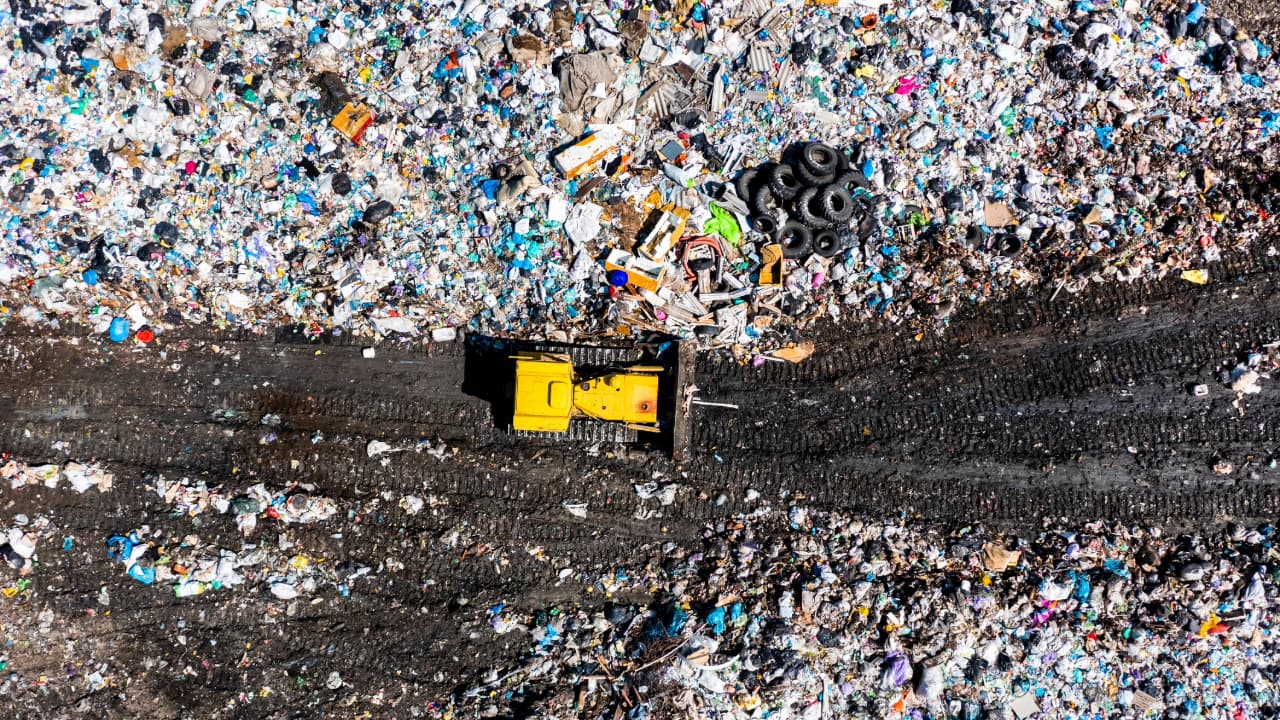
Could a simple chemistry idea end plastic pollution? Discover how scientists created programmable plastics that degrade on a set timeline, offering a real solution.
While walking through Bear Mountain State Park in New York, chemist Yuwei Gu noticed plastic bottles spread across the trail and floating in the nearby lake. The sight of so much waste in a natural area made him deeply think about plastics and how they differ from natural materials.
Gu, a professor at Rutgers University, studies polymers, which are long chains of molecules. These polymers are found in nature, such as in DNA, RNA, proteins, and cellulose. Natural polymers carry out their function and then break down over time, unlike synthetic plastics that can remain in the environment for decades or even centuries, causing pollution.
The Chemistry of Polymers
Gu realized the difference lies in the chemistry. Natural polymers have small chemical features in their structure that allow them to break apart when needed. He wondered if human-made plastics could be designed similarly, strong and functional during use, yet capable of safe degradation after being discarded.
This idea led to a major breakthrough. Gu and his colleagues at Rutgers developed a new chemical method that allows plastics to break down under normal conditions, without the need for high heat or harsh chemicals. Their study, published in Nature Chemistry, shows that plastics can be designed to degrade naturally, offering a possible solution to one of the biggest problems with modern materials.
How Polymers Work
Polymers are made up of repeating units connected like beads on a string. Plastics, like proteins and DNA, are held together by chemical bonds. These strong bonds make plastics durable, but also hard to break down once they are thrown away. Gu’s research focused on finding a way to create bonds that remain strong during use but become easier to break down when degradation is needed.
Programmable Plastics
The key discovery is a way to “pre-programme” plastics to degrade. By carefully arranging specific parts of the polymer’s structure, the bonds can be made more easily breakable at the right places. This is similar to folding paper so it tears along a crease. The plastic remains strong while in use but can break down thousands of times faster when triggered.
By controlling the chemical structure, the same plastic can be designed to break down in days, months, or years. This allows the lifespan of a plastic to match its intended use. For example, food packaging might only need to last one day, while car parts must last many years. Degradation can happen naturally or be triggered by ultraviolet light or certain metals.
The method also has applications beyond environmental benefits. It could be used to make drug capsules that release medicine over time or coatings that disappear after a set period, opening up new possibilities for smart, responsive materials.
Safety and Future Research
Early lab tests show that the liquids released when these plastics break down are not toxic, but more testing is needed to ensure long-term safety. Gu and his team are also looking at the fragments left after degradation to confirm that they do not harm ecosystems or living things.
The researchers are exploring how this approach can be used for traditional plastics and incorporated into current manufacturing processes. The goal is to create materials that work well during use but then safely disappear afterward. Continued development, along with collaboration with sustainable manufacturing companies, could lead to this chemistry being used in everyday products.
Gu’s team at Rutgers includes collaborators from doctoral students to associate professors, all contributing to this innovative research. What started as a simple observation during a hike has now become a promising strategy to address plastic pollution, inspired by the clever designs found in nature.