The rugby year is almost at an end with 2025 delivering plenty of twists and turns – on and off the pitch.
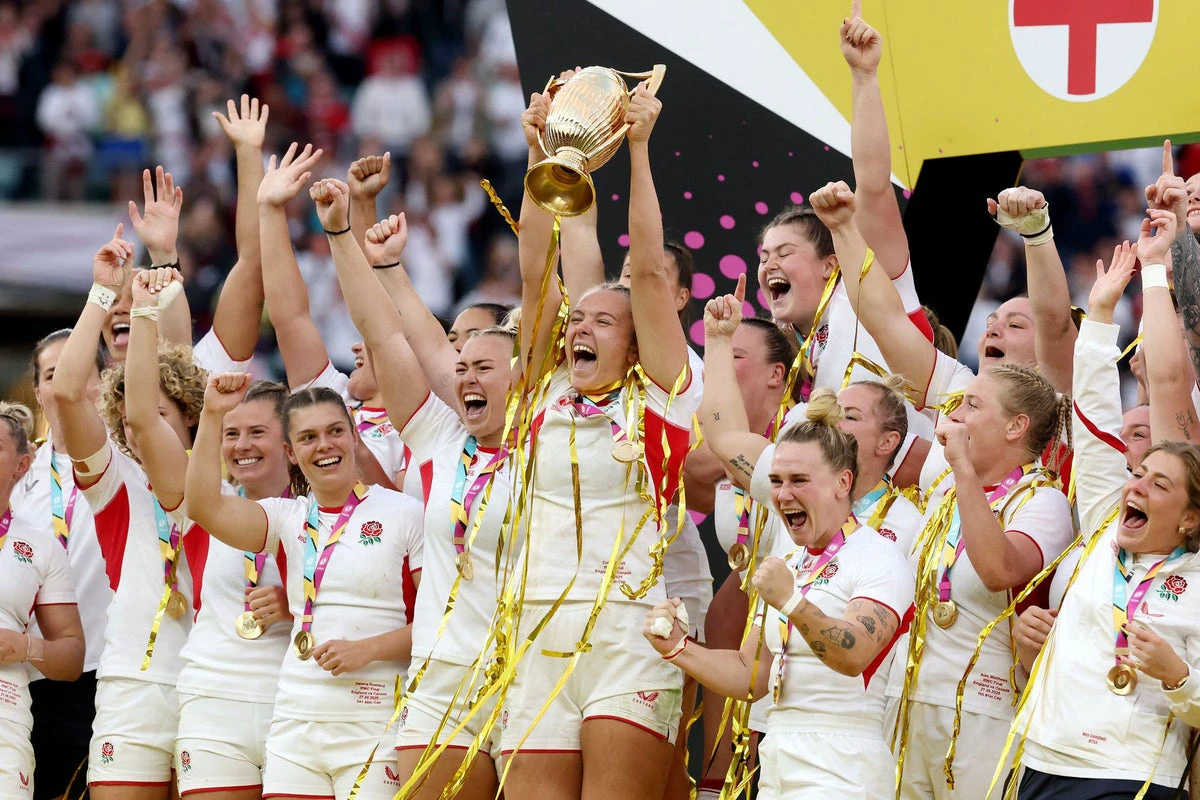
The biggest Women’s World Cup in history provided a moment to potentially alter the future of the sport, in front of a sold-out Twickenham crowd, beating a Canadian side that emerged as one of the stories of the year.
In the men’s game, the British and Irish Lions emerged as 2-1 winners over Australia in a series ,while the Springboks produced several reminders of why they are currently best in class on their way to another Rugby Championship success. Who can stop them securing a World Cup three-peat in 2027? Six Nations winners France and an improving England might fancy their chances.
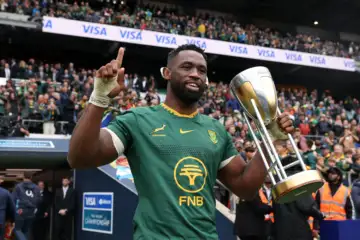 With the threat of rebels and disruptor leagues seen off for now, the traditional club game showed its strength with Toulouse triumphant in the Top 14, Bordeaux-Begles beating Northampton in a thrilling Champions Cup final and Bath delivering a long-awaited title as part of a treble that stirred a city that has rugby in its soul. Leinster channelled European disappointment into URC success, while the Crusaders bounced back in style to secure a 13th Super Rugby crown.
Plenty, then, to get stuck into – here are some of The Independent’s rugby highlights and lowlights of 2025:
Game of the year
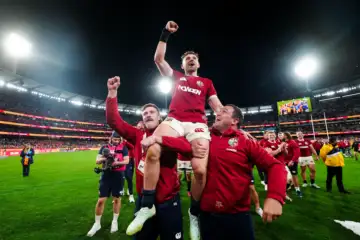 Australia 26-29 British & Irish Lions, second Test. A load of excellent contenders across 12 months with plenty of peaks – Canada’s semi-final win over the Black Ferns in Bristol was a corker, while the Red Roses’ pipping of a rampant France at the end of the Women’s Six Nations was mad and magnificent. A nod, too, to Northampton’s improbable Champions Cup win at Leinster – but for its blend of occasion, atmosphere, arena, stakes, quality and a dollop of drama, it has to be an unforgettable night at the MCG.
Moment of the year
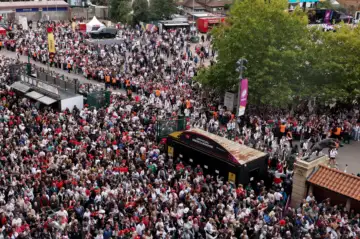 It is hard to pick just one but virtually all of the options come from a single transformative weekend. England securing Women’s World Cup glory on home soil in front of packed stands was testament to their excellence and the RFU’s investment. and a celebratory press conference where a slew of England stars showed up half still-drunk, half-hungover was good fun but watching the Red Roses arrive at Twickenham amid crowds quite unlike any that the grand old ground had ever seen had even this jaded hack slightly choked up. Briefly.
Women’s player of the year
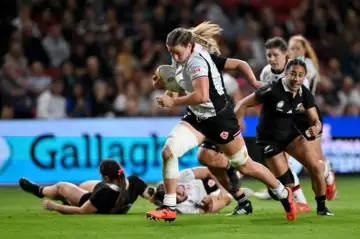 Sophie de Goede. Does it perhaps feel silly to look away from the world champions for the individual honour? Perhaps, but that speaks to just how good Canada’s do-everything lock was after returning from her torn ACL. Honourable mentions to Hannah Botterman, Meg Jones and a heap of other Red Roses – including Emma Sing, seldom sighted at the World Cup but outstanding in Gloucester-Hartpury’s third successive PWR title win.
Men’s player of the year
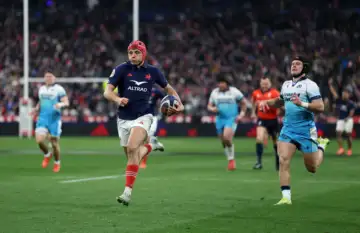 A strangely tricky category to pick. Malcolm Marx was a worthy winner of the official gong having finished the year exceptionally; Ox Nche and Pieter-Steph du Toit deserving other nominees from a Springboks collective simply superior, currently, to the rest. Maro Itoje probably deserves more love than he has received for and captaining the Lions to series victory, and Ardie Savea carried both Moana Pasifika and, more impressively, the All Blacks almost single-handedly at times. But Louis Bielle-Biarrey just gets our nod for a Six Nations/Champions Cup double.
One to watch in 2026 (women)…
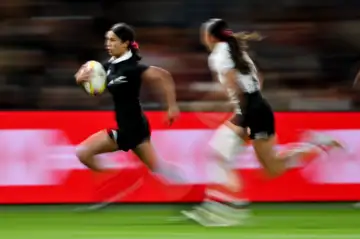 The different approaches top unions have to their women’s programmes were perfectly clear during the World Cup, and how each reacts now to maintain momentum will be key. New Zealand have faced plenty of criticism for their and this feels like a vital time for the nation as they seek a new coach. Anyone who watched Braxton Sorensen-McGee this year will know the teenage phenom is bound for great things but there are decisions to make over the 19-year-old, who has stepped into sevens. It is paramount that New Zealand continue to put more investment and time into their 15-a-side programme, though, particularly with the first women’s British and Irish Lions tour to the country just 18 months away.
One to watch in 2026 (men)…
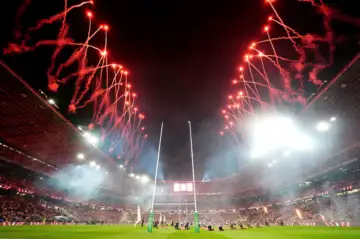 The inaugural Nations Championship could be a delight or a disaster. Contextualising the July and November international windows did not, perhaps, feel necessary, yet there will be no shortage of fun Tests across the two months and free-to-air coverage on ITV in the United Kingdom feels a really positive step. There will be a few oddities along the way – Fiji are slated to “host” England in Gqeberha (formerly Port Elizabeth), of all places – and the finals weekend feels an ambitious venture, with three double-headers at Twickenham across three days.
Men’s team of the year
1 Ox Nche (SA), 2 Malcolm Marx (SA), 3 Thomas du Toit (SA); 4 Maro Itoje (ENG), 5 Tadhg Beirne (IRE); 6 Pieter-Steph du Toit (SA), 7 Ardie Savea (NZ), 8 Ben Earl (ENG); 9 Cam Roigard (NZ), 10 Sacha Feinberg-Mngomezulu (SA); 11 Louis Bielle-Biarrey (FRA), 12 Len Ikitau (AUS), 13 Tommaso Menoncello (ITA), 14 Tommy Freeman (ENG); 15 Damian Willemse (SA).
Women’s team of the year
1 Hannah Botterman (ENG), 2 Amy Cokayne (ENG), 3 DaLeaka Menin (CAN); 4 Sophie de Goede (CAN), 5 Morwenna Talling (ENG); 6 Zoe Stratford (nee Aldcroft) (ENG), 7 Jorja Miller (NZ), 8 Alex Matthews (ENG); 9 Justine Pelletier (CAN), 10 Zoe Harrison (ENG); 11 Abby Dow (ENG), 12 Alex Tessier (CAN), 13 Meg Jones (ENG), 14 Braxton Sorensen-McGee (NZ); 15 Ellie Kildunne (ENG).
Coach of the year
Rassie Erasmus feels an obvious choice here with how he’s managed to balance building depth with continuing to keep the Springboks as the best team in the world, while also innovating and challenging orthodoxy. He is a remarkable figure in South Africa. There are similarities in what Johann van Graan is doing at treble-winners Bath, while no coach did more with less than Kevin Rouet and Canada, who punched so far above their financial weight at the Women’s World Cup.
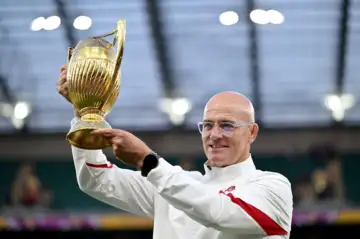 John Mitchell, though, remains unbeaten as England head coach and finally got the Red Roses over the line, taking the pressure off his players and enabling them to express themselves on and off the pitch – while also learning a few things himself, even after a long career as a top-level coach.
Executive bungle of the year
Ever a competitive category. The Welsh Rugby Union’s commitment to contention for this award is admirable – organising that Springboks game really was a misstep – and World Rugby deserve flak for their failure to fully clarify the head contact procedure after a messy November. Paraguay fielding an ineligible player cost them a chance to test themselves a shot at the World Cup final qualification tournament, which you’d have to say is far from ideal. R360’s attempt to get off the ground was misguided in many ways, and a more transparent approach is surely wise if they do try to launch again.
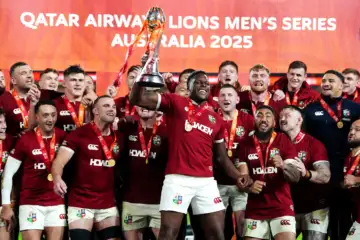 But I think the British and Irish Lions deserve spotlight here, for a tour that was not what it could have been. Andy Farrell’s squad had a great time in Australia but it felt like little of the outside world was allowed to see it, with less engagement in the community or with history than on past trips, and the media banned from watching training sessions. Even their behind-the-scenes documentary was lacklustre, and the tour games other than the Tests failed to fully whet the appetite, other than the First Nations & Pasifika XV clash.
Three hopes for 2026
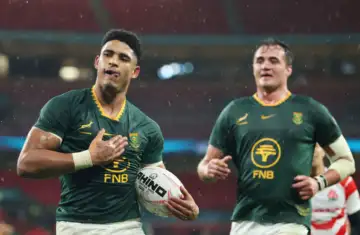
1 South Africa continue to evolve – in the right way. The manner in which the Springboks have taken their game forward in the last two years deserves immense credit, the back-to-back world champions not content to rest on their laurels and let others catch up. With Sacha Feinberg-Mngomezulu steering the ship, they have a more ambitious look, and there may be a need to bring others through elsewhere to combat the age profile of the squad. But I think all would be glad if there were fewer acts like those of Jasper Wiese and Eben Etzebeth during the year, and comments fuelling social media suggestions of some sort of deep-state rugby conspiracy against the Boks.
 2 A cleaner, clearer officiating process. The job of a rugby official in the modern era is exceptionally difficult, the game played by individuals ever quicker of foot and of thought always seeking an extra edge. But attempts to make a sport painted in shades of grey more black-and-white have only served to create confusion – November was particularly tricky on this front with protracted periods of decision-making in games still resulting in imprecise or inaccurate conclusions. It is understood that some top referees would like to be empowered more and have the television match official (TMO) input less frequently.
3 Good news in Wales. Welsh rugby remains at a low ebb, with both the men and the women enduring tricky 2025s and the impending restructure of the domestic game creating yet more unwelcome uncertainty. There is going to be a long road to recovery for a proud nation but let us hope a new year brings fresh hope and direction. Similarly, one hopes that Australia’s Wallabies and Wallaroos can pick up steam again as they prepare to host World Cups in the next few years.