The risk of heart diseases is increasing day by day. People do not even realize when this silent killer disease slows down the heartbeats. The risk of heart diseases has increased in the last few years.
Bad diet, deteriorating lifestyle, stress, smoking habit are rapidly increasing cholesterol and triglyceride which causes heart diseases. Nowadays, heart disease has become the biggest cause of death across the world. The most dangerous thing is that this disease can occur suddenly and sometimes its symptoms are not clearly visible beforehand. For this reason, people want it to be clear in routine checkup whether their heart is healthy or not.
According to Dr. Bimal Chhajar, former consultant of AIIMS and founder and director of Saaol Heart Center and renowned cardiologist, there are many tests available in the market to detect heart health, but it is important to know which tests are more important and which can easily detect the disease. Often people go to the doctor and get confused about which tests to get done and which not to get done. Let us know from the experts what is the real cause of heart disease and what tests are necessary to detect this disease.
What is the real problem in heart disease?
There is only one major problem at the root of heart disease and that is blockage in the arteries. This blockage does not occur suddenly, but develops gradually over years. The biggest reason for this is the fat accumulated in the body. We call this fat cholesterol and triglyceride in medical language. When both of these increase, gradually the arteries of the heart start narrowing and the blood flow starts stopping. To detect this fat, it is necessary to undergo some special tests which will give us accurate information about our heart.
The first and basic test is lipid profile.
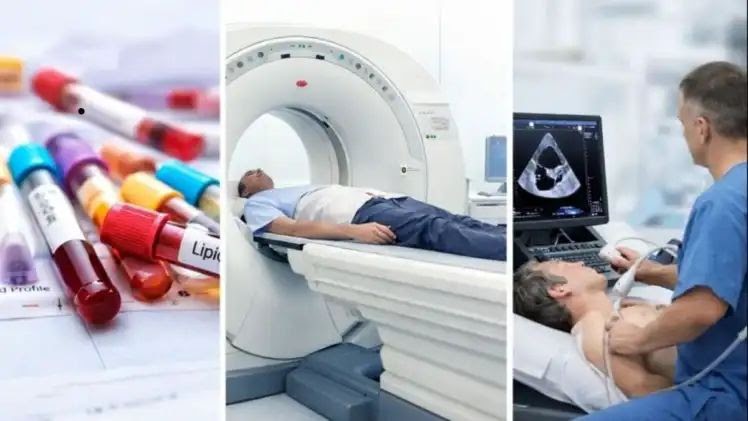
The first and most important step in heart checkup is the lipid profile test. This is a simple blood test, which provides information about total cholesterol, triglyceride, LDL and HDL. Even though the normal range of cholesterol is written in the report as 130 to 200, going above 150 is not considered good for the heart. If cholesterol is around 130 and triglyceride around 100 then the risk of heart blockage reduces significantly. But as these levels increase, the risk of heart attack and blockage also increases.
The second and most important test is CT coronary angiography.
CT coronary angiography is considered to be the most reliable method of examining the heart today. This test clearly tells what percentage of blockage is there in the arteries of the heart, whether it is 10%, 40% or 90%. The biggest feature of this test is that no wires are inserted in it nor does the patient need to be admitted. Complete reports are available within minutes, making it easy to decide whether lifestyle modifications alone will suffice or treatment is needed.
CT Coronary Angiography facility is available at hundreds of places in our country. Apart from big cities, now this test is being done easily in small cities also. Its price may vary in different hospitals, but this test is most helpful in understanding the real condition of the heart.
The third test is echocardiography
Echocardiography provides information about the structure and pumping of the heart. This shows whether the heart muscles are working properly or not, whether there is any defect in the heart valve and whether the pumping of the heart has become weak. Many times it happens that there is no blockage, but still the heart becomes weak. Echo test is very useful in identifying such conditions.
Why one should be careful with wire angiography
There is no need to undergo wire angiography in routine checkup. This is an invasive procedure and many times the patient is immediately pressured to undergo angioplasty or bypass. Whereas the patient just wants to know whether there is blockage or not. Therefore, unless there is a definite need for operation, it is better to avoid this test.
conclusion
If you really want to know whether your heart is healthy or not, then these three tests, lipid profile, CT coronary angiography and echocardiography are enough. These tests reveal the complete picture of the heart’s fat condition, blockage and pumping. This not only decides the right course of treatment, but also avoids unnecessary fear and hasty operations.
Disclaimer
This story has been prepared for general information purposes. Before making any health-related changes or changes in diet, consult your doctor.