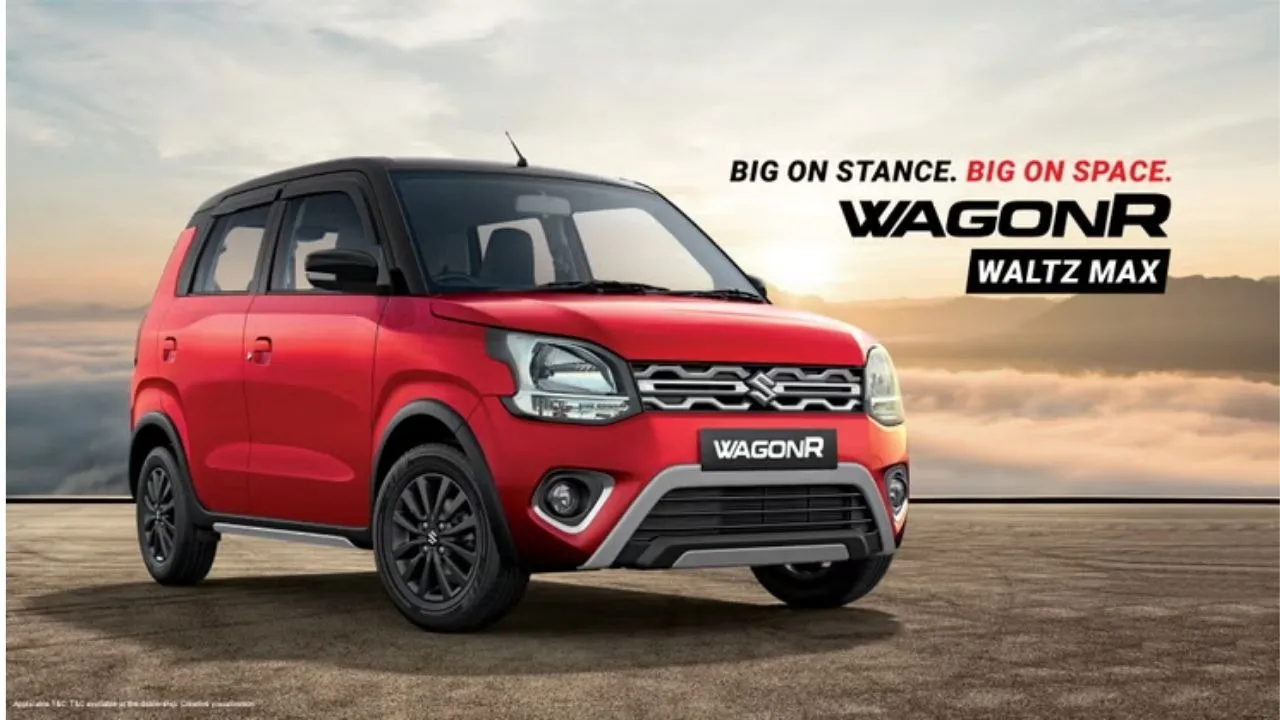
Introduced in 1999, the Maruti Suzuki entered the Indian market as Maruti’s response to the growing demand for spacious, practical hatchbacks. Competing with the Hyundai Santro, it differentiated itself through its signature “tall-boy” design, offering generous cabin space, easy accessibility and everyday practicality while remaining affordable for first-time car buyers and urban families.
Over the years, WagonR has evolved with regular product upgrades, including new platforms, enhanced safety features, touchscreen infotainment, AGS transmission and factory-fitted CNG variants. Supported by Maruti Suzuki’s extensive dealership and service network, the hatchback has consistently appealed to families, fleet operators and cost-conscious buyers seeking reliability, fuel efficiency and low maintenance.
With more than three million units sold and a place among India’s best-selling cars for over a decade, WagonR demonstrates how functional design, continuous product evolution and strong brand trust can create long-term market leadership. Its journey highlights the value of solving everyday consumer needs while adapting to changing customer expectations.
/afaqs/media/media_files/2026/07/26/sbi-2026-07-26-23-26-56.jpg)
State Bank of India (SBI) has evolved from one of Asia’s oldest financial institutions into India’s largest commercial bank while maintaining its core brand values of trust, accessibility and stability. Over the years, the bank has expanded beyond traditional banking into digital payments, wealth management, insurance, investment banking and financial services, serving customers through one of the country’s largest physical and digital networks.
The case study examines how SBI balanced its legacy with rapid digital transformation. Rather than positioning technology as a replacement for its branch network, the bank integrated digital platforms such as YONO with its extensive offline presence, enabling it to serve both digitally savvy customers and those in underserved markets. Alongside this, SBI continued to reinforce its reputation through trust-led communication, financial inclusion initiatives and a diversified product portfolio.
For marketers, SBI demonstrates how established brands can modernise without dilluting their identity. Its journey highlights the importance of combining heritage with innovation, investing in omnichannel experiences, and building long-term customer relationships while adapting to changing consumer expectations.
began as an export-focused business before expanding into domestic retail as India’s liberalising economy created demand for products rooted in Indian identity. The brand positioned handcrafted apparel, home furnishings, personal care and food products as everyday lifestyle choices, making traditional crafts relevant for modern consumers rather than niche or ceremonial purchases.
Instead of relying on celebrity-led advertising or discount-driven promotions, Fabindia built its brand through artisan-led sourcing, understated communication, thoughtfully designed retail stores and word-of-mouth advocacy. Its value-premium pricing, exclusive retail network and focus on authenticity helped establish it as a trusted brand for consumers seeking quality, craftsmanship and purpose.
Over the years, Fabindia has influenced India’s lifestyle retail landscape by creating a national market for handcrafted products and integrating artisans into organised retail value chains. While balancing growth with its values has remained a challenge, the brand continues to be recognised as one of India’s earliest purpose-led retail businesses, demonstrating that cultural authenticity and long-term brand building can create lasting consumer loyalty.