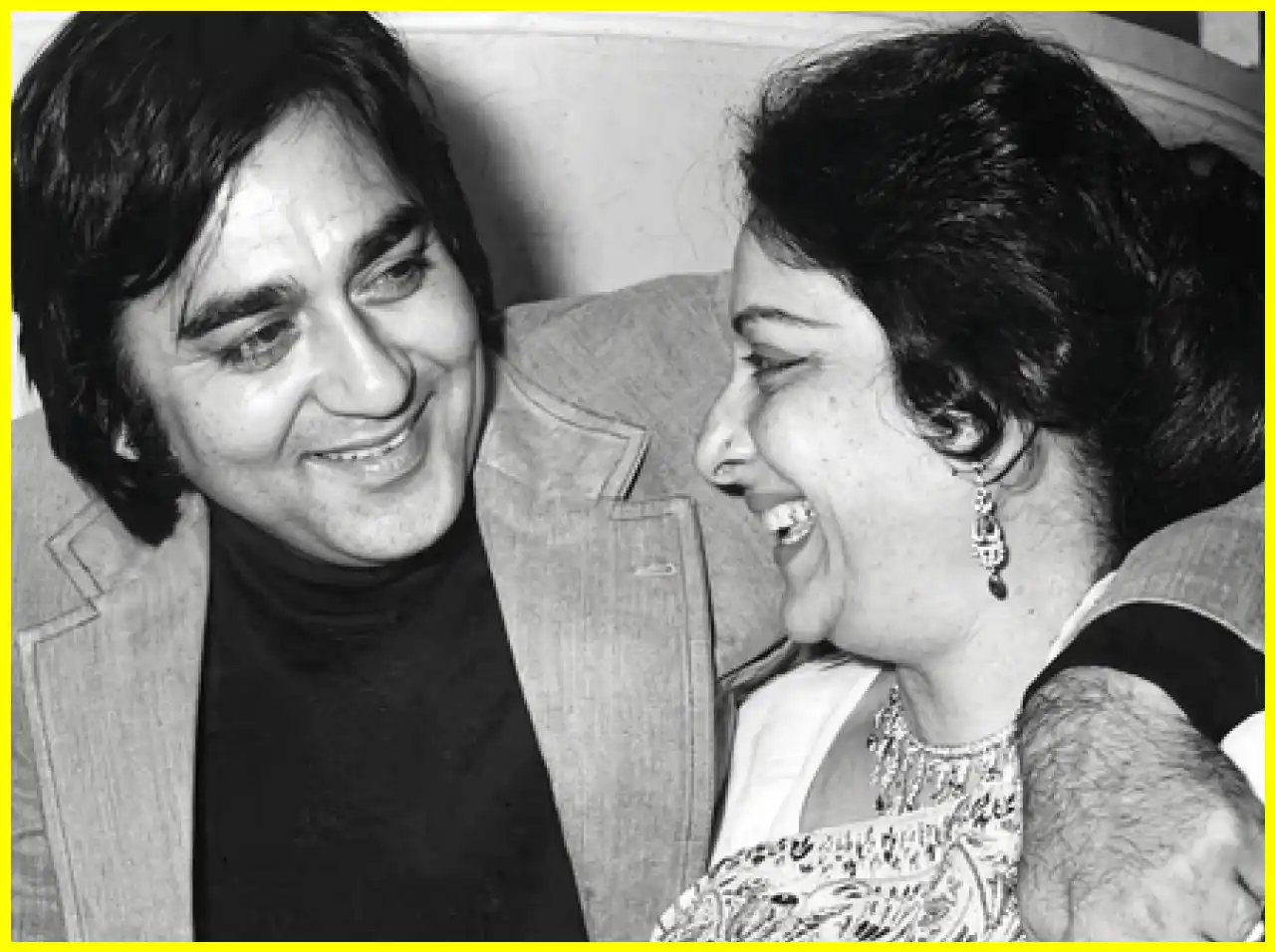
In the realm of love, everything is permissible, especially when it involves someone who cares for your family even more than you do. The late Sunil Dutt, a legendary actor in Hindi cinema, was known for his magical dialogue delivery and deep gaze. Whenever he appeared on screen, the entire theater fell silent. Audiences held their breath, captivated by his presence, carving out a unique identity even alongside legends like Dilip Kumar.
Fans of Sunil Dutt still believe that he fell in love with Nargis while rescuing her from flames during the filming of the 1957 classic “Mother India.” However, the truth is quite different. It was not “Mother India,” but rather “family priority” that struck a chord in Sunil Dutt’s heart for Nargis. She selflessly cared for Sunil’s sister, stood by the family during tough times, and left him astounded.
In an interview, Sunil Dutt himself clarified that if love could blossom from extinguishing fires, he would have fallen for many heroines. The media exaggerated the narrative. The reality was that Nargis was exceptionally kind. She took great care of his sister, which is rare in today’s fast-paced world. Witnessing her concern for his family, he decided to propose to her. He humorously added that if she declined, he would return to his village and farm. Nargis accepted, and Sunil’s mother was thrilled about their union. Thus, a professional relationship on set gradually transformed into a spiritual bond, marking the unspoken love story of Sunil Dutt and Nargis.
Sunil Dutt’s fiery demeanor in “Mother India” continues to impress audiences today. Beyond acting, he also made a name in politics, inspired by Pandit Jawaharlal Nehru. He served as a Member of Parliament and a central minister, passionately addressing issues that affected the nation. People connected with him, and he never looked back in his political journey.
Interestingly, Sunil Dutt was one of those artists who changed his name upon entering the . Originally known as Balraj Dutt, he adopted the name Sunil Dutt to carve out his own identity in the 1950s, distinct from big names like Balraj Sahni. He began his cinematic career on a railway platform and left an indelible mark with his performances in the 50s and 60s.
Reflecting on his life, Sunil Dutt mentioned that his greatest joy came when he reunited with his mother after the partition. Millions lost their homes during that tumultuous time, and Sunil was also searching for his family. A relative in Ambala helped him reunite with his mother, brother, and sister. Remembering that moment, he expressed, “It felt like the whole world had come back to me. All my hopes had shattered, but my mother was there. A new beginning ensued.”
Sunil Dutt believed that everything he achieved was due to the love and affection of his audience, as he never intended to enter the film industry. Initially, he interviewed famous film stars, but his voice resonated with people, leading fans to write to him.
He also shared insights about his film “Milan,” detailing how he prepared to row a boat on the Godavari River authentically. He regarded “Mother India” as a classic, noting that such films are rare. Although it was nominated for an Oscar, it missed out by just one vote.
During the 1962 war, he traveled to Ladakh to entertain soldiers, impressing then- Jawaharlal Nehru. Sunil Dutt’s story is not just one of cinematic success but also of the pain of partition, true love, family priorities, and patriotism—a journey that continues to inspire.
Sunil Dutt starred in iconic films like “Mother India,” “Waqt,” “Padosan,” “Khandar,” “Sujata,” “Reshma Aur Shera,” “Hamraaz,” and “Munna Bhai M.B.B.S.” His last film, in which he appeared alongside his son Sanjay Dutt, became a blockbuster. Born on June 6, 1929, Sunil Dutt passed away on May 25, 2005.