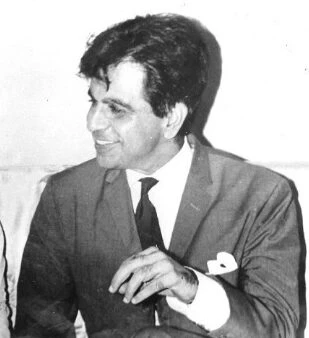
Who is the real Khan of Bollywood? Not the ones flashing luxury cars or social media selfies. Not the ones chasing trends or box-office numbers.
The man who made the camera bow, whose silence spoke louder than every dialogue ever written. Dilip Kumar is the benchmark that every actor envies, every director admires and every story still tries to measure up to.
Known as the greatest actor of all time, he was born on December 11, 1922, in Peshawar, British India, into a large Pashtun family. Named Yusuf Khan at birth, he carried with him a quiet ambition that would one day reshape Indian cinema. Moving to Bombay as a young man, he worked in a British army canteen, where destiny intervened: Devika Rani and Himanshu Rai of Bombay Talkies spotted his presence, his aura, and knew they had discovered something extraordinary.
Taking the stage name Dilip Kumar, he debuted with Jwar Bhata in 1944, but it was Jugnu (1947) that brought him his first taste of stardom. By 1949, with Andaz, co-starring Raj Kapoor and Nargis, Kumar had arrived, and the industry would never be the same.
He was the “Tragedy King”, the man whose grief, longing, and quiet intensity turned heartbreak into an art form, yet he could also command screens with charm and heroism in films like Aan (1953), Azaad (1955) and Kohinoor (1960). In Naya Daur (1957), he captured the struggles of ordinary citizens in a newly independent India, and in Mughal-e-Azam (1960), he embodied Prince Salim with such intensity that the performance turned into a bit of an urban legend. Gunga Jumna (1961), Madhumati (1958) and Ram Aur Shyam (1967) showcased his versatility and cemented his status as a benchmark for generations of actors.
The song ‘Bharat Ka Rahnewala Hoon’ became an anthem of identity and pride, reflecting the heart of the actor himself, a man rooted in his country yet universal in his appeal. He wasn’t just a star – he was a standard, the actor every performer still studies.
Even as Bollywood evolved and new actors rose in the 1970s, Kumar returned with memorable performances in Kranti (1981), Vidhaata (1982), Shakti (1982) and Saudagar (1991), proving that mastery of the craft is timeless. Eight Filmfare Awards for Best Actor, the Dadasaheb Phalke Award, the Padma Bhushan, the Padma Vibhushan and Pakistan’s Nishan-e-Imtiaz celebrated what the world already knew: he was cinema’s original, the legendary “Tragedy King”, the “Original Khan of Bollywood”.
Off-screen, Dilip Kumar’s life was as graceful as his performances. He married Saira Banu in 1966, and their love quietly endured decades of fame, rumors and the relentless glare of Bollywood, proving that some stories are as timeless as the films he made. He passed away on July 7, 2021, in Mumbai, and yet he lingers in every glance, every sigh, every story the screen will ever tell, a presence no camera can capture but every heart remembers.