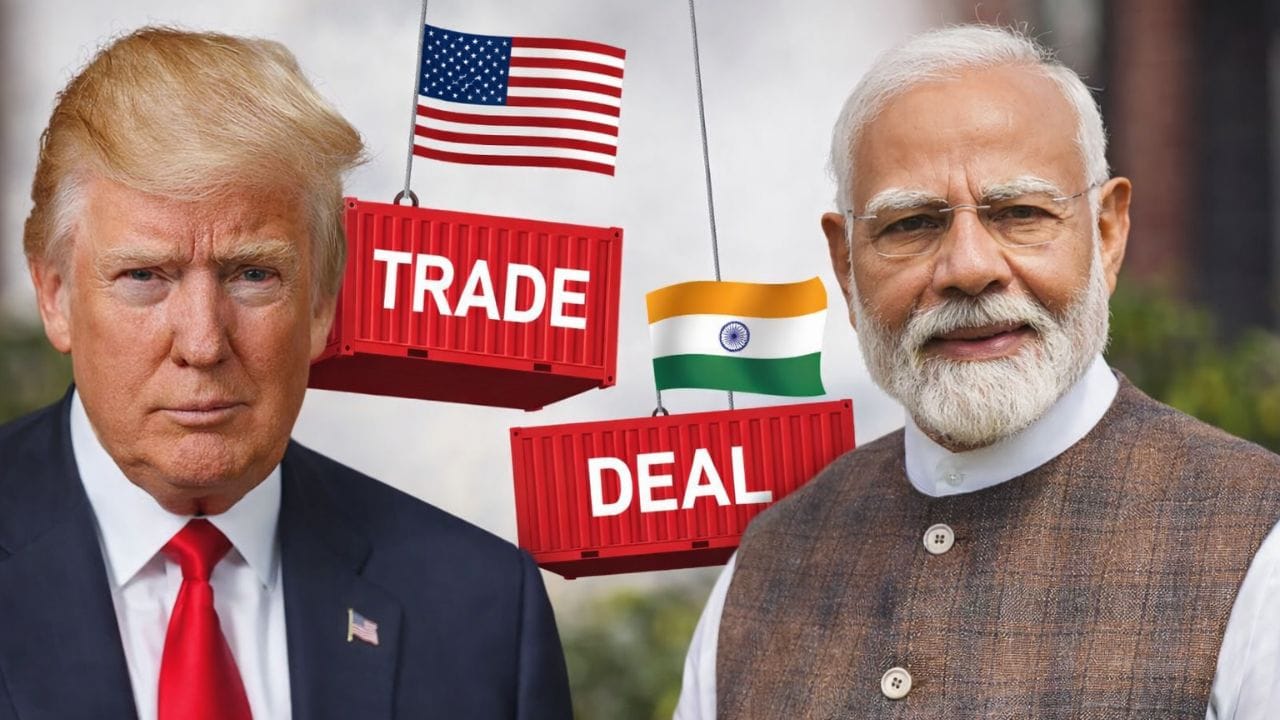
India and the United States on Friday took a step forward towards a historic trade agreement. The two countries released an interim trade deal framework, which aims to reduce tariffs, strengthen energy ties and deepen economic cooperation. This move comes at a time when both countries are trying to restructure the global supply chain and make trade more flexible. The special thing is that the India EU trade deal was called the ‘Mother of all deals’.
This trade deal between India and America is being called the ‘Father of All Deals’. Because this deal has been done between the world’s largest economy and the world’s largest market. In such a situation, it is also being said that in the coming days, the key to the American market will be in the hands of India. Let us also tell you which important points have been explained by Commerce Minister Piyush Goyal, which can change the economy of the country.
Joint statement of both the countries
The India-US Trade Deal Framework is part of the ongoing negotiations towards a comprehensive US-India bilateral trade agreement (BTA) starting in February 2025. Officials described the agreement as a step towards reciprocal, balanced trade and greater security of supply chains.
What did India agree on?
- The things India has agreed to include eliminating or reducing tariffs on all American industrial goods.
- It has also been agreed to cut tariffs on a wide range of US agricultural and food products, including dry grains (DDG), red sorghum for animal feed, nuts, fruits, soybean oil, wine and spirits.
- To provide preferential market access in agreed sectors to promote easy trade.
America agreed on these things
- It will impose 18 percent reciprocal tariff on most Indian goods including textiles, apparel, leather, footwear, plastics, rubber, organic chemicals, home decor, handicraft products and some machinery.
- The interim agreement, once successfully implemented, will remove reciprocal tariffs on a wide range of Indian goods, covering sectors such as generic pharmaceuticals, gems and diamonds, and aircraft parts.
Steel, Aluminum and Auto Parts
- Duties related to US national security regulations have also been addressed in this framework.
- Some duties imposed under Section 232 on Indian aircraft and aircraft parts related to steel, aluminum and copper will be removed.
- India will get preferential duty rate quota for auto parts.
- The charges imposed on medicines will be reviewed in line with the ongoing US Section 232 investigation.
non-tariff barriers
India has agreed to review the long-term barriers affecting imports.
- American Medical Devices.
- Information and Communication Technology (ICT) products.
- Food and agricultural products.
Negotiations will include accepting US or international standards and testing regulations in key areas within six months. Both sides will discuss standards and conformity assessment procedures to simplify trade.
Rules, Safeguards and Digital Trade
The rules have been set in the agreement so that mainly Indian and American producers benefit. Both parties may revise their commitments if tariffs change. Both countries have also resolved to work towards eliminating burdensome digital trade practices and establishing digital trade rules under a full BTA.
Supply Chain and Security
This framework outlines cooperation on economic security, supply chain strengthening, investment review, export controls and measures to counter non-market policies of third countries (possibly China).
India’s purchase commitments
India has committed to buy American goods worth $500 billion in the next five years. Which includes energy products, aircraft and parts, precious metals, technology products and coking coal. The deal also aims to expand the technology business including graphics processing units (GPU) and data center equipment.
What will happen next?
The interim framework will be implemented soon. Both countries will continue negotiations towards a full BTA and finalize the agreement, which aims to include broader market access, economic cooperation etc.