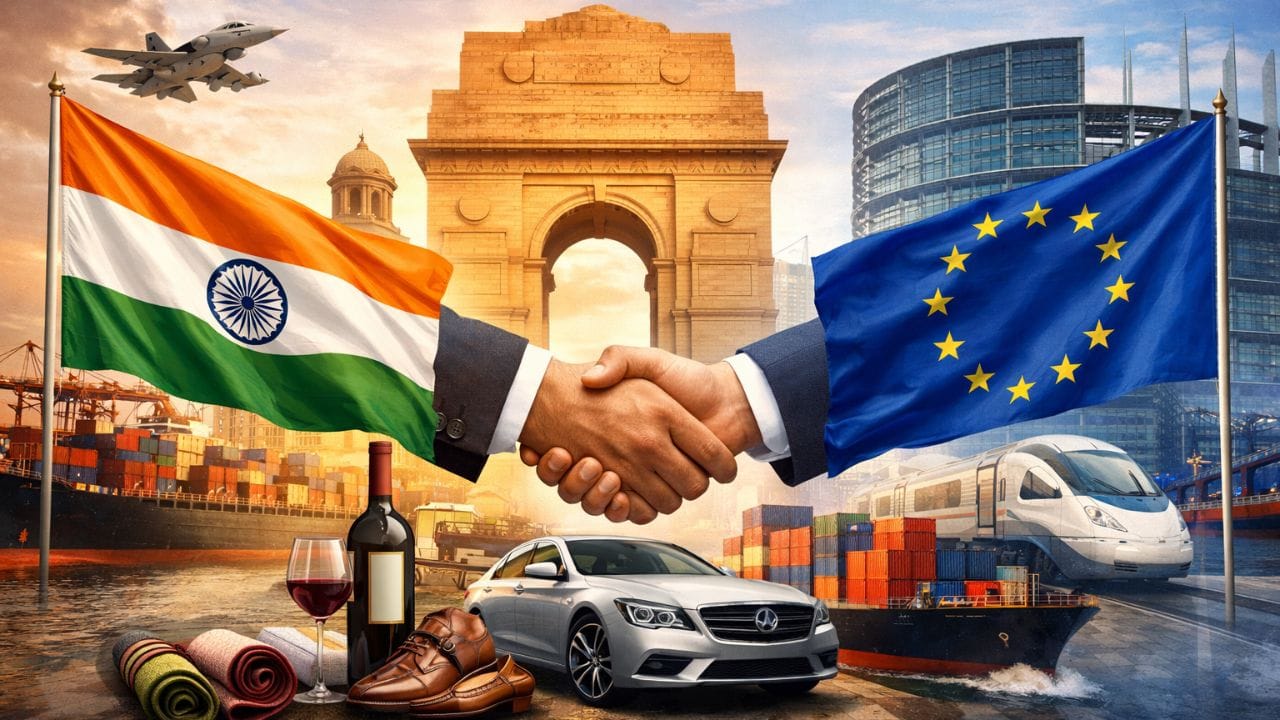
India is going to do ‘Mother of all deals’
This year’s Republic Day is going to be such a display of India’s strength and diplomacy, the echo of which will be heard from Washington to Beijing. When Republic Day is being celebrated in Delhi on January 26, behind the scenes a game is being played that will change the business equations of Asia and the world forever. The Free Trade Agreement (FTA) between India and the European Union (EU) is now in its final stages. It would be wrong to call it just a trade agreement, in the words of Commerce Minister Piyush Goyal, it is the “Mother of All Deals”.
20 years old wait, now things are happening
Negotiations for a Free Trade Agreement (FTA) between India and the European Union began in 2007. Both parties knew that they needed each other, but things did not work out. By the year 2013, this conversation came to a complete halt. The reason was mutual differences, Europe wanted India to reduce taxes on its vehicles and liquor, whereas India was worried about its data security and workers’ rights.
But after 2020 the world changed. The Corona pandemic and geopolitical tensions proved how dangerous it can be to depend on any one country or market. Supply chains were broken and inflation increased. This compulsion brought both the parties back to the table. Talks resumed in June 2022 and now, in early 2026, officials say the deal is almost finalized.
Will luxury cars, foreign wines become cheaper?
The biggest question is what will he get from this deal? The EU’s biggest emphasis is on India reducing the heavy import duties on cars and liquor (especially wine and spirits) coming from Europe. Currently, foreign cars are taxed up to 100%, making them out of the reach of the common buyer. If this agreement happens, then European cars and other luxury goods can become cheaper in the Indian market.
However, the Indian government is taking slow steps. There is a problem in sectors like automobile and steel. India fears that if foreign steel comes without restrictions, domestic companies will suffer losses. At the same time, agriculture is a ‘red line’ for India. The government has made it clear that it will not completely open the dairy or agriculture sector by risking the livelihood of crores of small farmers. Bloomberg’s report suggests that a middle path can be found, so that respect for both sides is maintained.
This deal will be ‘jackpot’ for India
For India, this deal is not just about making imports cheaper, but also about selling its goods. Currently, Indian clothes, textiles and leather goods have to pay 12 to 16 percent tax in Europe. At the same time, countries like Bangladesh and Vietnam have got exemption, due to which their goods become cheaper and Indian exporters lag behind.
After this agreement, Indian textile industry, leather products, medicines (pharma) and electrical machinery will be able to be sold in the European markets without any discrimination. This simply means promotion of manufacturing in India and creation of new jobs in sectors like textiles. Apart from this, India’s IT sector and service industry, which has already proved its mettle in the world, can get the benefit of easy rules and visa process to work in Europe.
‘Masterstroke’ amid tension between America and China
The timing of this deal says a lot. America has imposed various types of tariffs in recent years, due to which Indian exporters are facing difficulties. On the other hand, trusting China is now being considered a risk. In such a situation, Europe, which is already India’s largest trading partner, has emerged as a strong option.
In the year 2024, bilateral trade between India and EU would reach 120 billion euros. Now efforts are being made to increase this figure further. This agreement will free India from the compulsion to depend on any one market. Experts believe that whether the final announcement is made on January 27 or not, both sides are very close to the finish line.