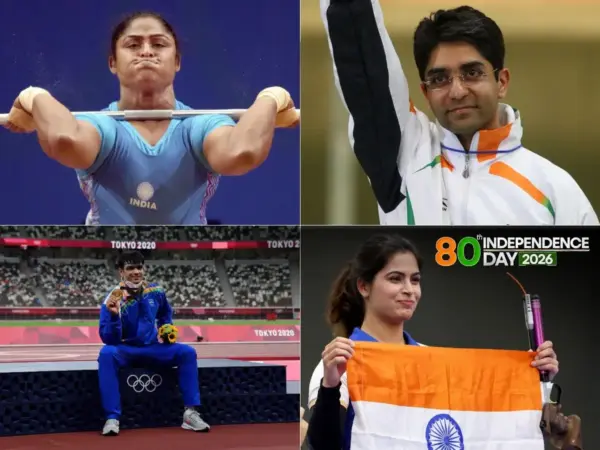
As India celebrates its 80th Independence Day on Saturday (Aug 15), we take a look and cherish how, with a fundamental shift in mindset from just being happy to qualify to acquiring global dominance in several sports, they have come far since gaining independence.
From cricket and chess to javelin and boxing, Indian athletes are redefining boundaries on the world stage. From individual brilliance to dynamite teamwork, the Indians have gained name and fame in the world of sports. Here, we will understand how.
7 factors that shifted India’s mindset and changed its sporting ecosystem
- The Isolated Outliers (1952-1990s) – Beyond the hockey field, where the Indian men’s team never let any team come near its Olympic gold medal tally, even today, success mostly relied on the shoulders of individual stars. Be it K.D. Jadhav’s 1952 Olympic bronze in wrestling or Prakash Padukone’s 1980 All England in badminton, India’s equivalent to success was mere participation and rare title wins during that period.
- 1983 World Cup Win that Changed India’s Sporting Stance – Merely 36 years after gaining independence from British rule, a moment came that changed the world’s perspective towards India in sports, particularly cricket. Mostly known for its handful of individual performers, India needed to win the Prudential World Cup in 1983, and against all odds, to make a space for itself in the cricket world. And Kapil Dev’s India did just that, defeating the defending champions and two-time winners, West Indies, in the World Cup final to realise their dream.
- Ending Olympic Medal Drought – While Sachin Tendulkar had emerged on the international scene after India’s historic World Cup win, the country had not tasted major success until Leander Paes’ Olympic medal in the 1996 edition. Four years later in Sydney, Karnam Malleswari broke all stereotypes to become the first Indian woman athlete to win an Olympic medal, proving that individual success can be achieved beyond the hockey field.
- Bindra’s Historic Gold Aced India’s Olympic Game – Even though India won several individual Olympic medals in the past decade and continues to do so in the recent games, it all began with Abhinav Bindra’s gold medal in shooting during the 2008 Beijing Summer Games. That one win alone injected confidence in athletes across disciplines and all age groups that India can dream of more gold at the Olympics.
- Grassroots Systemisation and Influx of International Coaches – The late 2000s and early 2010s prioritised grassroots systemisation in the country, with government programs like TOPS (Target Olympic Podium Scheme) alongside private foundations (OGQ, JSW Sports) providing world-class foreign coaching, elite sports science, and international exposure to budding athletes. Even programs like Khelo India decentralised talent discovery beyond metro cities, building ecosystems in tier-two and tier-three towns that previously lacked elite infrastructure.
- The Age of World Champions – Years later, India unlocked the age of world champions, with boxers, wrestlers, track and field athletes and javelin throwers, including Neeraj Chopra’s historic feats before and after his Olympic gold in the Tokyo Games, making headlines all over. World-class infrastructure, elite training and access to top facilities unearthed world champions across disciplines, making India proud worldwide.
- Elite Professional Mindset – Indian athletes across any sport fear none. Trained and ready to own their respective disciplines, Indian sport stars have begun aiming for the sky, with a sea of talent coming through the grassroots. This shift in mindset from being just happy to qualify to claiming world dominance reflects India’s sporting scene 80 years since independence.