Every few years, an action film comes along that reminds you why the genre became so popular in the first place. In an era of CGI-heavy spectacles, relying on rapid-fire editing, a filmmaker from Asia delivers a refreshingly physical actioner where every punch carries weight.
Directed by veteran action choreographer Kenji Tanigaki, tells a very familiar story. The plot borrows freely from and , and occasionally feels like a tribute to classic Hong Kong action cinema. The characters are broadly drawn and its emotional arcs rarely dig deep. But none of that seems to concern Tanigaki. His focus is squarely on the action. By the time the film reaches its final stretch, it’s easy to see why so many are already calling it one of the year’s best action films.
The story follows Wang Wei (Xie Miao), a mute Chinese immigrant working as a handyman somewhere in Southeast Asia, who sees his world fall apart when his young daughter Rainy (Yang Enyou) is kidnapped by a child-trafficking syndicate. Refusing to wait for the authorities, he sets out to find her himself.
His search brings him into the path of investigative journalist Navin (Joe Taslim), who is chasing the same criminal network for personal reasons. Together, they cut through a trail of gangsters, corrupt operators and hired killers, to nab the men behind the trafficking ring.
If you’ve watched enough action films, you’ll know exactly where the story is headed. There are very few surprises along the way. Thankfully, it doesn’t matter. The screenplay exists mainly to move Wang from one spectacular fight sequence to another, and once the action begins, it’s hard to complain about the lack of narrative complexity.
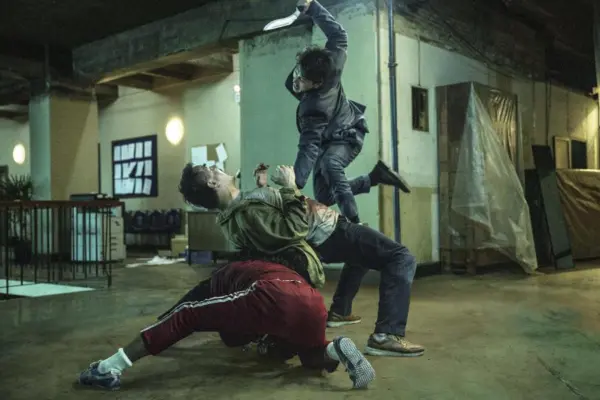
Tanigaki knows exactly how to build momentum. The opening fight is relatively grounded, relying on fast-paced martial arts and clever use of the environment. But each successive set piece raises the stakes. Soon, fists give way to hammers, arrows, motorcycles and every object that can be used as a weapon.
And every fight has its own identity. One sequence unfolds inside a warehouse packed with inventive choreography and bone-crunching weapon combat. Another transforms narrow corridors into claustrophobic battlegrounds. The finale, set largely inside a police station, escalates into an all-out war.
By the time that climactic showdown reaches its conclusion, you’ll probably feel as exhausted as the characters on screen.
What makes these sequences so impressive isn’t simply their brutality but the craftsmanship behind them. Meteor Cheung’s camerawork keeps the action remarkably clear even when half a dozen people are fighting in confined spaces.
Chris Tonick’s editing deserves equal praise. Every punch, throw and kick lands with clarity, allowing the choreography to do the storytelling.
The sound design amplifies that impact beautifully. Every broken chair, shattered table and crunching bone lands with unsettling force. Combined with an energetic electronic score, the film creates an exhilarating experience.
The performances elevate the experience further. Xie Miao carries much of the film without speaking a single line. As Wang, he communicates his rage through expression and movement alone. His physical control is astonishing, but so is the quiet emotional weight he brings to the role.