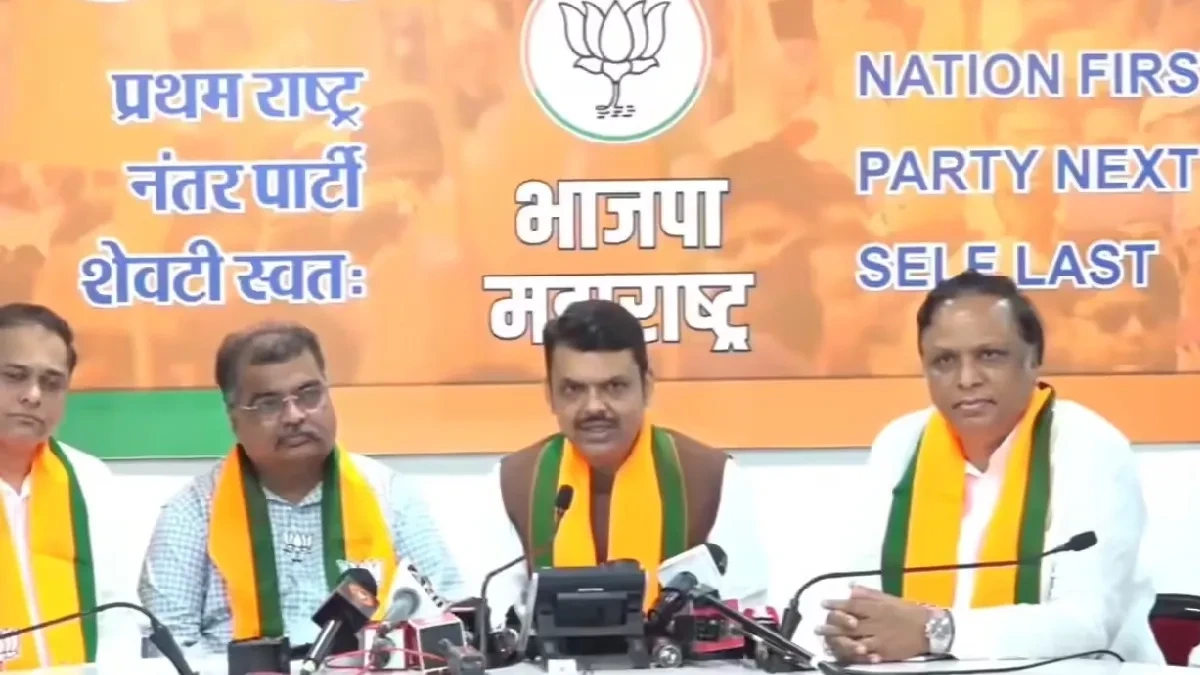
The Mahayuti clinched 118 of the 227 seats, with the BJP emerging as the single-largest party at 89 seats, complemented by 29 seats from the Shinde-led Shiv Sena. The mandate reflects not merely an electoral swing, but a decisive shift in public sentiment toward performance-led governance and institutional reform.
At the centre of this watershed moment stands the formidable partnership between Devendra Fadnavis, Maharashtra’s Chief Minister, and Ameet Satam, BJP’s Mumbai President, widely hailed as the political “Ram-Laxman” duo. Their complementary leadership proved pivotal: Mr. Fadnavis brought strategic depth, administrative experience, and a compelling vision for a renewed Mumbai, while Mr. Satam spearheaded an energetic, data-driven grassroots campaign that translated vision into votes. The entire grassroot and team of BJP was galvanised by this duo in a manner that mattered the most.
Throughout the campaign, Mr. Fadnavis foregrounded transformative infrastructure initiatives- the Coastal Road, Metro expansion, Atal Setu, and the Navi Mumbai International Airport – presenting a coherent roadmap for a globally competitive metropolis. This development-centric narrative resonated strongly with voters seeking tangible progress over rhetoric.
Appointed in August 2025, Mr. Satam rapidly galvanized the party’s organizational machinery under the banner of “Safer, Cleaner Mumbai.” His meticulous micro-planning and voter outreach contributed to an impressive 65% voter turnout, a clear endorsement of the “Modi-Fadnavis” governance model over the emotive, legacy-driven appeals of the opposition.
Ideologically, the contest extended beyond party lines. The alliance of Uddhav Thackeray’s Shiv Sena (UBT) and the Maharashtra Navnirman Sena (MNS) sought to frame the election around Marathi Asmita, attempting to portray the BJP as an external force. The Fadnavis – Satam leadership countered this narrative with clarity and conviction – asserting that Marathi Asmita is inseparable from Bharatiya Asmita. Their campaign emphasized inclusive development, embracing Mumbai’s diverse social fabric, while anchoring regional pride within a national and global outlook.
With the mandate secured, the BJP has unveiled an ambitious ₹74,400-crore BMC budget, prioritizing smart-city reforms, affordable housing, transparent governance, and infrastructure modernization. As preparations begin to install a Mahayuti Mayor, the signal from Mumbai’s electorate is unmistakable: the era of stagnation has ended.
By striking a careful balance between cultural pride and forward-looking governance, the Mahayuti has articulated a vision of Mumbai that is confident in its identity and uncompromising in its aspirations. The verdict reflects a city choosing progress over pedigree, performance over inheritance, and setting the stage for Mumbai to reclaim its stature as a global benchmark in urban governance.