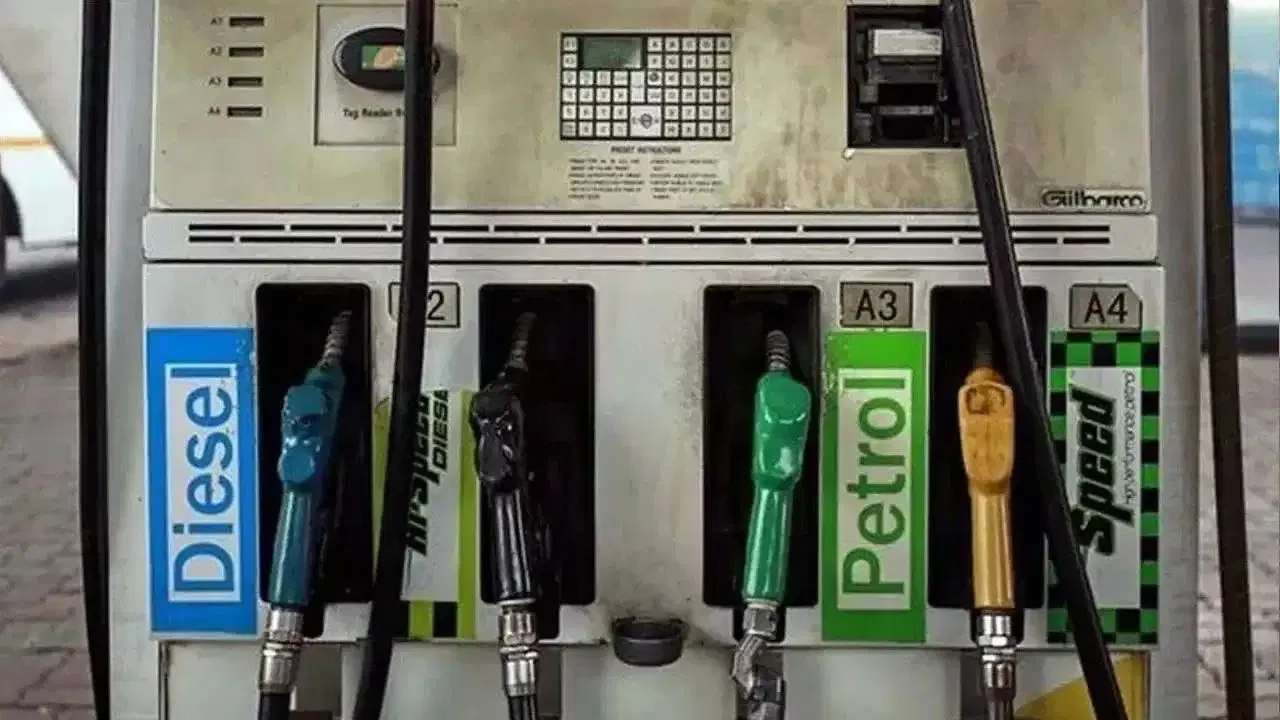
petrol-diesel
After the increase of about 8 percent in the prices of petrol and diesel in the second half of the month of May, further increase may be seen. According to the information, fuel prices may see an increase of another Rs 5 per liter. This is because government oil marketing companies (OMCs) are incurring losses (under-recoveries) of around Rs 610 crore every day due to fuel losses due to high crude oil prices and the West Asia crisis.
According to Prashant Vashishtha, Senior Vice President and Co-Group Head, Corporate Ratings, ICRA Ltd., despite an overall increase of about Rs 7.5 per liter in retail prices of petrol and diesel since May 15, OMCs are still making losses of about Rs 5.5 per liter on petrol and Rs 4.5 per liter on diesel. Vashishtha said that the combined loss of all three government fuel companies could be around Rs 610 crore every day. A further increase in petrol and diesel prices by about Rs 5 per liter could help OMCs get closer to ‘break-even’ on auto fuel sales.
downstream loss
This loss is not limited to auto fuel only. ICRA estimates that the loss (under-recovery) on LPG stands at around Rs 680 per cylinder, while the loss on Aviation Turbine Fuel (ATF) is around Rs 93 crore per day. According to Crisil Ratings analysis, if crude oil prices remain high and OMCs continue to reduce their losses, the total increase in petrol and diesel prices could reach close to Rs 10 per liter.
macroeconomic impact
Crisil said that this will have a cascading effect on the entire economy as transport costs will increase, which will lead to an increase in both food prices and core inflation. The rating agency estimates that an increase of Rs 7.5 per liter in petrol and diesel prices may increase consumer inflation by about 36 basis points, while a total increase of Rs 10 per liter may increase the impact by 48 basis points.
It is believed that the cost of transport will be the main reason for increasing inflation. Crisil said that the share of freight transport in India’s logistics cost is 54 percent, while road transport carries about 71 percent of the total freight. Fuel alone accounts for about 42 percent of the cost of road transport, due to which the increase in fuel prices can have a very bad impact on the supply chain. As a result, sectors dependent on transport may have to face higher costs. CRISIL says that the prices of items like dairy products, fruits, pulses, spices, tea, coffee, eggs, meat and fish may increase significantly, because due to increase in transportation costs, retail prices are also increasing.
How much crude oil can remain?
Manufacturers are facing a double cost blow due to rising crude oil-related input and transportation costs, putting pressure on margins and consumer prices. In the first two months of the current financial year, crude oil prices have averaged $ 112 per barrel, which is much higher than CRISIL’s full year estimate of $ 95 per barrel. Despite recent price increases, fuel retailers are still incurring significant losses, so the debate over balancing OMC finances, controlling inflation and keeping in mind consumer purchasing power is expected to intensify in the coming weeks.