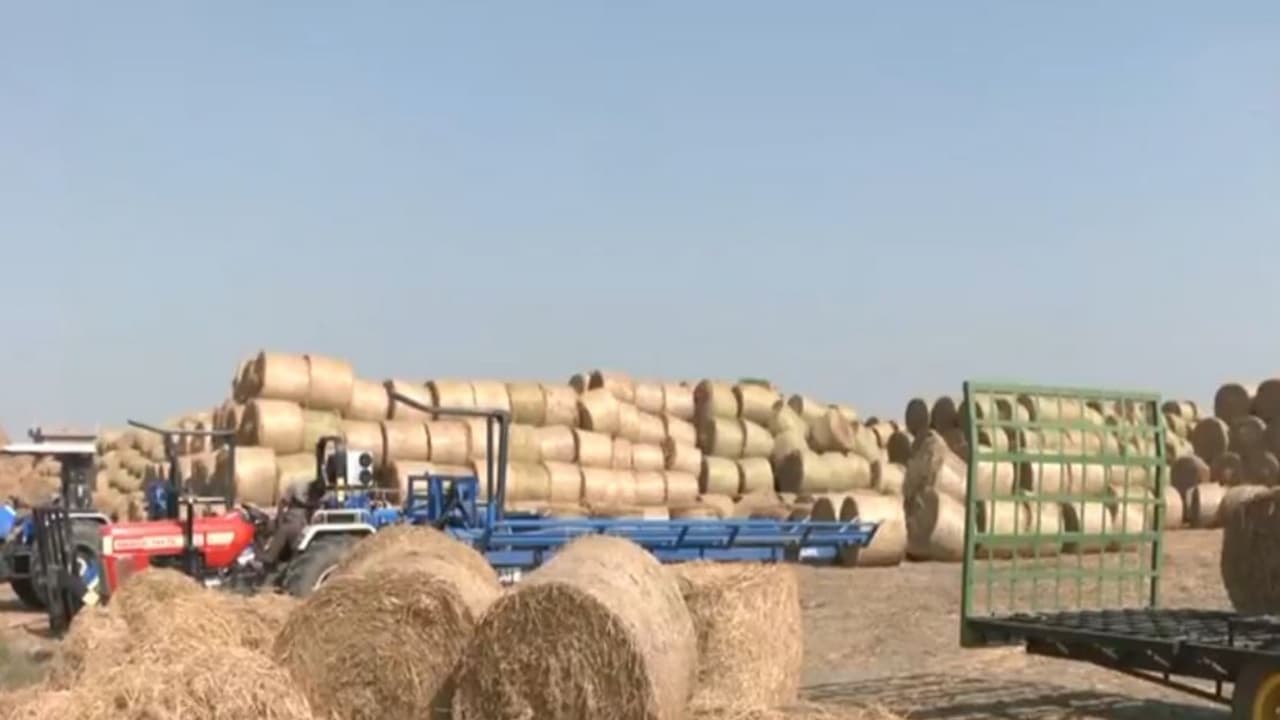
Tarn Taran district is tackling stubble burning by promoting in-situ and ex-situ residue management, converting agricultural waste into baled biomass to create income for farmers and reduce environmental pollution through a circular economy.
Combating Stubble Burning in Tarn Taran
Tarn Taran (Punjab) [India], October 30 (ANI): The Tarn Taran district administration has intensified its campaign against stubble burning, promoting sustainable paddy straw management through in-situ and ex-situ techniques, with a plant in Kot Dharam Chand Kalan village processing agricultural residue into bales for use in power plants, thermal plants and kilns. The plant prepares around 35,000 metric tonnes of stubble bales annually, with a daily processing capacity of 100 tonnes.
According to the district administration, it manages paddy residue from 15,000 to 18,000 acres of cultivated land and can cater to farmers across 8-10 villages. Deputy Commissioner of Tarn Taran, Rahul, said the district had emerged as a hotspot for stubble burning, prompting the administration to intensify awareness activities in coordination with the police.
Sustainable Crop Residue Management Techniques
Explaining the crop residue management methods, he said that under the in-situ technique, stubble is mixed into the soil in the fields, while the ex-situ technique involves converting it into bales, creating an additional source of income for farmers. “Tarn Taran has become the hotspot district for stubble burning; several cases have been reported. So, together with the Police Administration, the District Administration is carrying out awareness activities. They are also being discouraged from burning stubble. In an in-situ technique, stubble is being mixed on the field itself and used. In the ex-situ technique, bales of stubble are made and it provides an earning opportunity to the farmers. We are in Kot Dharam Chand Kalan village today and a small Plant has been set up here to prepare bales of 35,000 MT of stubble yearly – 100 tonnes of stubble daily. You can see the bales kept here behind me. The Plant manages 15,000-18,000 acres of land on which paddy crop has been cultivated. We have also spoken to the farmers in neighbouring villages,” he said.
The Deputy Commissioner added that the administration had organised more than 70 field demonstration camps and over 150 regular awareness camps for farmers in the last three months. He said efforts were also being made to reach farmers in neighbouring villages and encourage them to adopt sustainable residue management practices. “We have seen the impact of it; the Plant can manage stubble from 8-10 villages. There are supply orders to power plants and kilns round the year. This is a circular economy. The stubble which was being burnt has now turned into gold. This is benefiting farmers. Plant has been set up at 20-30% government subsidy. Govt has also provided help regarding Crop Residue Management machinery as well. We urge the farmers and Plant operators to make use of these resources and not let them go to waste…I hope more and more people connect with this…I have been told that once this gains pace, they will further extend it. In last 3 months, more than 70 field demonstration camps and more than 150 normal camps were organised for farmers. Farmers do not want to indulge in stubble burning, but some of them do this in haste. We are tapping such farmers,” he further said.
Enforcement and Future Outlook
Further, Senior Superintendent of Police (SSP) Surendra Lamba said the district, civil and police administrations had jointly intensified enforcement activities over the last 10 days to prevent stubble burning. He further said that 150 cases had been registered against people involved in stubble burning, while several other attempts had been prevented through timely intervention by the administration. He said the district had recorded fewer stubble-burning incidents compared to the previous year, considering all factors.
“To stop stubble burning and ensure that there are no further incidents of stubble burning in the district, the District, Civil and Police administrations have been working together. We have multiplied our activities in the last 10 days. We have increased our deployment by 3 times. We are focusing on hot spots and making people aware. When we see a live fire at any spot, it is doused with the available resources. Legal action is also immediately taken. So far, 150 cases have been registered against people who have indulged in stubble burning. But several such attempts have been thwarted as the administration reached the spot and guided them. Efforts have been really intensified, and we have also achieved success. There have been fewer incidents than last year if you count all factors,” he said.
Farmer and baler owner Mukhtiar Singh said the introduction of baling machines had reduced the difficulties farmers faced in managing crop residue after harvesting. He added that the collected stubble would be converted into biomass pellets and used as a substitute for coal in boilers and thermal plants. “I have joined the industry this year onwards. We operate 8-10 balers here, which are baling stubble. The problems that cropped up for farmers after cultivation of crops have been reduced with the baling machines now. After the baling of stubble, the stubble will be turned into biomass pellets, which will replace coal in boilers and thermal plants for use there. This is really good. We have received great support and subsidies from farmers,” Singh told ANI. (ANI)
(Except for the headline, this story has not been edited by Asianetnews Editorial staff and is published from a syndicated feed.)