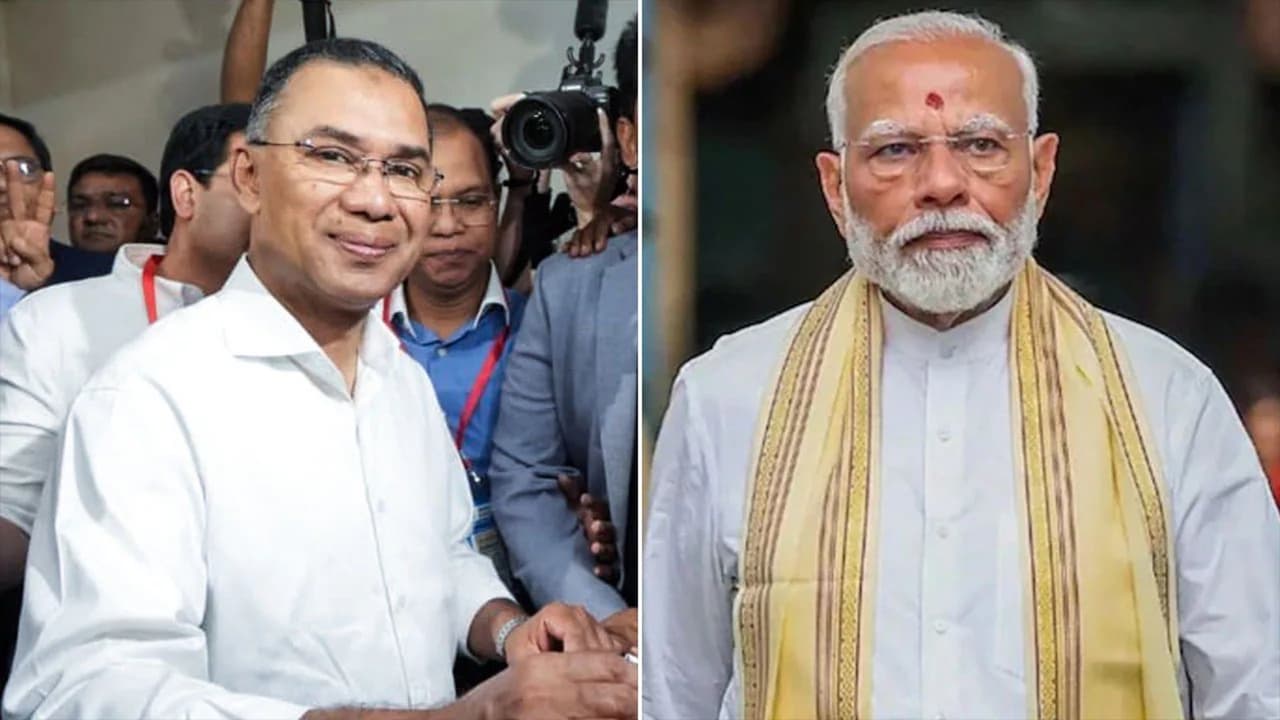
After his election win, Bangladesh PM-elect Tarique Rahman invited PM Narendra Modi to his February 17 swearing-in, signalling Dhaka’s intent to pursue balanced foreign policy and maintain constructive ties with India.
Bangladesh’s Prime Minister-elect Tarique Rahman, chairman of the Bangladesh Nationalist Party (BNP), has extended a formal invitation to Indian Prime Minister Narendra Modi to attend his swearing-in ceremony scheduled for February 17 in Dhaka. The diplomatic gesture comes days after the BNP secured a decisive mandate in the country’s general elections, marking a significant political transition in South Asia.
Rahman’s outreach to New Delhi is being viewed as an early signal that his administration intends to pursue a pragmatic and balanced foreign policy. By inviting Modi to the oath ceremony, Dhaka appears keen to maintain continuity in relations with India while simultaneously repositioning itself within a broader regional framework that includes major powers such as China, Pakistan and Gulf nations.
India was among the first countries to acknowledge the BNP’s electoral victory. Prime Minister Modi congratulated Rahman soon after the results were declared, reaffirming India’s commitment to peace, stability and prosperity in bilateral ties. The swift diplomatic exchange has helped ease speculation about potential strain in relations following the political change in Bangladesh.
While the invitation underscores goodwill, reports indicate that Modi may not be able to attend in person due to prior diplomatic commitments in India on the same day. If that is the case, New Delhi is expected to send a senior representative to the ceremony, ensuring India’s presence at the high-profile event.
The February 17 swearing-in ceremony is expected to draw leaders and representatives from multiple countries, reflecting Bangladesh’s strategic importance in the Bay of Bengal region. Observers suggest Rahman’s government is likely to prioritise economic cooperation, trade expansion, connectivity projects and border management discussions with India, given the deep interdependence between the two nations.
Bangladesh and India share extensive ties spanning trade, energy cooperation, river water sharing, security coordination and cross-border infrastructure development. Any recalibration under Rahman’s leadership will be closely watched across South Asia, particularly amid evolving geopolitical competition in the Indo-Pacific.
The invitation to Modi, therefore, goes beyond ceremonial diplomacy. It sends a calculated message that Bangladesh’s new leadership seeks constructive engagement rather than confrontation. By balancing domestic political shifts with outward-looking diplomacy, Rahman appears intent on positioning Dhaka as a stable and cooperative regional partner at a time of heightened geopolitical sensitivity.
As Bangladesh prepares for the formal transfer of power, the February 17 ceremony could mark not just a political milestone, but the beginning of a new diplomatic chapter in India-Bangladesh relations.