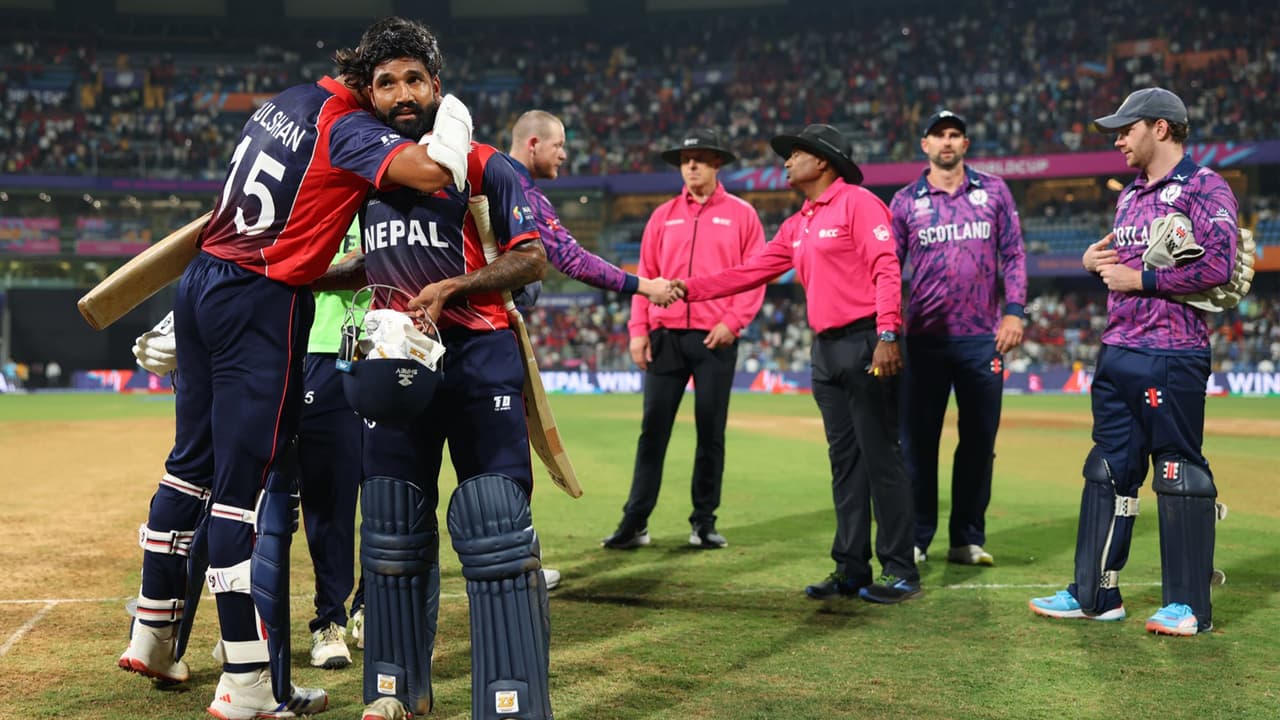
The expanded T20 World Cup has made international cricket a global contest. Associate nations like Italy, the USA, and Nepal now challenge established teams, proving “minnow” is outdated thanks to stronger preparation and growing talent pools.
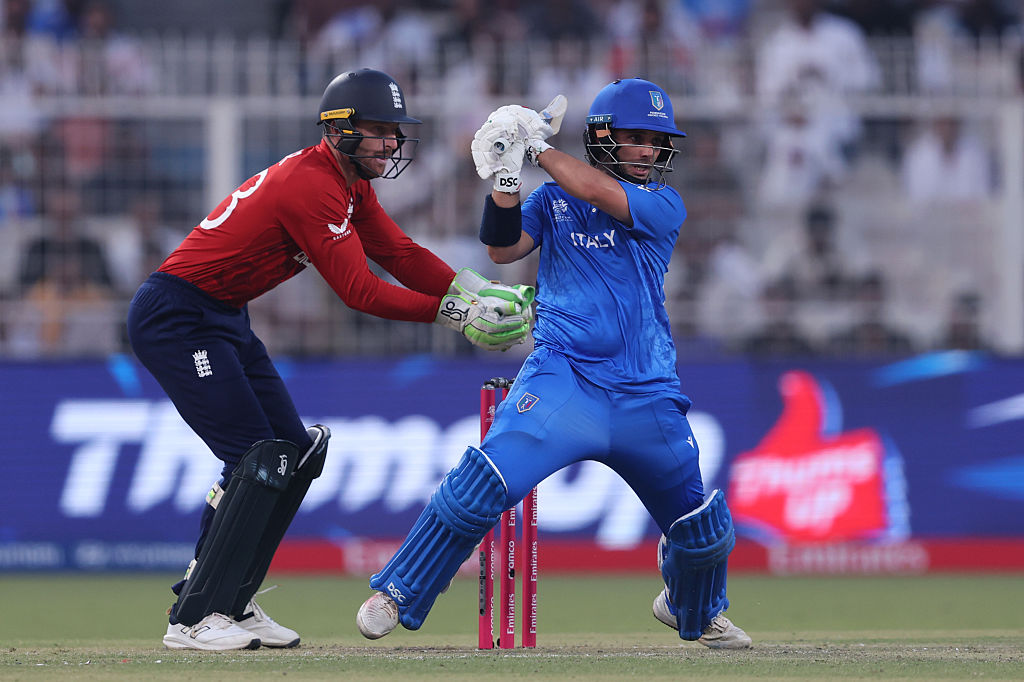
England versus Italy. In most corners of the world, that fixture belongs to football, a European classic painted in Azzurri blue and English white. But in February 2026, the contest unfolded not at Wembley or Rome’s Stadio Olimpico, but at Eden Gardens in Kolkata. And it was not football. It was cricket.
That single image, Italy facing England in a T20 World Cup, captured a larger truth. The so-called gentleman’s game is no longer guarded by velvet ropes. It is opening its gates.
For decades, international cricket functioned like an exclusive club. A familiar group of nations rotated through bilateral series, while aspiring countries hovered at the margins, invited occasionally but rarely taken seriously. The expanded 20-team T20 World Cup has changed that dynamic. The 2026 edition may well be remembered as the tournament that made the word “minnow” obsolete. Even Canada, long a quiet participant on cricket’s periphery, found itself back on the global stage, reinforcing the sport’s widening footprint across North America.
The Evidence Lies in the Group Stages
Italy, chasing a daunting 203 against defending champions England, refused to buckle. Ben Manenti’s blistering 60 off 25 balls and Grant Stewart’s counterattacking surge powered Italy to 178. For stretches of that chase, England looked unsettled. It was a genuine contest.
The United States delivered an even louder statement. They did not simply compete. They dominated. A commanding 199 for 4 against Namibia was followed by a crushing 93-run victory over the Netherlands, the largest margin ever recorded by an Associate nation in the tournament. Captain Monank Patel’s milestone of 1,000 T20 international runs underscored a deeper shift. American cricket is no longer a novelty. It is building substance.
Canada’s presence in the tournament further highlighted that transformation. With a squad shaped by South Asian and Caribbean diaspora communities, and players seasoned in domestic circuits, Canada is also quietly redrawing cricket’s map. Their participation was competitive, purposeful, and representative of the sport’s expanding geography.
Nepal came within four runs of stunning England in Mumbai, finishing on 180 for 6 in a chase that held Kathmandu breathless. There was tactical discipline and belief in equal measure. They played with clarity and composure, and for long stretches they looked capable of finishing the job.
Zimbabwe added another jolt by defeating Australia by 23 runs in Colombo. Although technically a Full Member nation, Zimbabwe’s recent struggles have placed them on the fringes of elite conversation. Their victory echoed the unpredictability this expanded format was designed to create.
What Has Changed is Not Merely Opportunity: It is Preparation
Diaspora communities have strengthened talent pools. Franchise leagues have accelerated player development. ICC investment in emerging markets has begun to yield measurable results. Associate nations are no longer collections of part-time dreamers. Many now field players seasoned in domestic T20 leagues, county systems, and global competitions. The technical gap has narrowed. The psychological gap has all but vanished.
The expanded World Cup has not diluted quality. It has intensified it. Established powers can no longer drift through group matches assuming inevitability. Every contest carries risk. Every opponent carries a belief.
Sport thrives on uncertainty. This tournament has restored jeopardy to the early rounds, and with it, renewed global interest. When England glance at a fixture against Italy, Nepal, or Canada, they see possibility rather than inevitability. When Australia face Zimbabwe, there is tension rather than comfort.
For fans in Rome, Dallas, Toronto, and Kathmandu, this matters deeply. The World Cup no longer feels distant. It feels participatory. It feels earned.
The minnows did not ask for sympathy. They asked for space. Once given the stage, they did not drown.