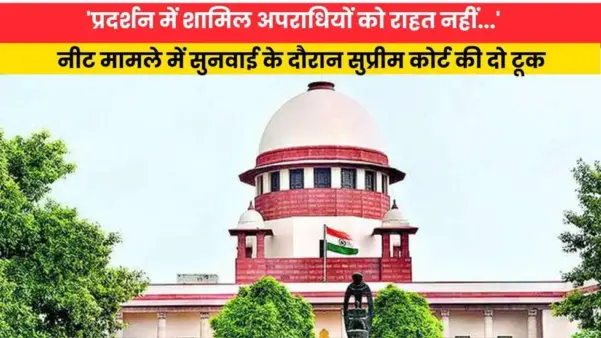
During the hearing related to the NEET (National Eligibility cum Entrance Test) case, the Supreme Court adopted a firm approach regarding protests and law enforcement.
The court emphasized that while peaceful demonstrations are a fundamental right in a democratic society, individuals engaging in violence, vandalism, or other criminal activities under the guise of protest cannot expect legal protection.
The apex court remarked that expressing dissent and voicing opinions are integral to democracy; however, this does not grant anyone the right to take the law into their own hands. The court indicated that if there is prima facie evidence of violence, damage to public property, or other criminal acts, relief from the court cannot be anticipated in such cases.
During the proceedings, petitioners sought relief concerning cases registered during the protests. The Supreme Court clarified that each case would be evaluated based on its specific facts and available evidence. Merely participating in a protest does not make someone a criminal, but if an individual’s involvement in a criminal act is established, the law will take its course.
The court reiterated that the Constitution grants citizens the freedom of expression and the right to peaceful assembly, but these rights are not absolute. Maintaining public order and adhering to the law is the responsibility of every citizen. Violence or chaos under the pretext of protest is unacceptable under any circumstances.
Following the Supreme Court’s remarks, the ongoing NEET-related disputes and protests have once again come into the spotlight. Legal experts believe that the court’s observations send a clear message that while democratic rights will be upheld, leniency will not be shown towards lawbreakers.
The hearing is still in progress, and a final decision is yet to be made. After listening to the arguments from the involved parties, the court has scheduled the next hearing date. Meanwhile, all parties are keenly awaiting the Supreme Court’s final ruling.