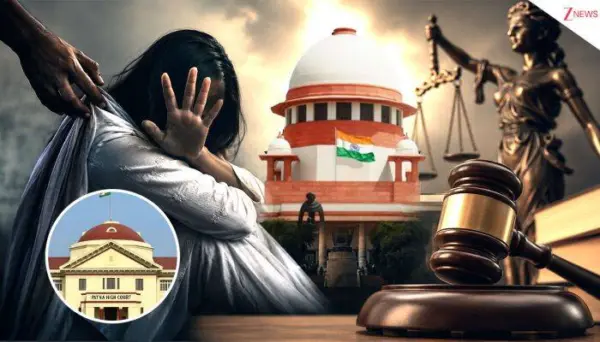
The Supreme Court has taken note of a Patna High Court order that ruled that removing a woman’s salwar and pressing her chest does not amount to an attempt to rape.
The issue was raised before the top court on July 14. The judges expressed concern. They also referred to a similar case that had earlier led to fresh guidelines on sexual offence cases.
Supreme Court hears challenge over Patna High Court order
During the hearing, Senior Advocate Shobha Gupta raised the Patna High Court order before the bench. The judges took the matter seriously as they were already hearing a similar case.
The bench was led by Chief Justice of India Surya Kant, along with Justice Joymalya Bagchi and Justice V Mohana. Advocate HS Phoolka also supported Gupta’s submission. Gupta told the court that similar rulings had continued despite an earlier warning from the Supreme Court. She said this had happened several times in recent months, according to Live Law.
Earlier Allahabad High Court ruling was set aside
The Patna High Court order is not the first to draw the Supreme Court’s attention. Earlier this year, the top court dealt with a similar controversy involving the Allahabad High Court.
In February, the Supreme Court took up on its own a High Court order that ruled grabbing a minor girl’s breasts, tearing her pyjama string, and trying to pull her under a culvert did not amount to an attempt to rape. The High Court treated the offence as a lesser crime under the Protection of Children from Sexual Offences (POCSO) Act.
The Supreme Court disagreed with that view and set aside the order. It also directed the National Judicial Academy to prepare fresh guidelines so judges handle sexual offence cases with greater care and sensitivity.
Supreme Court approves new guidelines for judges
While hearing the matter on July 14, the Supreme Court also approved a report prepared by an expert committee. The report gives clear guidance to judges on the words and expressions they should use and avoid while writing judgments in sexual offence cases.
The Chief Justice said, “research before writing judgments had clearly been lacking in such cases.”
To ensure the guidelines are followed nationwide, the court directed that every High Court and District Court use the handbook. It will be uploaded on court websites and shared with judicial academies, law universities, and law departments. Police departments have also been directed to follow the same language while preparing FIRs and charge sheets in such cases.