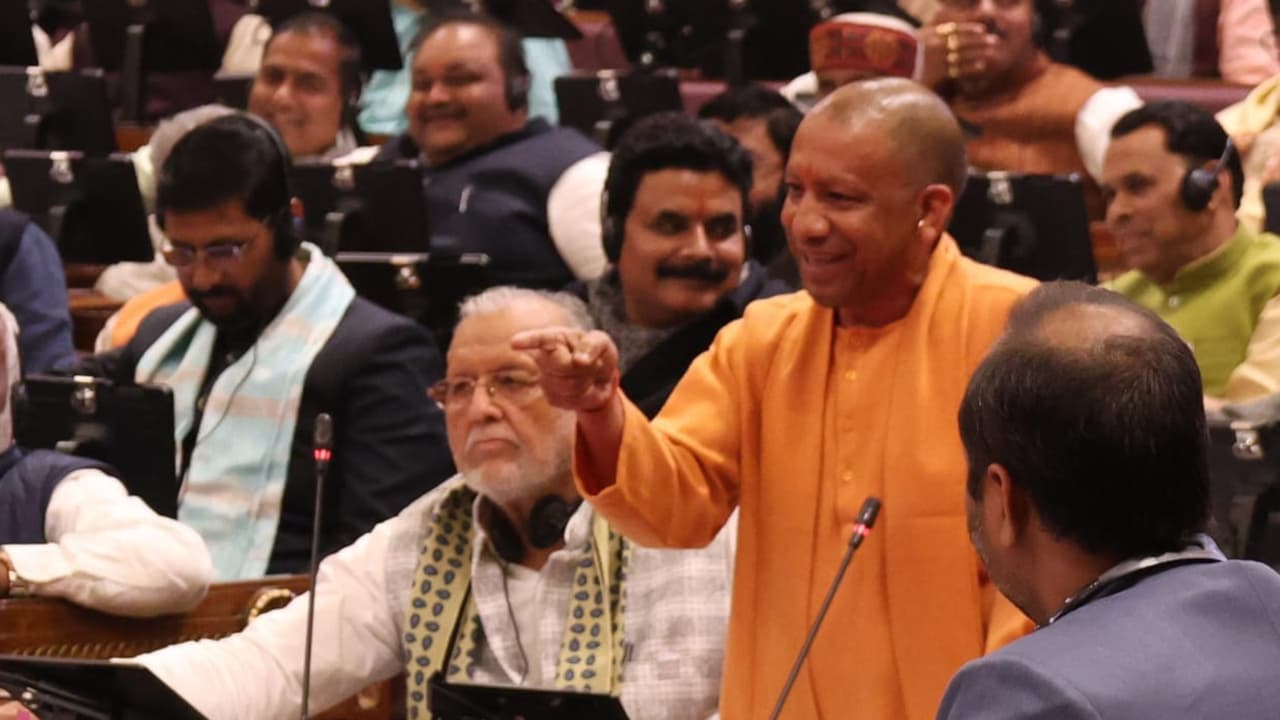
In the supplementary budget 2025-26, the Yogi government has given great priority to medical education and health services. Rs 423.80 crore has been allocated to strengthen medical colleges, super specialty hospitals and infrastructure.
Lucknow, 22 December. Yogi government has taken another big step towards changing the picture of health services in Uttar Pradesh. Keeping medical education and training at the center, a provision of ₹ 423.80 crore has been made in the supplementary budget for the financial year 2025-26. The government aims to strengthen the medical infrastructure, accelerate the establishment of new medical colleges and take the quality of treatment to new heights through super specialty services.
Preparation to strengthen medical infrastructure
Through the supplementary budget, additional resources have been made available to the major medical institutions of the state for salary, non-salary grants, professional and special services. Nehru Institute of Ophthalmology and Research, Sitapur has been given ₹ 1.74 crore for salary grant, Cancer Institute, Lucknow has been given an additional amount of ₹ 10 crore under various heads.
The government has also paid special attention to the major institutions of Lucknow. An additional requirement of ₹120 crore under various proposals to Sanjay Gandhi Postgraduate Institute of Medical Sciences (SGPGI) has been included in the budget. Center of Biomedical Research, Lucknow has been given a salary grant of ₹1 crore, Dr. Ram Manohar Lohia Institute of Medical Sciences has been given ₹20 crore and King George’s Medical University (KGMU) has been given a salary grant of ₹25 crore.
Also read: Bulandshahr NH-91 gangrape case: Justice received after 9 years, all 5 culprits sentenced to life imprisonment
Special emphasis on treatment of serious diseases
The government has also given priority to the treatment of serious and long-term diseases. An additional provision of ₹ 10 crore has been made for the purchase of medicines and chemicals under the free medical facility for hemophilia patients, which is expected to provide relief to thousands of patients in the state.
Medical colleges across the state got relief
In the supplementary budget, a large amount of money has also been allocated for government medical colleges in various districts of the state. Azamgarh Medical College has been given ₹50 lakh, Banda has been given ₹2.18 crore, Rural Institute of Medical Sciences located at Saifai (Etawah) has been given ₹73.09 lakh.
Apart from this, Agra Medical College has received an additional amount of ₹ 9.5 crore, Ganesh Shankar Vidyarthi Smarak Medical College Kanpur, ₹ 8.75 crore, Prayagraj ₹ 6 crore, Meerut ₹ 10.65 crore, Jhansi ₹ 3.85 crore and Gorakhpur ₹ 5.07 crore. Additional provision has also been made for the Cardiological Institute located in Kanpur under special services.
Promotion of new medical colleges and super specialty services
A salary grant of ₹ 2 crore has been made for the establishment of a super specialty children’s hospital and post graduate educational institute in Noida and a provision of ₹ 7 crore has been made for the proposed medical university in Greater Noida. Medical colleges in districts like Badaun, Firozabad, Basti, Ayodhya, Bahraich and Shahjahanpur have also been given additional funds worth crores of rupees under various heads.
Under Phase-Three, a provision of ₹ 45 crore has been made for the operation of autonomous state medical colleges. Along with this, JK Institute of Radiology and Cancer Research, Kanpur has also been given additional assistance for special services.
Government’s focus on improving the quality of health services
These provisions of the supplementary budget clearly indicate that the Yogi government is continuously working towards providing better and accessible health services to the general public by strengthening medical education, treatment facilities and super specialty services in the state. This budget will not only strengthen the existing institutions but will also play an important role in meeting the future health needs.
Also read: UP Vidhan Sabha: ‘Nothing to do with the poor…’ Questions raised on the health department, Brijesh Pathak’s answer