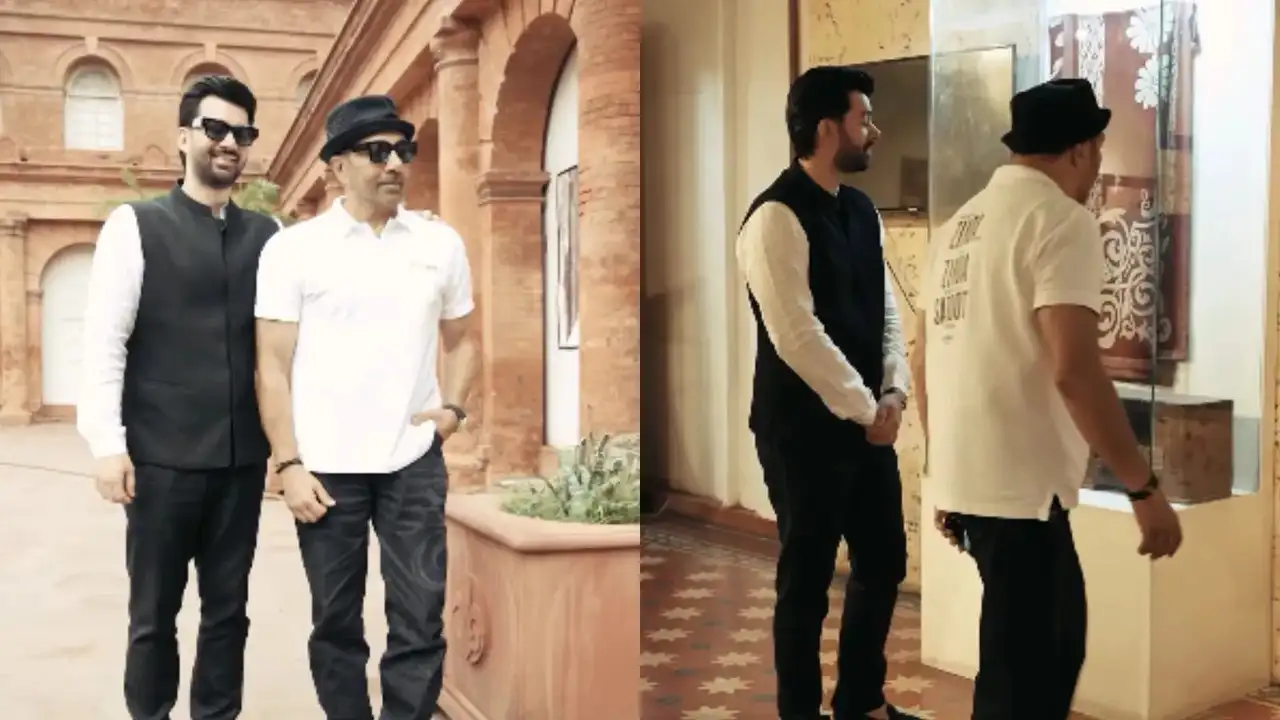
As Batwara 1947 gears up to revisit a significant chapter of India’s history, Sunny Deol and his son Karan Deol visited the Partition Museum in Amritsar. The visit offered them an opportunity to connect with the memories and stories preserved at the museum, many of which continue to resonate decades later. Sunny took to his Instagram to share glimpses of his experience, reflecting on the emotions surrounding Partition and the importance of remembering its impact. Without revealing much about the upcoming film, his note highlighted the enduring lessons of history, particularly the value of peace, humanity and togetherness.
Sunny and Karan Deol visit Partition Museum
Sunny Deol and son Karan Deol visited the Partition Museum in Amritsar as part of the promotions of their upcoming film Batwara 1947. The father-son duo explored the museum, taking a closer look at exhibits documenting the Partition and the stories of those affected by it. From viewing archival displays and maps to observing installations and artefacts, Sunny and Karan appeared deeply engaged as they walked through the museum. The visit gave them an opportunity to connect with the history and memories preserved at the venue ahead of the film’s release.
Reflecting on the experience, the actor spoke about the many stories of “pain, courage, separation and survival” preserved at the museum. He noted that walking through those memories makes one realise “how deeply Partition changed millions of lives forever.”
also stressed that while some chapters of history are painful, they must be remembered so that future generations understand the importance of “peace, humanity and togetherness.” He concluded his note with, “Waheguru sab te meher kare.”
About Batwara 1947
follows Sikander Mirza and his family, who are forced to leave Lucknow and migrate to Lahore amid the chaos of Partition. After being allotted a haveli, they discover that an elderly Hindu woman, Durgavati Devi, or Mai, continues to live there and refuses to leave her ancestral home. What begins as a dispute over the property soon becomes a deeper conflict shaped by fear, displacement and communal tensions.
 Sunny Deol in Batwara 1947
As pressure mounts on Mai to vacate the haveli, Sikander’s perspective begins to change. He finds himself standing up for her against those demanding her removal, as the story explores the larger themes of humanity and compassion beyond religious divisions. With violence and unrest escalating around them, Sikander’s decision to protect Mai becomes a powerful test of his beliefs and the values he chooses to uphold.