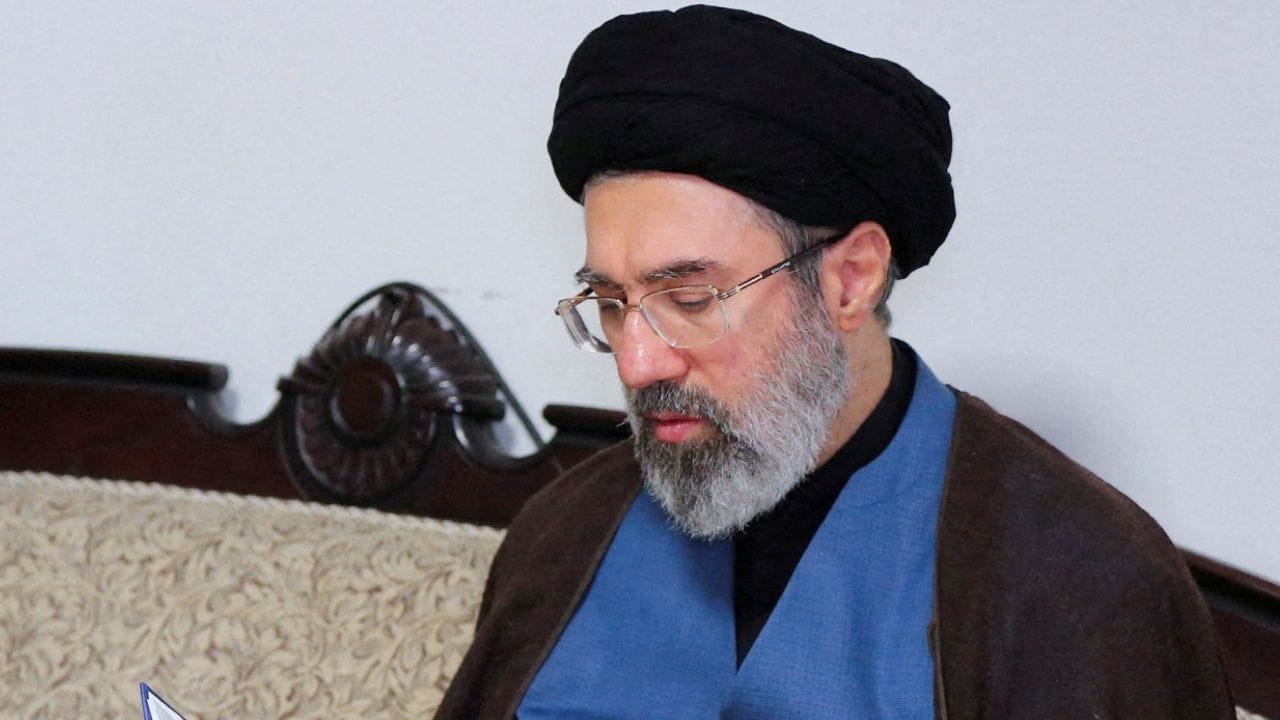
New Delhi: Iran’s new Supreme Leader and Ayatollah Ali Khamenei’s hardline son Mojtaba Khamenei delivered his first public message on Thursday amid the ongoing war in West Asia. In a statement broadcast through a news anchor on Iranian state television, Mojtaba said that the “Strait of Hormuz should stay closed and use as leverage against the enemy as a tool of pressure.”
He did not appear on camera during the broadcast. According to a report by Associated Press that cited an Israeli assessment, Mojtaba Khamenei may have suffered injuries during attacks carried out in the early days of the war.
Warning to Gulf states hosting US bases
In his message, Mojtaba issued a warning to Gulf countries that host American military bases. He called on them to shut down all US bases in the region.
He said attacks on those bases would continue if they remained operational. He also stated that Iran was targeting only US military facilities in West Asia.
Mojtaba claimed that the security guarantees given by Washington to its regional partners were unreliable. He said that the protection promised by the US is “nothing more than a lie.”
Vow to avenge killings in Minab attack
The new Iranian leader also promised retaliation for the deaths of several people during the early phase of the war. He referred to those killed as martyrs and included the children who died in the attack on a school in Minab.
The school incident occurred on the first day of the conflict. Mojtaba said Iran would pursue vengeance for those deaths and warned that the country would not step back.
No sign of de escalation
Mojtaba refused to give any signal of reducing tensions in the conflict. He said Iran would “obtain compensation” from its enemy for the losses it suffered.
According to him, Iran would either “take from its assets” or cause damage of the same scale in response.
He also expressed gratitude to members of the “resistance front” in Yemen, Lebanon and Iraq. He said Iran’s priority remained vengeance “until fully achieved.”
The conflict between Iran, the United States and Israel has now entered its second week. The crisis has triggered instability in global energy markets. The Strait of Hormuz runs along Iran’s coastline and handles nearly 20 per cent of the world’s oil supply. Any disruption in this route affects international oil shipments and raises concerns about energy security worldwide.