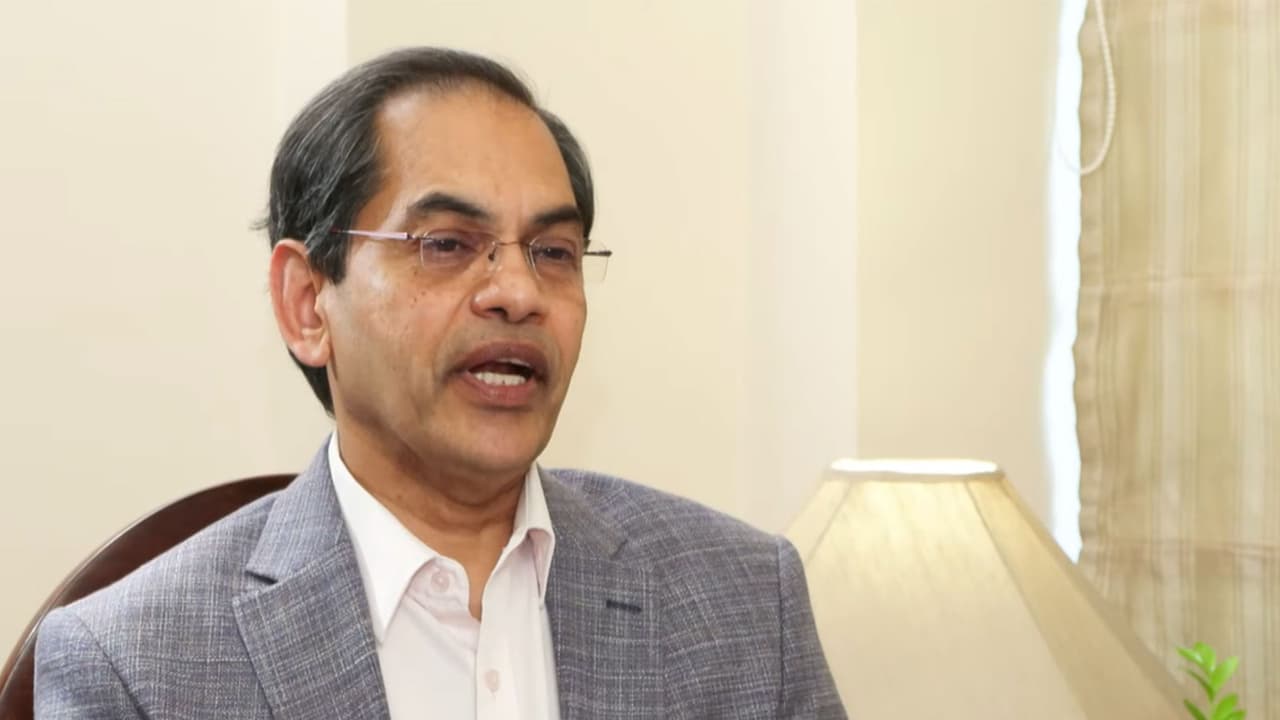
Ex-Indian Ambassador Sanjay Sudhir warns the Strait of Hormuz closure is a food security threat for 10M Indians in the Gulf. With Trump’s 48-hour ultimatum to Iran, the focus shifts from oil to a potential humanitarian crisis.
As the West Asia conflict reaches a critical flashpoint, former Indian Ambassador to the UAE Sanjay Sudhir has cautioned that the ongoing closure of the Strait of Hormuz is no longer just an energy crisis but a direct threat to the food security of millions. His comments come as U.S. President Donald Trump issued a final 48-hour ultimatum to Tehran, warning that “all hell will rain down” if the strategic shipping lane is not reopened and a deal reached.
Humanitarian Crisis Looms for Indian Diaspora
Speaking with ANI, Sudhir highlighted a more immediate humanitarian concern: the survival of the 10 million Indians living in the Gulf while global markets remain fixated on oil prices. Currently, the closure of the Strait of Hormuz has halted the primary maritime route for food exports. Sudhir noted that while cargo flights are being used, they are not a “sustainable solution” for feeding millions.
“We have about 10 million Indians living in that part of the world. So, India is one of the main sources of food for the entire GCC, also our 10 million Indians. How does the food get there? It’s through the Strait of Hormuz. So, while the focus might be on energy, we have to feed our people. Of course, there are cargo flights, but it’s not a sustainable solution. The Strait of Hormuz has to open,” he said.
India’s Diplomatic Balancing Act
The former diplomat noted that traditional blocs like the G7, NATO, or BRICS have limited leverage in this specific conflict due to the “nature of the combatants.” For India, the priority remains a “proactive diplomacy” focused on two fronts, mitigating the “disproportionate hit” to LPG supplies and ensuring the 10 million-strong Indian diaspora in the Gulf does not face a food shortage.
“So, whether it’s G7 countries or NATO countries or BRICS countries or India, there are limits to what they can do because the nature of the combatants in this war is of a very different nature altogether. The less said, the better. So India… what India can do only is to safeguard its energy security, the interests of its 10 million people living in that part of the world. I think that it is doing very well,” he said.
Trump Issues 48-Hour Ultimatum to Tehran
With the 48-hour clock ticking, the region stands on the precipice of an all-out military confrontation that could permanently alter the global economic and political landscape.
On Saturday, President Trump took to social media to issue a final warning to the Iranian government: Iran has 48 hours (expiring Monday, April 6) to “make a deal” or unilaterally reopen the Strait. Failure to comply will result in what Trump described as “all hell” raining down, likely referring to the resumption of strikes on Iran’s energy and command infrastructure.
Ex-Envoy on Regional ‘Uncertainty’ and Indian Neutrality
Sudhir characterised the regional situation with one word: uncertainty. He addressed the recent assassination of Iran’s Supreme Leader Ayatollah Ali Khamenei in joint U.S.-Israeli strikes on February 28, 2026, stating that India would not have sided with the military action.
“I don’t think India would have sided with Israel on the killing of Ayatollah Khamenei because we were there to convey our condolences. You know, as I said, it’s not our war. It’s not a war of our making. It’s something which we have to deal with. We have to deal with the situation for the advantage of our people, to meet our interests and all. So for that, we have been engaging in very proactive diplomacy. The thing is, for any country, there are limits to what they can do, whether it’s India or the UK or Germany,” he said
Global Calls for De-escalation
The escalating rhetoric has sparked global alarm. Mohamed ElBaradei, former Director General of the IAEA, issued an “urgent appeal” on X, imploring Gulf leaders and the United Nations to intervene before the region is “turned into a ball of fire.” ElBaradei questioned the efficacy of international institutions, calling on regional neighbours to act before the 48-hour window expires. (ANI)
(Except for the headline, this story has not been edited by Asianet Newsable English staff and is published from a syndicated feed.)