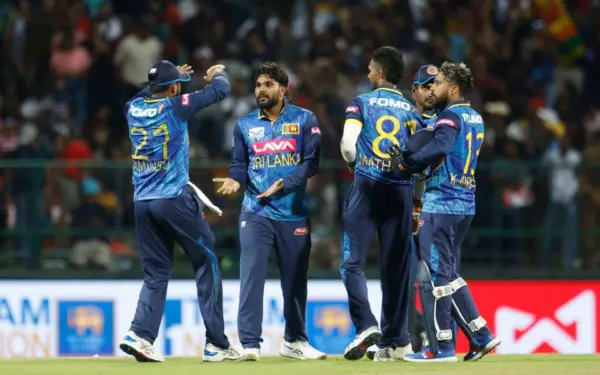
Sri Lanka have been handed a 15% match fee fine following a slow over-rate offence in the first ODI against England, played at Chester-le-Street on Tuesday, September 22, 2026. The penalty was triggered after the side was found to be three overs behind the required rate once all permitted time deductions had been factored in.
Match referee Jeff Crowe, a member of the Emirates ICC Elite Panel of Match Referees, determined that a breach had occurred and brought the charge against the Sri Lanka team. Captain Kusal Mendis acknowledged the offence and accepted the proposed sanction without contest, which meant the matter was settled without convening a formal disciplinary hearing.
The four match officials who levelled the charge were on-field umpires Wayne Knights and Graham Lloyd, third umpire Adrian Holdstock and fourth umpire James Middlebrook. Their collective involvement in flagging the breach is consistent with the standard procedure set out under the ICC Code of Conduct when a slow over-rate violation is identified during an international fixture.
Which ICC regulation was applied and how is the fine calculated?
The sanction was imposed under Article 2.22 of the ICC Code of Conduct for Players and Player Support Personnel. This regulation prescribes a fixed penalty rate of 5% of the match fee for every over by which a team falls short of completing its innings within the allotted time. Because Sri Lanka were three overs short after all approved allowances were applied, the individual fines for the players involved accumulated to a combined total of 15%.
The time allowances built into the calculation cover specific stoppages that are beyond a team’s control, such as injuries, weather interruptions and other delays attributable to circumstances outside the fielding side’s influence. Only after those deductions are made is the remaining shortfall used to determine the number of overs for which a penalty applies. Sri Lanka were still three overs adrift even after those concessions, confirming the breach and leaving no scope to reduce the sanction further.
What does Mendis accepting the charge mean for the process?
When a captain or player accepts a charge under the ICC Code of Conduct, the governing body’s regulations allow the matter to be closed without a formal hearing. Mendis exercised that option on behalf of the Sri Lanka side, and the case was concluded on the same day as the match at Chester-le-Street.
This route is available to any player or team official who does not wish to contest the charge. Accepting the sanction does not carry any additional demerit points on the ICC’s disciplinary record beyond what Article 2.22 specifically prescribes for a slow over-rate offence. The fine itself is deducted from the match fees of the players who were part of the playing group for that fixture, meaning every member of the Sri Lanka XI bears a share of the financial penalty rather than the captain alone absorbing the full cost.