Sunrisers Hyderabad walked out of New Chandigarh with 219 on the board and still lost by six wickets. That alone says enough about the kind of evening this was.
Their batting had enough explosion to put Punjab Kings under pressure, but their bowling could not hold the line. In a chase that was ripped open early and finished with seven balls to spare, SRH were left searching for positives in a game that mostly exposed their softness with the ball. One of those positives came from the least expensive corner of their squad.
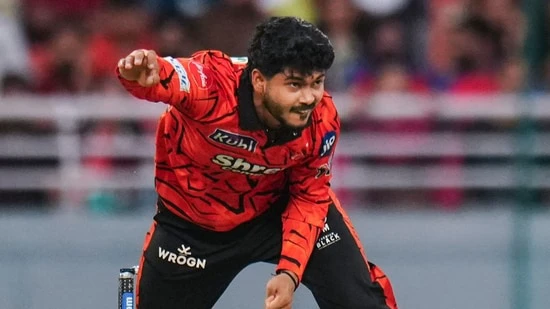
Shivang Kumar, whose per-match cost in SRH’s auction economy works out to just ₹2.14 lakh, ended up being the franchise’s biggest positive return on the night. In a team packed with bigger names and heavier price tags, it was the low-cost left-arm wrist-spinner who gave SRH their best return on investment, both in pure profit and in times-of-return terms. In a game where Punjab chased down 220 to reach 223/4 in 18.5 overs, Shivang’s 4-0-33-3 was not just statistically useful. It was the only SRH bowling spell that seriously tried to drag the match back from the edge.
This is not a story about a cheap player padding his numbers in a dead game. This is about a ₹2.14 lakh per-match investment producing the biggest positive return for SRH in the one discipline where they were being outplayed. On the monetary layer, Shivang returned 48.51 times his match cost, comfortably the best multiple among SRH players in this match.
A spell that mattered even when the game was slipping away
The raw figures say 3 for 33. The match context says more.
Punjab were not building a chase. They were detonating one. Priyansh Arya and Prabhsimran Singh stormed through the powerplay, and PBKS had already flown to 99 before Shivang struck. That matters because wickets in a chase of 220 are not equal. A wicket at 40 for 2 is useful. A wicket at 99 for 1, when one batter has already scorched 57 off 20, is an emergency intervention.
Shivang’s first wicket was Priyansh Arya, caught for 57 off 20. It came immediately after being hit for six. That sequence alone told its own story. SRH were on the ropes, and Shivang still found a response ball. Instead of allowing PBKS to keep surfing the powerplay wave into the middle overs, he removed the batter who had turned the chase into a sprint.
Then he got Prabhsimran Singh for 51 off 25. This may have been the more important wicket in sequence, because it prevented PBKS from carrying one set opener deep into the chase. Remove one aggressor, and a batting side can still reset around the other. Remove both, and a window opens. Shivang created that window for SRH by dismissing both openers within a short span.
His third wicket, Cooper Connolly for 11 off 13, was less glamorous but still significant. Connolly was helping PBKS move from opening carnage into middle-overs control. By taking him out, Shivang briefly made the chase interesting. At that point, he had personally pushed PBKS from a position of complete cruise control into at least a conversation about pressure.
The bigger story is what SRH did not get from the rest
This is where Shivang’s value grows. In a match when Punjab still got home comfortably, SRH needed support bowling around him. They did not get enough of it. Shivang’s economy was 8.25 in a match where 442 runs were scored. In that landscape, 33 in four overs while also taking three wickets is proper control. It is not merely acceptable. It is match-relevant.
That is why his ROI number is not some spreadsheet trick. It reflects a larger cricket truth. When a side loses despite scoring 219, the bowlers who can both strike and contain become disproportionately valuable. Shivang did both better than any other SRH bowler on the night. He was not a passenger picking up a late wicket or two. He was the one bowler who forced Punjab to actually recalculate.
And that is where the contrast bites. SRH have invested in star power, established reputations and big-match experience, but their biggest positive from this game came from a player whose per-match cost barely nudges ₹2.14 lakh. In franchise cricket, that is the sort of number teams dream about. A tiny cost base, a three-wicket spell, and a return profile that outshines far bigger investments.
Cheap value is only useful if the team recognises it
The lesson for SRH is not just what Shivang delivered. It is that performances like this need to be understood properly.
A side that is leaking runs and struggling to control momentum cannot afford to treat a spell like 3 for 33 in a 220 chase as a footnote. This was not a cosmetic performance in a lost cause. It was a serious contribution in the hardest possible conditions for a bowler. Shivang removed the two men who broke the chase open and then struck again during the transition. There are not many more meaningful ways to influence a run-fest.
SRH lost the match, and that will dominate the headlines. But beneath the damage sits one very sharp number: ₹2.14 lakh. On a night when much of SRH’s bowling investment went up in smoke, that tiny per-match outlay turned into their biggest positive. In a tournament where squads are constantly judged by price, pedigree and promise, Shivang Kumar delivered the one thing franchises value most: returns that punch absurdly above cost.