Spotify added 6 million premium subscribers in the third quarter, bringing the total to 306 million and beating its guidance.
- CFO Christian Luiga said AI investments have accelerated feature releases while headcount remained flat.
- Advertising revenue grew 9% at constant currency, compared with 3% growth in each of the first two quarters.
- For the Q4, Spotify forecast operating income of $918.4 million and 316 million premium subscribers.
Spotify (SPOT) added 6 million paying subscribers to reach 306 million in the third quarter, and its co-CEO Gustav Söderström said during the earnings call that AI agents are not a threat to the company. According to him, Spotify is now an agent itself, and that other companies want to use the AI tools it built.
“Spotify is now an agent that you can not only click on in our app, but talk to, ask questions of, and instruct,” he said. “We can do things today that no other media services can do.” Söderström added that tens of millions of people now speak to Spotify in English.
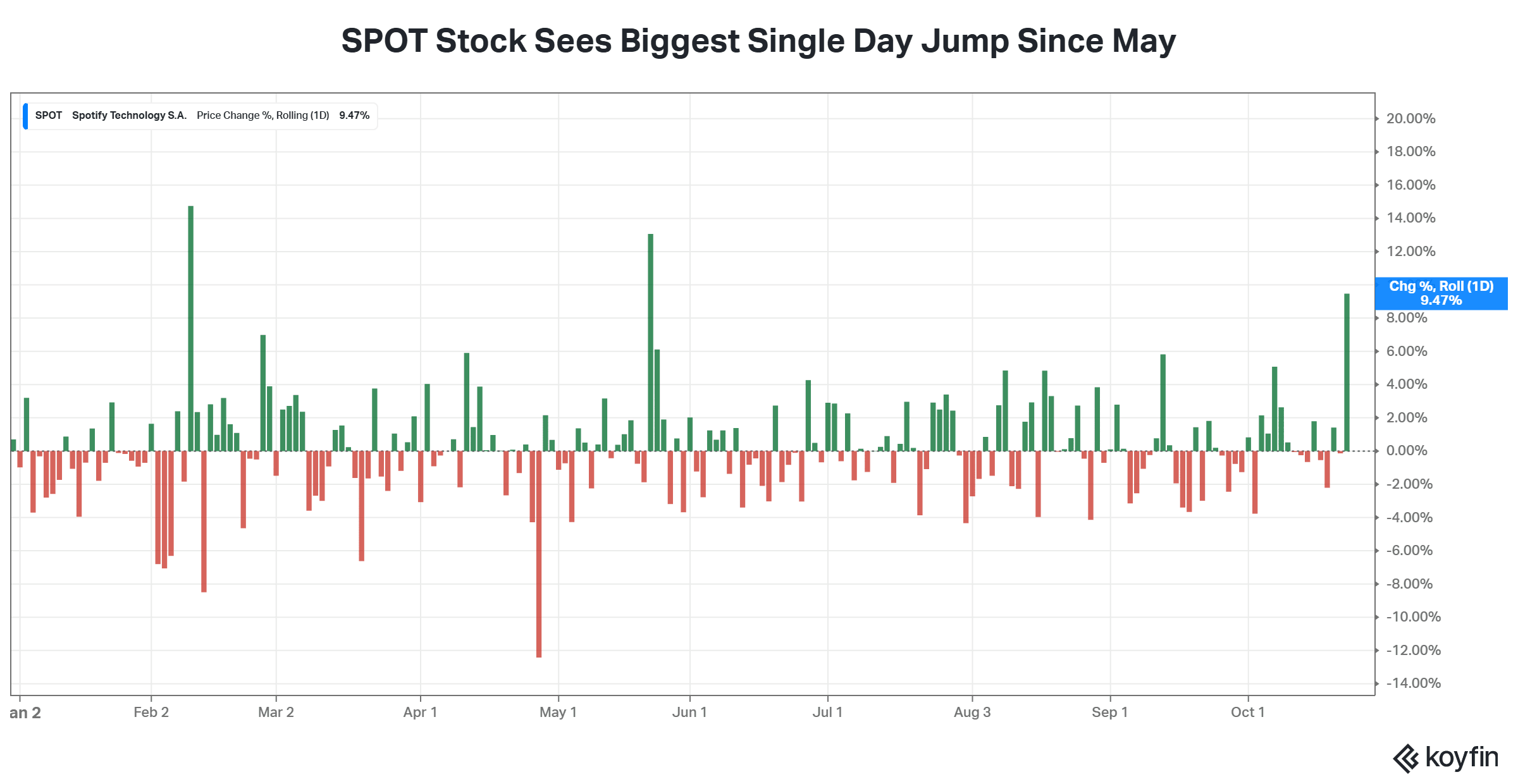
SPOT stock rose as much over 10% in morning trade, on track to hit a 10-month high, and was among the top trending tickers on Stocktwits at the time of writing. If gains hold, this could also be the stock’s biggest single-day jump since May.
The rally comes despite Spotify’s third quarter (Q3) results missing Wall Street’s expectations on revenue and earnings.
Spotify Sees Opportunity In AI Tools
Söderström said Spotify’s AI capabilities could become a source of value beyond its own platform, with other companies expressing interest in using the technology.
He called potential revenue from licensing or sharing the technology as “option value,” rather than providing a firm financial forecast. The Co-CEO added that Spotify has already invested in developing its AI tools, and making them available to other companies could help spread those costs across a larger pool of developers.
“This is a way for us to amortize those costs more efficiently. I’m not going to give any more guidance on this right now,” Söderström said.
Spotify Expects Expense Growth To Moderate
Chief Financial Officer Christian Luiga said Spotify’s AI investments are helping it release features faster without increasing headcount.
“On AI, our investments have accelerated feature shipping, while keeping headcount flat.”
– Christian Luiga, CFO, Spotify
Söderström added that the benefits are becoming visible in the products users experience. “We are seeing significant acceleration in end-user products,” he said.
The investments have nevertheless contributed to higher costs. Operating expenses rose 26% in the third quarter, driven mainly by marketing, cloud infrastructure and AI spending.
Co-CEO Alex Norström said the increase was consistent with the company’s earlier outlook, which called for operating expense growth to peak in Q3 before moderating from the fourth quarter (Q4) onward.
Luiga said the moderation is expected to continue into 2027.
Advertising Growth Picks Up, User Growth Slows
Spotify’s advertising business showed signs of improvement. Ad revenue grew 9% at constant currency in Q3, up from 3% in each of the first two quarters. “Further, our automated channels continue to scale, and sponsorship products are growing, particularly in podcasts,” Luiga said.
He said Spotify expects advertising to move toward double-digit growth in Q4, supported by automated biddable sales and podcasts. Automated biddable sales now account for 40%, according to Luiga.
Overall, advertising contributes about 10% of Spotify’s revenue. Luiga said the company sees room for improvement in the business, noting that sustained growth of 10% or more would be preferable to the low-single-digit pace seen earlier in the year.
User growth, meanwhile, is expected to slow from last year’s record pace. Spotify forecast 818 million monthly active users for Q4, an increase of 30 million. That would be below the 38 million users it added in the same quarter of last year, when it launched a new free tier.
Music Label Negotiations Loom
Spotify is also approaching another round of negotiations with major music labels. An analyst noted that the company’s agreements with Universal Music Group and Warner Music Group reach their two-year mark in the first quarter of 2027.
“This is a recurring two-year rhythm that we’ve more or less had forever. Now we’re coming up on another one,” said Luiga. “And we’re excited. We’re working with our partners. The relationship is just improving, and it’s improving primarily because our interests are aligned.”
Spotify Q3 Earnings Recap
Spotify’s reported Q3 revenue of €4.69 million ($5.57 billion), marginally below the expected $5.6 billion as per Koyfin. Earnings per share (EPS) came in at $2.82, missing Wall Street forecast of $3.19.
Premium subscribers rose 9% to 306 million, above guidance of 305 million. Operating income was $752.6 million, against guidance of $750.4 million. For the Q4, Spotify forecast operating income of $918.4 million and 316 million premium subscribers.
How Is Retail Feeling About SPOT Stock?
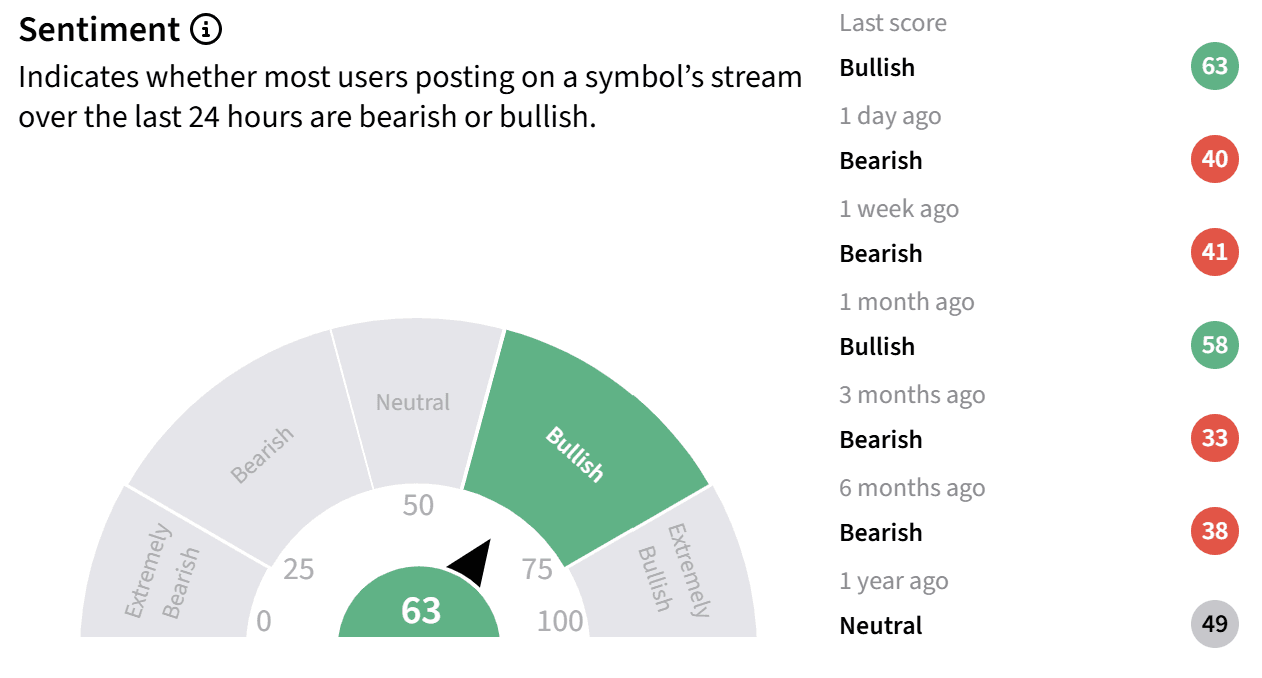
On Stocktwits, retail sentiment around Spotify flipped to ‘bullish’ from ‘bearish’ territory over the past day. Chatter increased to ‘high’ from ‘normal’ levels. Platform data showed a 300% uptick in message volume.
One retail trader pointed to the improvement in advertising growth, noting that the 3% pace recorded in each of the first two quarters had raised concerns about the business.
View this Stocktwits post
SPOT stock has traded flat this year and fallen around 15% in the last 12 months.
(Conversion rate: €1 = $1.12)<
Read also: Nvidia’s Jensen Huang Wants AI Chips To Be A ‘Financeable Asset,’ Says Neocloud Demand Is ‘Off The Charts’
For updates and corrections, email newsroom[at]stocktwits[dot]com.<