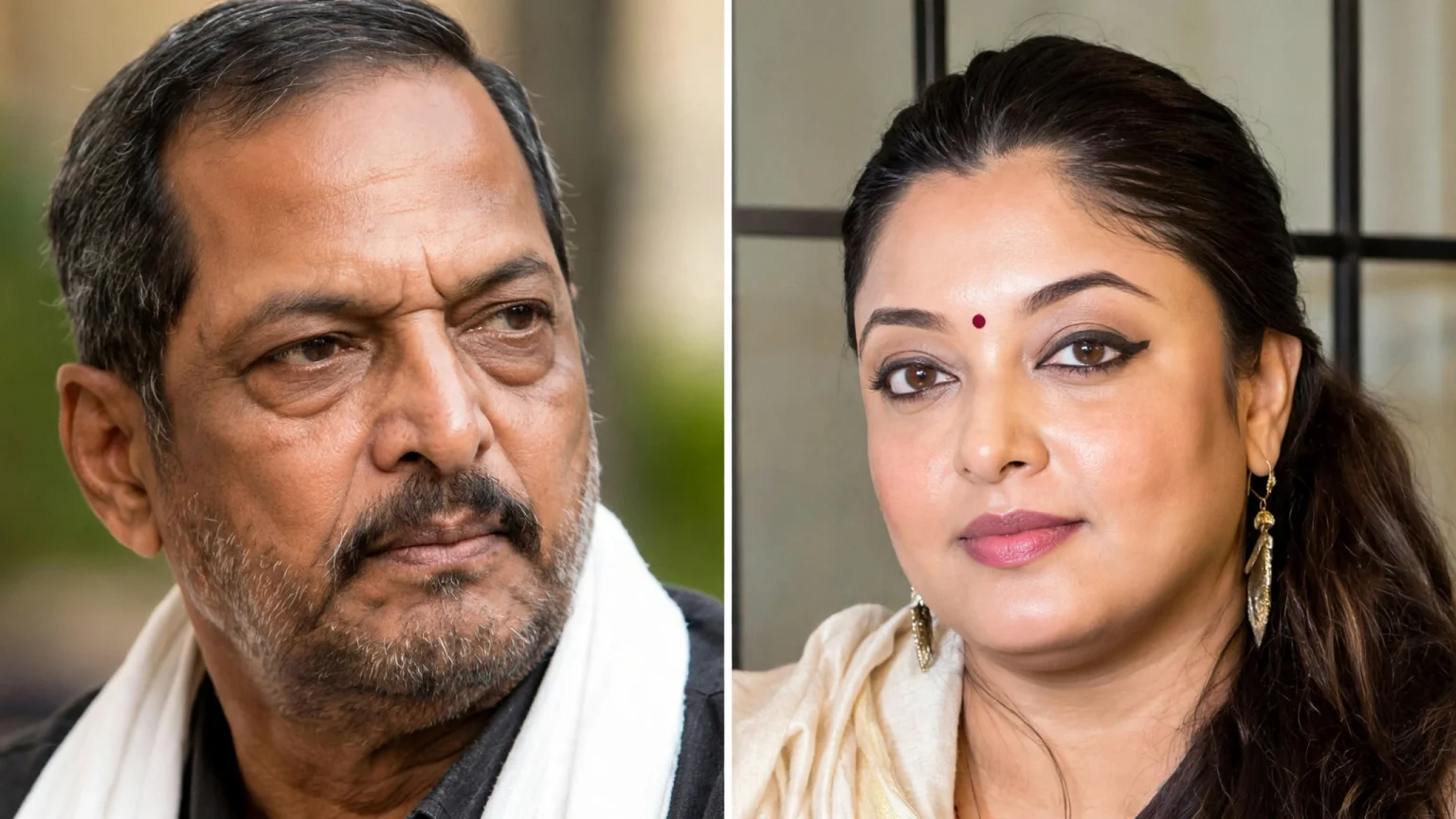
Singer Sona Mohapatra has voiced support for actress Tanushree Dutta after she faced online criticism over her remarks following reports of veteran actor Nana Patekar’s death. In a post on X, Sona questioned why Dutta was being targeted for speaking about her past experiences, arguing that a person’s death should not automatically silence those who have previously alleged wrongdoing. Her comments have brought renewed attention to the allegations Dutta made during India’s #MeToo movement and the broader debate about accountability, public memory and the treatment of people who speak out.
Sona Questions the Criticism Directed at Tanushree
Responding to the discussion surrounding Dutta’s remarks, Sona wrote that dignity should extend to both the deceased and the living. She questioned whether death should prevent uncomfortable truths from being discussed and whether a person’s passing automatically changes how their past actions are viewed.
“Death should be with dignity. But so should the living,” she wrote, raising questions about why people are expected to avoid difficult conversations after someone dies.
Sona acknowledged that people may wish to pay tribute to a veteran actor following reports of his death. However, she said she was troubled by the criticism directed at Dutta, who had publicly accused Patekar of sexual harassment years earlier.
The singer also challenged the expectation that Dutta should set aside her account of the alleged incident simply because the actor was being remembered by colleagues and admirers. Her comments focused on the distinction between mourning a public figure and allowing people who have raised allegations to speak about their experiences.
Sona Recalls the Challenges Dutta Described
In her post, Sona referred to the difficulties Dutta has said she experienced after speaking publicly about the alleged harassment. Dutta’s allegations against Patekar date back to the filming of the 2008 movie Horn ‘OK’ Pleassss and became widely discussed during the #MeToo movement in 2018.
Patekar denied the allegations. The dispute became a prominent part of the national conversation about workplace harassment, power dynamics and the professional consequences that people may face after making accusations.
Sona argued that Dutta had already endured public scrutiny and professional difficulties after speaking about her experience. She questioned why the actress was now being expected to disregard that history or change how she describes it.
The singer’s intervention did not establish the allegations as proven facts. Rather, it defended Dutta’s ability to speak about her own experiences while public discussion surrounding Patekar’s reported death continued.
Singer Says Charity Should Not End Questions About Conduct
Sona also responded to a social media user who reportedly argued that Patekar had donated a significant portion of his earnings to support farmers and people in need. The user questioned why only one woman had raised allegations against the actor.
In response, Sona challenged the idea that charitable work should prevent questions about alleged misconduct. Her argument was that public contributions and personal conduct should not automatically be treated as interchangeable matters.
The exchange highlighted a recurring tension in discussions involving prominent public figures: whether their professional achievements or philanthropic activities should influence how allegations against them are considered. Sona’s comments suggested that neither public admiration nor charitable work should, by itself, settle questions about a person’s behaviour.
At the same time, allegations require careful reporting and should not be presented as established findings without supporting evidence. Patekar’s denial remains relevant context in coverage of the dispute.
Tanushree’s Earlier Remarks Renew Public Discussion
Dutta recently drew criticism after making remarks about Patekar during a conversation with followers on Instagram Live. She questioned reports surrounding his death and referred to the investigations into the deaths of Sushant Singh Rajput and Disha Salian.
Her comments included speculation about whether Patekar’s reported death could leave questions unresolved. No evidence was provided in the material supplied to establish a connection between Patekar and those cases, and her statements should be understood as her personal claims rather than verified facts.
Following the backlash, Dutta shared a longer video in which she spoke about the experiences she says affected her career, health and personal life. She also questioned why people should be expected to forget allegations simply because the person concerned has died.
According to the supplied report, Patekar reportedly died on October 8 at the age of 75 following a cardiac arrest. Those details have not been independently verified for this article.
Sona’s response has shifted attention towards the treatment of people who speak publicly about alleged harassment. Her central argument is that remembering a public figure and listening to those who have accused them of wrongdoing need not be mutually exclusive.