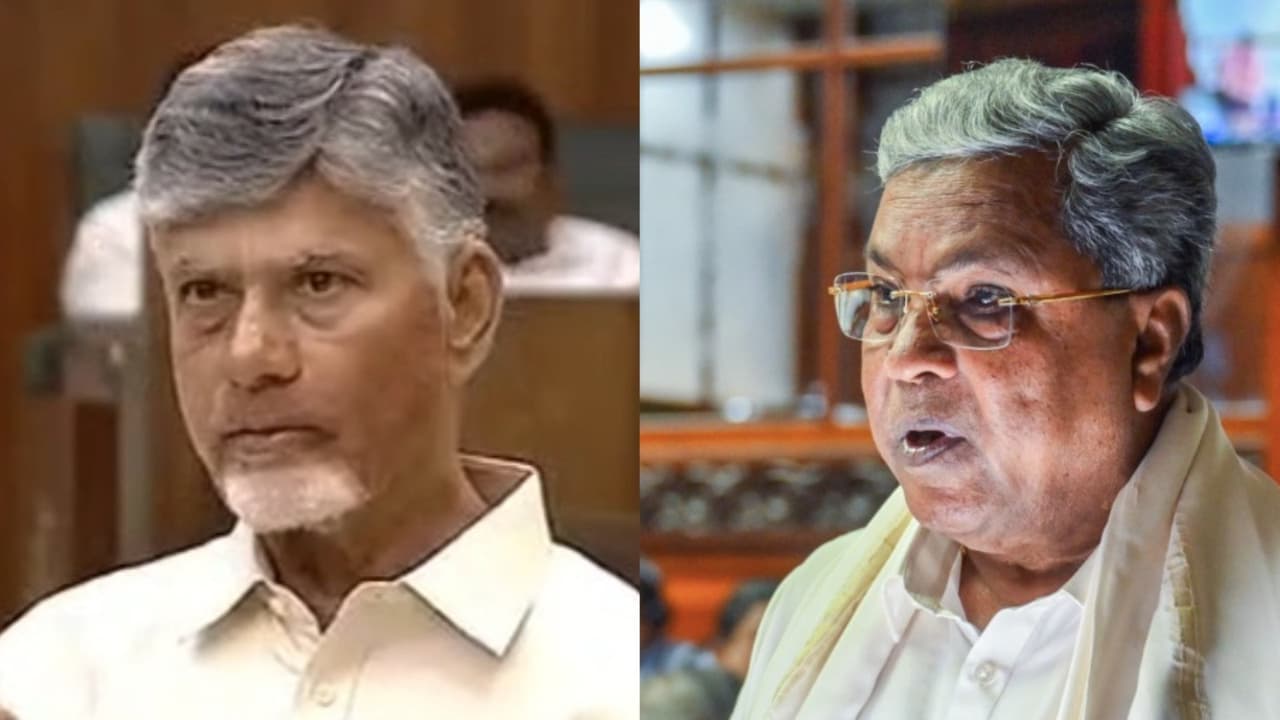
Karnataka and Andhra Pradesh are mulling social media restrictions for children. CM Siddaramaiah announced a ban for under-16s, while AP is considering a ban for those under 13 or 16, reflecting a growing global trend to curb screen time.
Karnataka, AP Mull Social Media Ban for Children
Amid growing concerns over the impact of excessive screen time on young minds, the governments of Karnataka and Andhra Pradesh are considering restrictions on social media access for children. While Karnataka Chief Minister Siddaramaiah announced that social media will be banned for children below 16 years in the state, Andhra Pradesh Chief Minister N Chandrababu Naidu said his government is examining a similar move, with discussions underway on whether the age limit should be set at 13 or extended to 16.
These state-level moves reflect a 2026 global trend. Several nations have recently moved toward similar restrictions: Australia implemented a total under-16 ban in late 2025; France & Greece introduced bans for those under 15, and Spain mandated age verification for minors under 16.
While presenting the ₹4,48,004 crore State Budget in the Assembly in Bengaluru, Siddaramaiah announced that social media will be banned for children under the age of 16 in the state. Explaining the move, he said the government aims to curb the growing impact of excessive mobile usage among children.
Meanwhile, in neighbouring Andhra Pradesh, N Chandrababu Naidu said the state government is considering restricting access to social media for children below 13 years of age, though discussions are still underway on whether the cutoff should be 13 or 16. “We have received a suggestion to ban social media for children aged below 13 years. Definitely, we will ensure there will be no access to the children below 13 years of age in the coming 90 days,” Naidu said in the Assembly. He added that the final decision will depend on broader consultations. “Discussion is going on whether it should be 13 years or 16 years. If everyone agrees on it, we will decide.”
Political Reactions and Implementation Challenges
Leaders from the ruling Congress in Karnataka backed the proposed restrictions, saying families across the country are struggling with the impact of unregulated social media use among children. Congress leader Rizwan Arshad said the issue affects many households and requires a structured policy response. “Social media usage by young children is a social issue that every family is facing. If children get exposed to a lot of unfiltered information through social media, that affects their mental and emotional capabilities,” he said.
Arshad added that the government must consult society while framing the policy. “The government needs to take society into confidence and formulate a policy for implementation. We need to sit and deliberate on this issue.”
Karnataka minister Santosh Lad also welcomed the proposal but acknowledged challenges in implementing such a restriction. “I welcome it, but implementation is always a challenge. The involvement of society is required in this. It is difficult to monitor everyone,” Lad said, adding that the move should receive broader support. “I don’t understand why they are protesting against it. They should welcome it instead,” he added.
Karnataka Budget: BJP Criticises Financial Management
However, the Opposition Bharatiya Janata Party criticised the broader state budget presented by Siddaramaiah, accusing the government of poor financial management. BJP MP and former chief minister Basavaraj Bommai called the budget disappointing and alleged that the state’s finances were under stress. “This is the most disappointing budget. Despite taking ₹1,32,000 crore loan and imposing an additional burden of ₹25,000 crore tax, there is a deficit of ₹32,000 crore,” Bommai said. He added that the financial situation suggested, “There is no money for development.”
In another statement, Bommai described the financial plan as “a directionless, zero-progress budget which will take the state to the brink of debt.”
Siddaramaiah Defends Budget Amid Criticism
Responding to the criticism, Siddaramaiah said the opposition’s remarks were politically motivated. “BJP is reacting politically. They are opposing it politically,” the chief minister said, defending the fiscal planning of his government.
Budget Highlights: Tech, Infrastructure, and Welfare
Meanwhile, the ₹4.48 lakh crore budget presented by Siddaramaiah, his 17th as chief minister, focuses heavily on technology, infrastructure development and social welfare programmes. The chief minister said the size of the budget represents a 9.4 per cent increase over the previous year. He also noted that changes in GST rates have affected the state’s revenue. “Even though we have been hit by GST, we are number two in the country in GST collection. We have lost about ₹10,000 crore in taxes due to this,” he said.
Highlighting welfare initiatives, Siddaramaiah said the government has allocated significant funds for its flagship guarantee schemes. “We are spending ₹51,000 crore on all guarantee schemes. We have spent ₹1,21,598 crore on guarantees,” he said, adding that the government has maintained fiscal discipline. The chief minister said the state’s total debt would be around ₹8.24 lakh crore, which remains within permissible limits. “It will be 24.94 per cent, so we are within the limit,” he said.
Key Announcements and Initiatives
Among the major infrastructure announcements, the government approved a ₹40,000 crore North-South and East-West corridor network in Bengaluru. The North-South corridor will connect Hebbal Junction to HSR Layout-Silk Board Junction, while the East-West corridor will run from KR Puram to Mysore Road. In the first phase, tenders have been invited for a 17-km North-South corridor project estimated at ₹17,780 crore.
The budget also proposes the creation of a “Bangalore Robotics and AI Innovation Zone” in collaboration with the Indian Space Research Organisation (ISRO) and the Indian Institute of Science (IIS) to promote artificial intelligence and robotics research.
Other announcements include the construction of a 450-bed multi-speciality hospital in Karwar, new peripheral cancer centres in Mysuru and Tumakuru, a trauma care centre in Raichur, and infrastructure expansion in Bengaluru, including tunnel and elevated roads. The government also proposed enacting the Rohith Vemula Act to prevent caste-based discrimination against students in educational institutions.
As discussions continue over children’s digital safety and the economic direction of the state, the proposals from Karnataka and Andhra Pradesh have sparked a broader national conversation on regulating social media access for minors while balancing technological growth with social responsibility.
(Except for the headline, this story has not been edited by Asianet Newsable English staff and is published from a syndicated feed.)