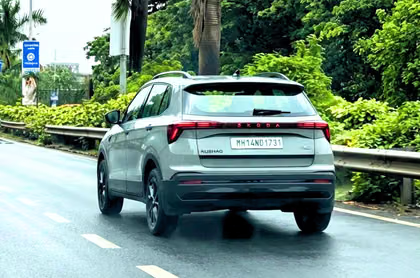
In March 2026, launched the updated and one of the biggest updates was the introduction of a new 8-speed torque converter (automatic) with the smaller 1.0-litre turbo petrol engine, replacing the older 6-speed automatic. We’ve put the 2026 Kushaq 1.0L 8AT through our real-world fuel efficiency tests to see how it fares.
Skoda Kushaq
- Gets an aggressive auto stop-start system
- Weighs 1300kg
- Claimed efficiency is 19.09kpl, 1kpl more than 1.0 6AT
Skoda Kushaq 1.0L automatic mileage explained
Powering the Kushaq is the same 1.0-litre three cylinder direct injection turbo-petrol engine that produces 115hp and 178Nm. With the addition of a new 8-speed automatic gearbox, the claimed efficiency has gone up by 1kpl, to 19.09kpl.
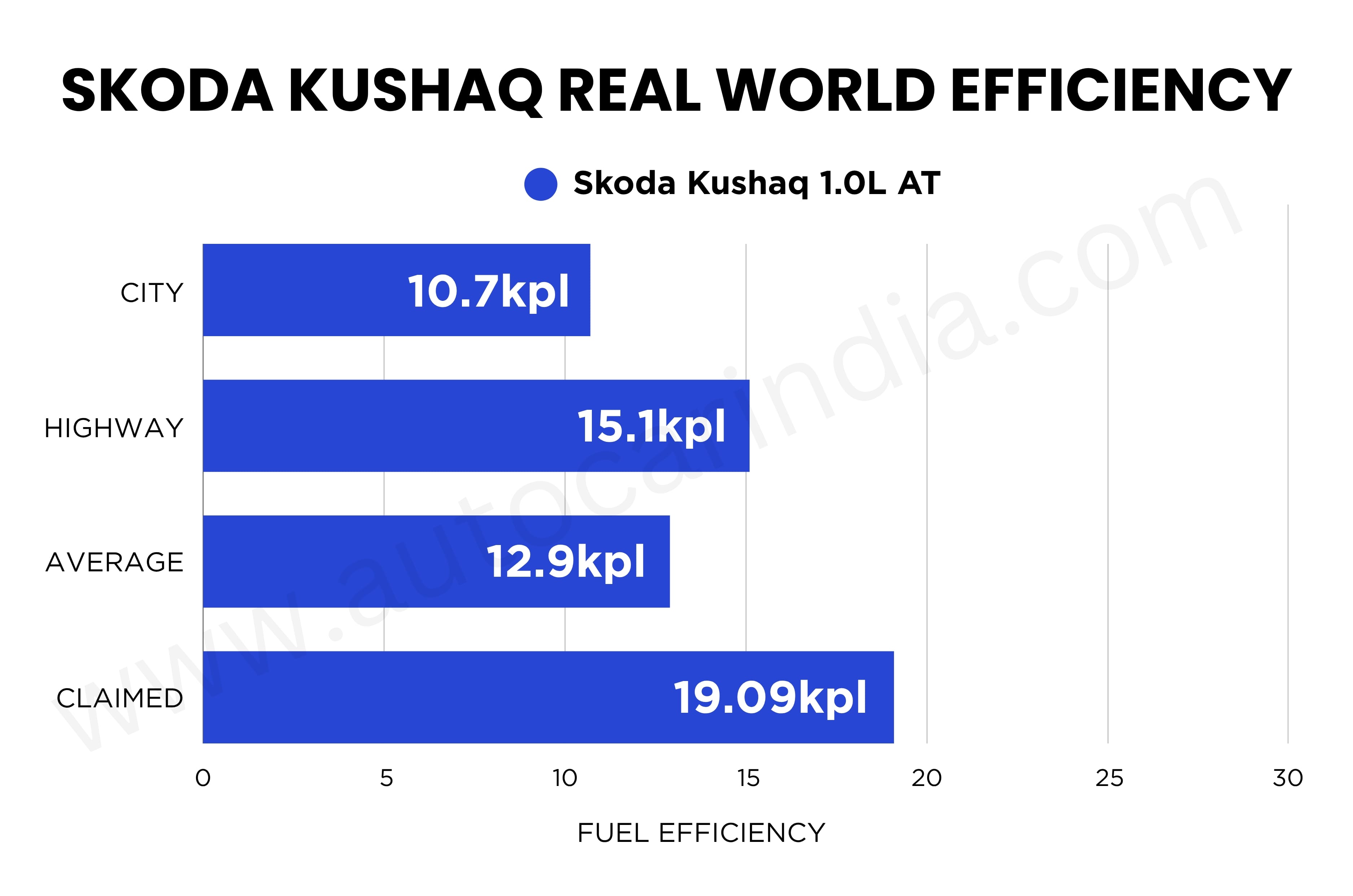
In our real world tests, the Kushaq returned 10.7kpl in the city and 15.1kpl on the highway, bringing its overall average efficiency to 12.9kpl. Interestingly, the updated Kushaq is 1.8kpl and 2.7kpl, more efficient than the older Kushaq with the 6-speed automatic gearbox, in the city and highway respectively, despite being 14kg heavier.

Notably, like the outgoing version, the Kushaq 1.0 8AT doesn’t get drive modes, but it continues to get an automatic engine stop-start feature. The latter is quite aggressive, and often tends to cut the engine while decelerating, even before the car has come to a complete stop. Also, while the creep function is less aggressive than the 6-speed auto version, it still feels quite eager off- the-line.
Autocar India’s fuel efficiency testing
Before our real-world fuel efficiency tests, we fill our test cars’ tanks to the brim and maintain tyre pressures based on the manufacturer’s recommendation. These cars are driven in fixed city and highway loops in and around Navi Mumbai, and we maintain certain average speeds. Throughout the tests, there is only one person in each car, running the aircon at 22deg C in full-auto mode, and other electricals, such as the audio system, indicators and wipers, when required, just like a regular user would. Periodic driver swaps further neutralise variations in driver patterns. At the end of each cycle, we calculate efficiency by filling the tanks to full again.