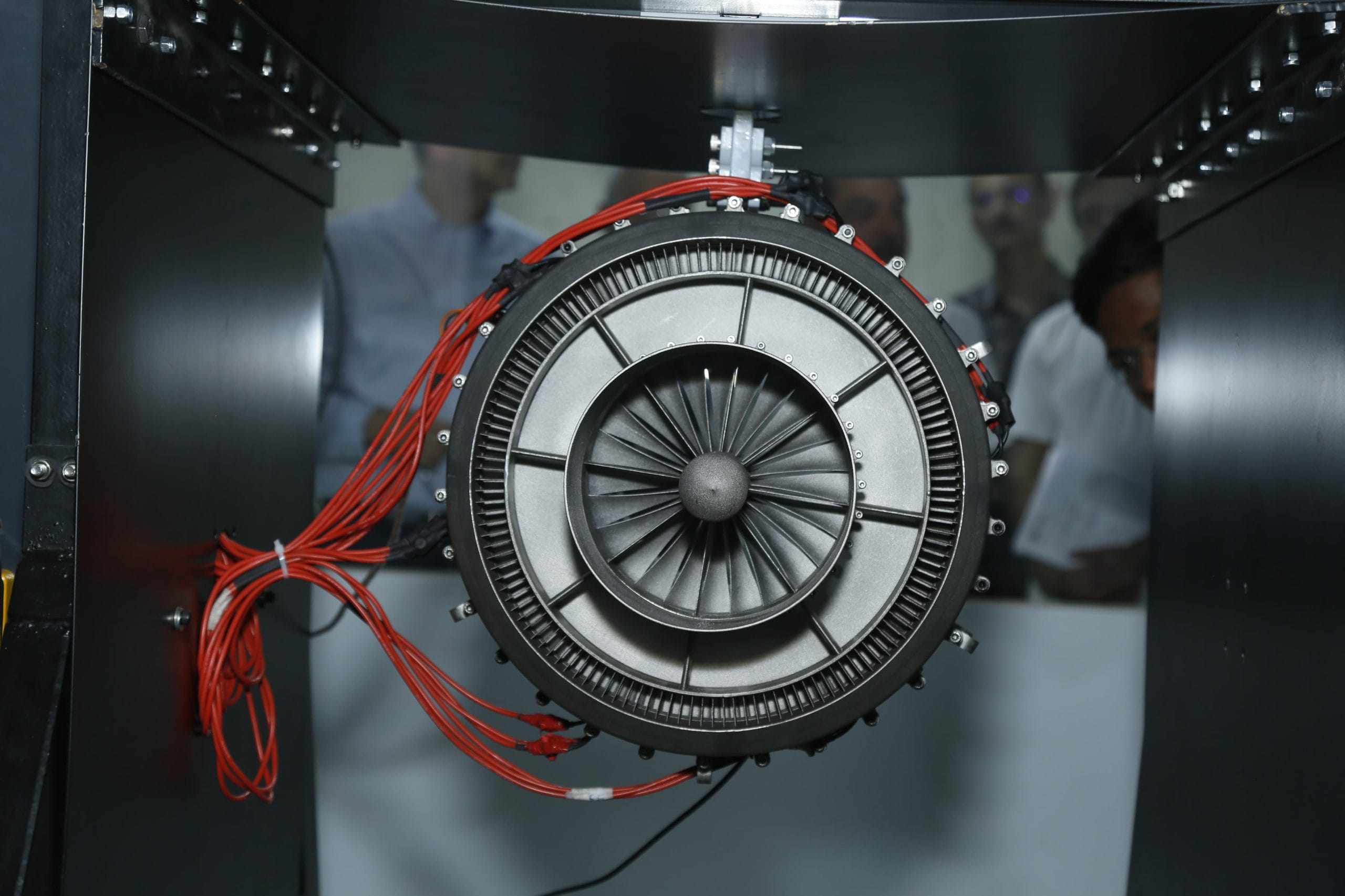
New Delhi: SiriNor, a Indo-Norwegian deep tech aerospace and defence startup developing an emission-free electric jet engine revealed its 2026 roadmap at the Inaugural Global CleanTech Forum, held at the 56th annual meeting of the World Economic Forum in Davos, Switzerland between 18 and 23 January 2026. SiriNor was among the handful of startups globally selected to participate in the Global CleanTech Forum that brings together founders, investors, policymakers and climate leaders to accelerate clean-energy solutions through curated access to decision makers. As the demand for air travel grows, the aviation sector is predicted to contribute up to 20 per cent of global emissions by 2050.
SiriNor is addressing this challenge with a 100 per cent electric, zero-emissions jet engine that does not use any combustion, that is power-source agnostic. While the jet engine works on batteries today, it is designed to be compatible with hydrogen or nuclear power sources in the future. The startup has secured a global patent in the USA for its unique tip driven propulsion architecture, that is being scaled up to cover major aviation manufacturing hubs in the US, Canada, EU and India. In April 2025, SiriNor validated its propulsion concept with a successful ground test, surpassing the design intent of 40,000 RPM with a thrust of 10 kgf.
UAV retrofit test planned in India
The electric jet engine is designed to reduce dependence on imported superalloys and exotic materials, translating into a 30 per cent cheaper build and 40 per cent cheaper maintenance profile. Founder and India CEO of SiriNor, Abhijeet Inamdar says, “Davos is the perfect forum to highlight a massive gap. The aviation sector plays an invaluable role in driving the global economy, but it desperately needs a reboot that ditches the emissions of traditional combustion jet engines.” In the short term, SiriNor is rolling out small engines with 30 and 100 kgf thrust for UAVs, with a UAV retrofit test planned in India by mid to late 2026, and is on track to generate commercial revenue from unmanned platforms by the end of this year.