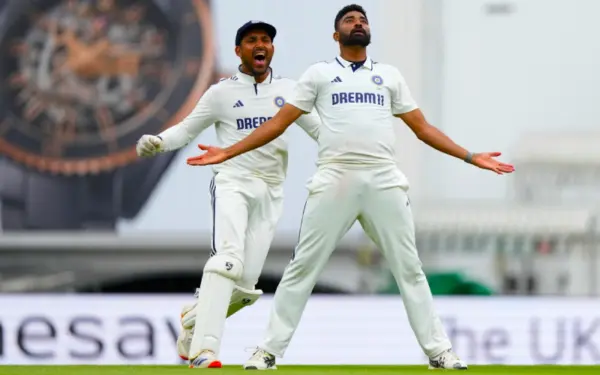
Mohammed Siraj spread his arms wide, almost in disbelief. Gus Atkinson had missed a full toss, the off stump lay uprooted, and The Oval erupted.
Indian players sprinted in from every direction before circling into a jubilant huddle.
One year later, the scoreline is almost secondary. What remains is how it happened.
England needed just 35 runs on the final morning. India needed four wickets. Logic favoured the hosts. What followed over the next 56 minutes reminded everyone why Test cricket remains the sport’s greatest examination of skill and nerve.
By then, this young Indian side had already spent five Tests answering questions. Could India move on from a generation of greats? Could Shubman Gill lead a team in transition? Could an inexperienced pace attack close out a series in England?
At The Oval, they stopped answering with words.
Siraj later revealed he woke up believing he would change the game. It sounded audacious until he made it real. Every spell felt like an attempt to wrest the series back. By the time Atkinson’s off stump was uprooted, Siraj had not only completed a five-wicket haul, but he had also produced one of the defining fast-bowling performances by an Indian in England.
“When I woke up this morning, I told myself I would change the game. I opened Google, downloaded a ‘believe’ image, and put that as my phone wallpaper,” he said afterwards.
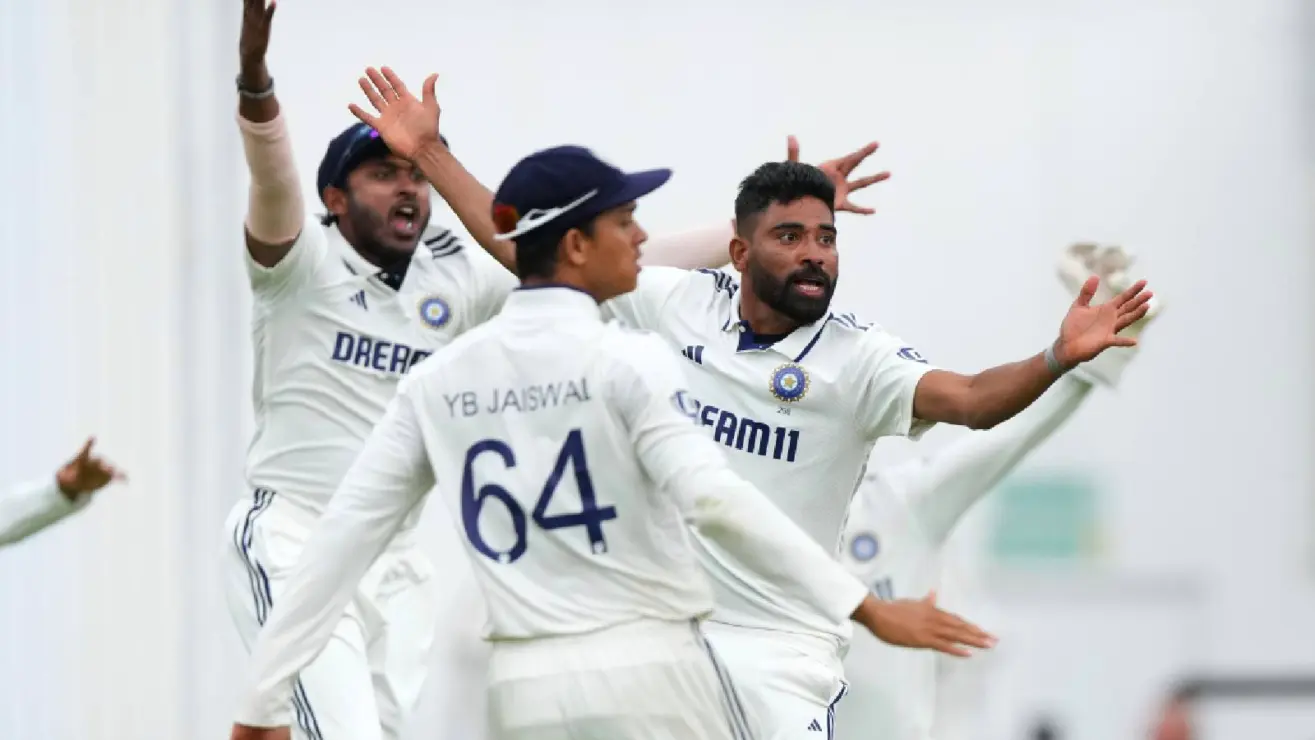 India’s Mohammed Siraj, right, appeals successfully for the wicket of England’s Jamie Smith on day five of the fifth cricket test match between England and India at The Kia Oval in London, Monday, Aug. 4, 2025. (AP Photo/Kirsty Wigglesworth)
But anniversaries rarely belong to one player alone.
The Oval Test was also about a dressing room that refused to let a series slip away after trailing 1-2. It was about Yashasvi Jaiswal’s second-innings hundred, Akash Deep’s invaluable resistance with the bat, Prasidh Krishna’s timely breakthroughs, and Gill placing his faith in a group still finding its feet at the highest level.
There was theatre everywhere. Chris Woakes, batting with one functioning arm, walked out to a standing ovation. Harry Brook and Joe Root had pushed England to the brink of an extraordinary chase. Every run felt decisive, every appeal louder than the last, every over somehow tenser than the previous one.
For 56 minutes, Test cricket stripped itself to its purest form. There were no shortcuts, no tactical timeouts, no second chances. Just eleven men refusing to blink before another eleven did.
It marked the arrival of a new Indian Test side that discovered its identity not through dominance but through resilience. They lost sessions, recovered from collapses, battled out for a draw in Manchester and produced one final act of defiance at The Oval.
A year after India’s stunning escape at The Oval, the scorecard still reads India won by six runs.
But what survives is the image of Siraj, arms spread wide and an Indian huddle bouncing in celebration. Sometimes, six runs are enough to define a generation.