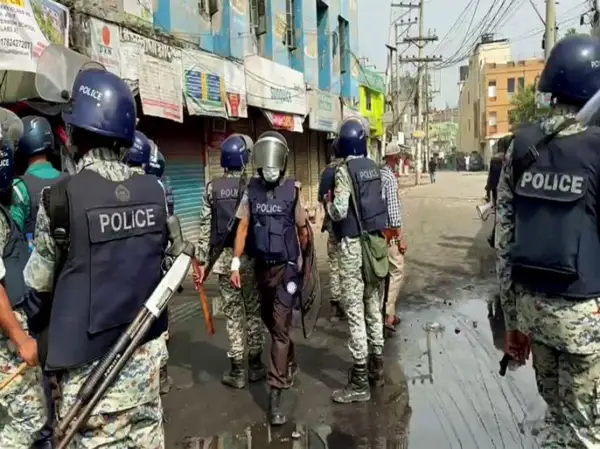
Gopalganj, the home district of former Bangladeshi Prime Minister Sheikh Hasina, has been isolated due to ongoing political unrest. Supporters of Hasina reportedly blocked roads by felling trees, severely disrupting connectivity in the region.
Visual evidence suggests these blockades were deliberately created to impede movement.
The situation escalated further when the Tungipara police station was reportedly abandoned and set ablaze. In a related incident, the residence of a Bangladesh Nationalist Party (BNP) lawmaker was torched, leading to retaliatory attacks where houses of three former Awami League lawmakers were also set on fire, underscoring the deepening political divide across the country.
Prime Minister Tarique Rahman, addressing the Jatiya Sangsad, labeled the Awami League a ‘fascist force’ and urged citizens to resist its activities. Police, Border Guard Bangladesh (BGB), and BNP members have mobilized to de-escalate the violence. Rahman has also directed BNP lawmakers to engage with their constituents and counter Awami League actions.
These developments follow Sheikh Hasina’s announcement of her impending return to Bangladesh in December, after her departure to India amidst the July-August 2024 student uprising. Despite a ban on its activities, the Awami League and its affiliates have resumed political gatherings, leading to clashes with law enforcement and BNP activists. The violence has reportedly claimed at least two lives, with BNP offices also being targeted.