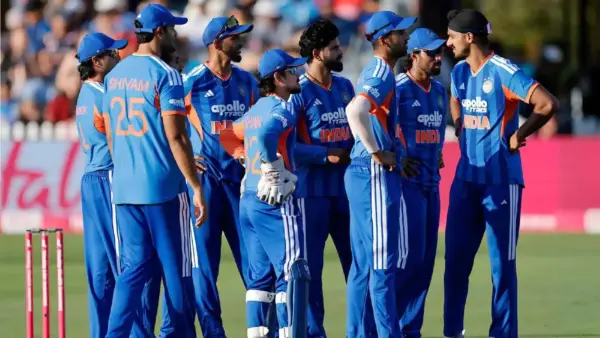
India’s recent defeats to Ireland and England in the T20I series are worrying, because the results have exposed some weaknesses that were so far largely masked by India’s immense individual talent.
The most immediate concern is India’s inability to adapt to overseas conditions. It’s an old failing that has existed for decades.
Against both Ireland and England, the batters struggled against swing, seam movement and high-quality fast bowling. Several observers, including the coaching staff, acknowledged that the team failed to assess conditions and modify its aggressive batting approach.
Vaibhav’s failure under debate
In this context, the unimpressive debut of India’s youngest star Vaibhav Sooryavanshi has become a topic of widespread debate. Sooryavanshi’s first three T20I innings have produced scores of 14 (10 balls), 13 (5 balls) and 15 (10 balls). For a youngster who dominated domestic and franchise cricket, these numbers have naturally sparked questions about whether he’s ready for international cricket or not.
However, one must also remember that judging a player after just three innings would be premature. It was just that in his case, expectations had gone sky high even before he began his international career. International cricket is a completely different challenge. Many of the game’s greatest batters endured difficult starts before establishing themselves on the world stage.
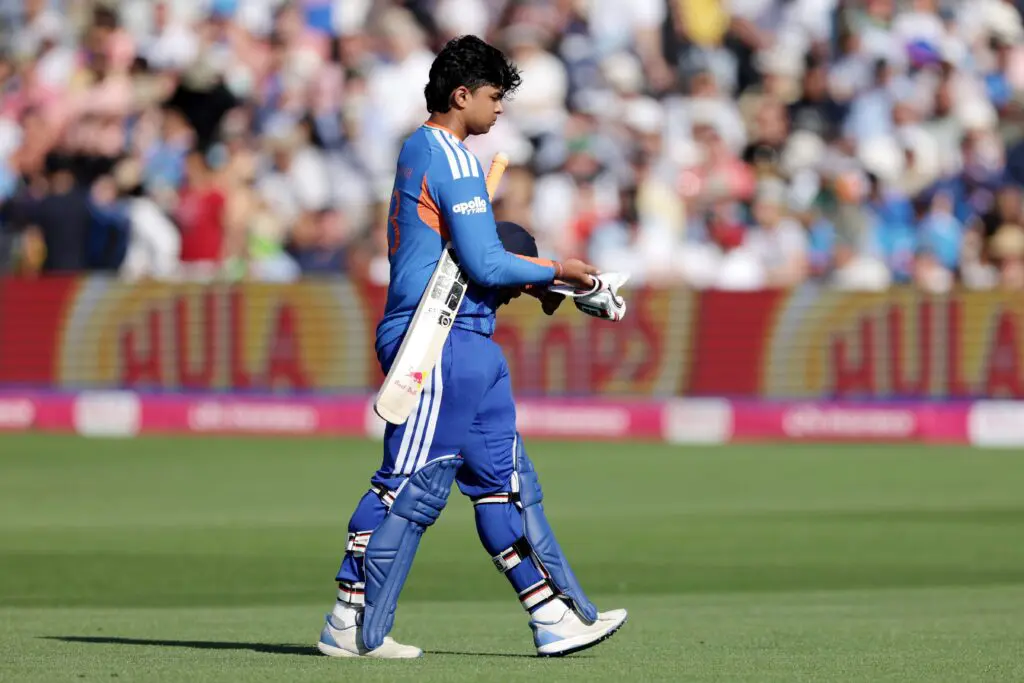 Vaibhav Sooryavanshi leaves the field after being caught out by England’s Sam Curran from the bowling of Jofra Archer during the fourth Vitality IT20 match against England at the Seat Unique Stadium in Bristol, England, on July 9.
Former India cricketer Mohammad Kaif believes the youngster deserves time and support.
Speaking on his YouTube channel, Kaif said, “The way Vaibhav Sooryavanshi has shown his potential, if I were the captain or the coach, I’d be willing to back him even if he failed in 10 matches.”
However, the team selectors didn’t share the same views as Kaif and dropped Sooryavanshi unceremoniously after three failures. It was a knee jerk response, but one must understand that selection at this level comes with very high expectations. Every opportunity matters and Sooryavanshi will need to show that he can adapt, learn quickly and convert his immense potential into consistent performances.
So, his first three innings don’t define his career, but his response to early setbacks will be a pointer to his maturity and determination.
Is transition the real cause?
Another issue is the transition underway in the T20 side. Following India’s T20 World Cup triumph, the team has introduced several young players. Head coach Gautam Gambhir has argued that a “reset” inevitably brings inconsistency, with inexperienced players being asked to perform immediately against top opposition.
But Gambhir’s statement, backed by Shreyas Iyer’s words, needs to be looked at in greater depth. Is transition an easy excuse for Gambhir’s own failings as a coach? Also, we must look at the team’s inability to adapt to challenging conditions. Shreyas Iyer’s appointment as captain of India’s T20 team was supposed to herald a new era. But the hopes of millions of fans have been dashed. The cause for the debacle was not just transition.
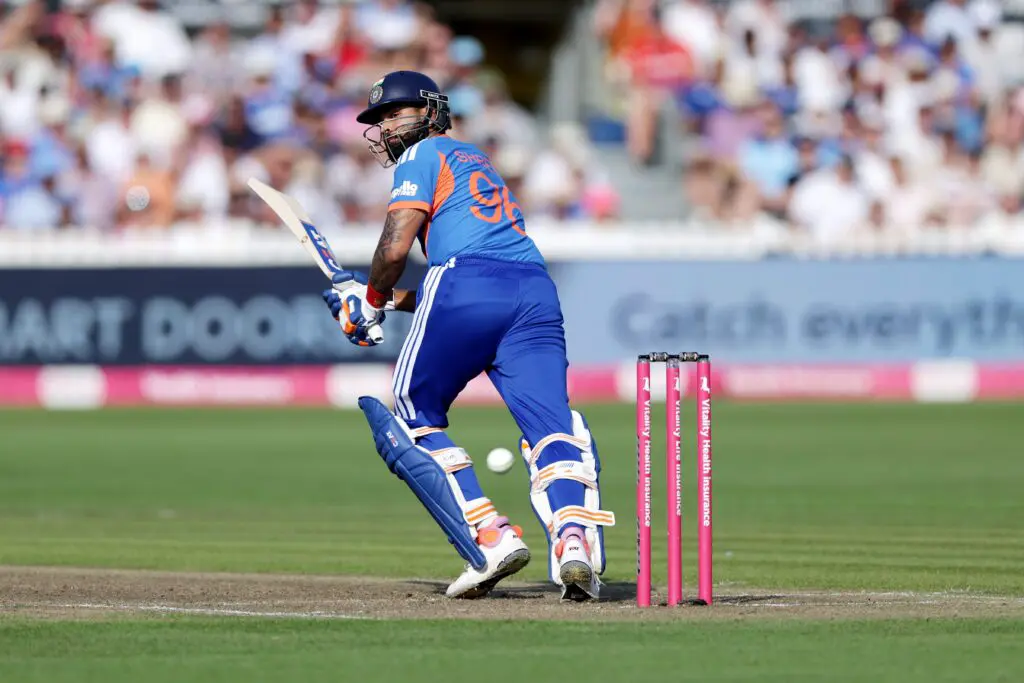 Shreyas Iyer bats during the fourth Vitality IT20 match against England at the Seat Unique Stadium in Bristol, England, on July 9.
Gambhir was appointed as coach in July 2024 amidst a lot of hype following his success with Kolkata Knight Riders – both as captain and mentor – but his results with the Indian team have been far from flattering. He has often put up an aggressive posture to cover up for his own shortcomings in formulating tactics as a coach.
But all is not lost
However, all is not yet lost. India still possesses the world’s strongest and most extensive domestic cricket system, an unmatched supply of young talent through the Indian Premier League (IPL) as well as excellent financial resources and coaching infrastructure. But what these losses suggest is that Indian cricket, including both the administrators and the players, may have become slightly overconfident.
Years of dominance on flat pitches and in the IPL have encouraged a playing style that was based almost entirely on power-hitting. But when confronted by challenging overseas conditions, especially on pitches in England and Ireland, against disciplined seam bowling and opponents who execute their plans well, that approach has backfired.
The next six to 12 months will determine whether the shocking defeats are merely a temporary dip or something more significant. Great teams are judged not by whether they lose, but by how quickly they learn from defeat. Right now, there’s no doubt that the Indian cricket is witnessing one of its most topsy turvy phases.
After Ajit Agarkar assumed charge, several high-profile decisions have sparked intense discussions among fans. Many supporters believe some decisions have been too harsh on senior players like Rohit Sharma, Virat Kohli and Ravindra Jadeja. Others argue that every new era demands bold selections to build a stronger team. However, the full and true impact of these decisions will ultimately be judged by the team’s performances on the field. So far, the new approach has not succeeded.
If India rediscovers the balance between aggression and adaptability, these losses may ultimately prove valuable in a certain way. They will provide a lesson from which many things can be learnt. But if the weaknesses persist on future overseas tours, then concerns about a deeper problem will become much more justified and a big scale review must be carried out.