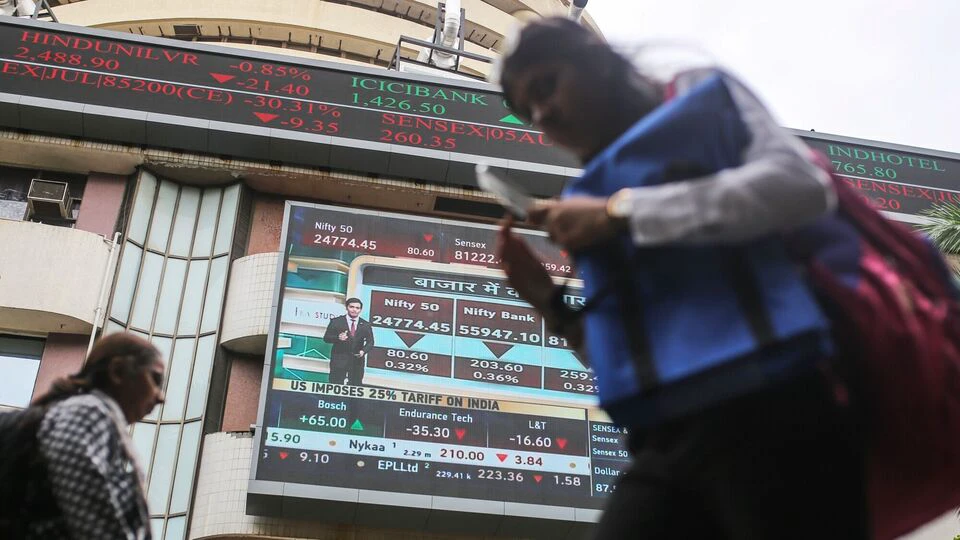
Indian stock market: As we enter into 2026, the Indian equity market is at a pivotal juncture-shifting away from a period led largely by domestic liquidity toward a phase where earnings execution, policy coherence, and macroeconomic stability are set to drive returns.
Market performance in 2025 was mixed, with the Nifty 50 scaling a record high of 26,326 on December 1 and posting annual gains of 10.2%. Meanwhile, Sensex has gained up to 8% in last one year.
India’s inflation edged up in November after touching a record low in October, but it remains comfortably below the Reserve Bank of India’s 4% target, leaving room for additional repo rate cuts in the coming year.
The RBI reduced interest rates by 25 basis points last week and indicated it may continue to loosen monetary policy, pointing to subdued inflation. It projects inflation to start rising from January, with CPI averaging 2.9% during the three months ending March.
” We believe a cyclical recovery is unfolding in the Indian equity market as the corporate earnings cycle turns upward and economic growth broadens. As growth momentum becomes more visible across financials, consumption, and capital-intensive sectors, India stands out as one of the few large markets where cyclical recovery is aligned with structural growth drivers, creating a supportive backdrop for equity markets over the medium-to-long term,” said brokerage firm Axis Direct in a note.
Key market drivers in 2025
Revival in corporate earnings
According to the brokerage firm, corporate earnings have appeared to be at an inflexion point. Consensus estimates indicate a meaningful rebound in earnings growth, accelerating to 12%-15% YoY over FY26-27, which is expected to be the primary driver of the Nifty’s upward trajectory.
“A broad-based recovery in corporate earnings is anticipated in FY27, supported by resilient GDP growth, a revival in demand, and a supportive domestic policy environment,” the firm said.
GDP growth
According to the firm, India’s growth momentum remains firm heading into 2026, with GDP growth forecasts for H1FY27 revised upward to 6.7%-6.8% from 6.4% earlier. The RBI has also raised its GDP growth projection for FY25-26 to 7.3%, from 6.8%, following a strong second-quarter performance. This upward revision reflects sustained domestic demand, ongoing policy reforms, and supportive macroeconomic conditions.
Currency Dynamics
The rupee saw a sharp depreciation amid FII outflows and India-US trade-related uncertainty, slipping past the crucial ₹90 per dollar mark.
While the depreciation creates near-term pressure through rising imported input costs, it also benefits exporters by boosting rupee-denominated revenues, leading to a mixed impact across sectors.
“Prolonged weakness could add to imported inflation risks. We expect a rebound, with USD/INR potentially moving back below the ₹90 level,” the brokerage firm said.
India-US trade deal
The outcome of the elavated tariffs levied by the US on Indian exports continues to be a key factor shaping investor sentiment and prospects for export-driven sectors.
Any rollback or even a partial easing of these duties would serve as a strong positive trigger, boosting FII confidence, supporting export growth across affected industries, and reinforcing the outlook for sustained market performance.
Stock market outlook in 2026
According to Nitin Rao, CEO, InCred Wealth, the market story evolves from being cautious to cautiously positive. Rao believes that the upcoming year is likely to witness a transition from valuation-driven investment returns to earnings growth-driven investment returns.
“The regulatory environment is set to remain conducive, with positive trends in inflationary pressures, besides broadening earnings participation. However, instead of a breakout, equities are seen showing directional improvement. On balance, 2026 appears to be turning out to be a year where progress rather than dramatics will be the key to investment success; where patience, balance, and asset allocation will form the pillars on which investment decisions will rest,” Rao said.
Meanwhile, brokerage firm Motilal Oswal Financial Services expects the market to deliver steady growth in CY26, supported by a recovery in corporate earnings and a gradual revival in private sector investments. Recent and forthcoming government policy measures should further aid this recovery. The Union Budget 2026 will be a key event to watch, as it is likely to set the direction for FY2026-27.
“CY2025 was a year of consolidation marked by volatility and global uncertainty, but it also helped reset valuations and investor expectations. As we move into 2026, improving earnings visibility, supportive policy measures and the potential turnaround in FII flows create a favourable backdrop for Indian equities. We remain optimistic on the long-term compounding potential of Indian markets and advise investors to stay disciplined, focus on quality businesses and use market volatility as an opportunity to build exposure fundamentally strong businesses aligned with India’s structural growth themes,” the firm said.