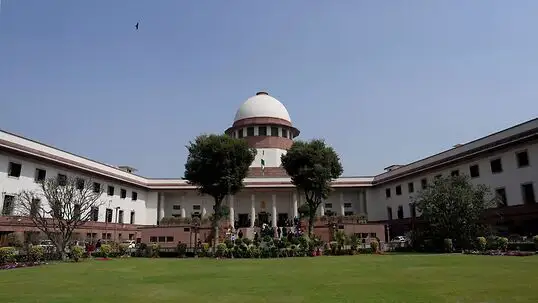
The Supreme Court has upheld a Madras High Court ruling that a person who converts to Islam cannot automatically claim reservation under the notified Backward Class (Muslim) category based on their former caste status, dealing a setback to the Tamil Nadu government.
The court held that conversion alone does not make a person a member of any of the notified backward-class Muslim communities in the state. It observed: “Such conversion severs the legal foundation of an entitlement which is specifically conditioned upon membership of that Hindu social order.”
The ruling upholds the Madras High Court’s June 25, 2026, judgment declaring unconstitutional a Tamil Nadu government order that permitted people from Backward Classes (BC), Most Backward Classes (MBC), Denotified Communities (DNC) and Scheduled Castes (SC) who converted to Islam to claim reservation under the Backward Class Muslim category.
The state government had challenged the High Court’s decision before the Supreme Court. The government order, issued on March 9, 2024, was intended to allow eligible converts to retain access to reservation benefits by obtaining community certificates under one of the seven notified Muslim communities.
What Is The Tamil Nadu Quota?
Tamil Nadu provides a separate 3.5% sub-quota for Backward Class Muslims under its reservation framework. The category covers seven notified Muslim communities: Ansar, Dekkani Muslims, Dubekula, Labbais (including Rowthar and Marakayar), Mapilla, Sheik and Syed.
The dispute centred on whether a person who converted to Islam from a Hindu backward-class or Scheduled Caste community could be treated as belonging to one of these notified Muslim communities and claim the associated reservation benefits.
The state government had argued that the 2024 order would prevent people who were already eligible for reservation from losing those benefits following religious conversion. The Madras High Court rejected this approach, holding that the government could not use an executive order to override established judicial precedents on community status.
How Did The Case Begin?
The case arose from a petition filed by Sameer Ahamed, formerly known as Paramasivam, who converted to Islam in 2015. He sought a community certificate identifying him as a Muslim Lebbai to claim reservation benefits. His application was rejected by the revenue authorities, prompting him to approach the Madras High Court.
The 2024 government order became central to his case. The High Court eventually struck it down, holding that a person converting to Islam could not automatically be assigned membership of a specific notified Muslim community merely on the basis of their previous caste status.
The Supreme Court’s decision upholding that judgment is a setback for Tamil Nadu’s attempt to extend the Backward Class Muslim reservation category to such converts.