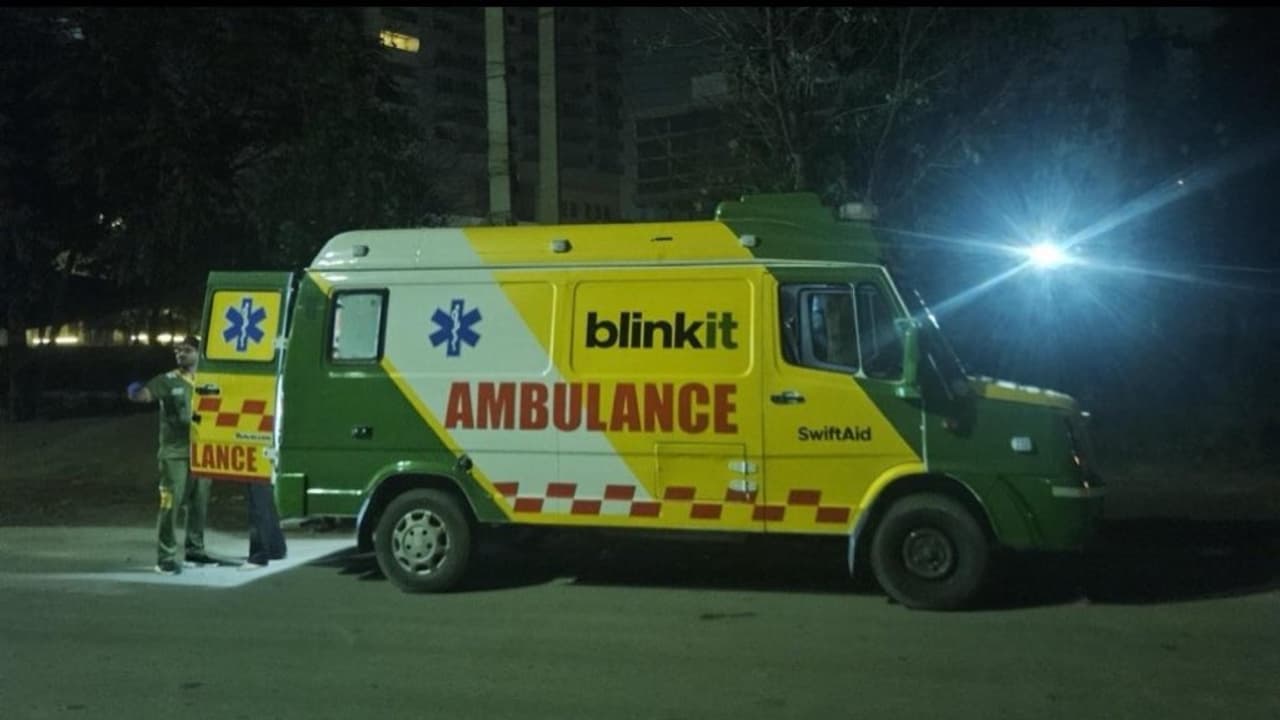
A Blinkit ambulance reached a Delhi man’s home within just eight minutes and helped rush his critically ill grandmother to the emergency ward has caught the attention of Zomato founder and CEO Deepinder Goyal.
A Blinkit ambulance reached a Delhi man’s home within just eight minutes and helped rush his critically ill grandmother to the emergency ward has caught the attention of Zomato founder and CEO Deepinder Goyal. The heartwarming account has also sparked a discussion about the ambulance service’s pricing policy, with the company introducing a Rs 2,500 charge for non-emergency transfers while keeping emergency rides completely free.
Sparsh Sehgal, a Delhi-based X user, revealed how the quick response from Blinkit’s ambulance service proved crucial when his grandmother’s health suddenly deteriorated. He said the ambulance arrived at his doorstep within eight minutes and helped transport her to the emergency ward without delay.
Sehgal expressed gratitude towards the team, saying he doubted whether even a hospital ambulance could have responded so quickly.
“Blinkit ambulance saved my grandma’s life today,” he wrote, thanking the service for its timely intervention.
Scroll to load tweet…
Responding to the post, Deepinder Goyal shared insights into the ambulance service’s journey, its growing demand and the reasons behind the latest pricing decision. He described Blinkit Ambulance as an extension of the service-oriented philosophy that inspired him to establish Zomato.
“In the last 2 years, we have served ~20,000 emergency cases (~42,000 cases in total). We haven’t charged a single rupee for any of them. And we want to keep it that way,” Goyal wrote.
Scroll to load tweet…
Blinkit Ambulance to charge Rs 2,500 for non-emergency trips amid misuse
The Zomato CEO pointed out that the free ambulance service was increasingly being used for non-emergency requirements, including routine medical checkups, hospital appointments and transfers from hospitals to homes.
According to Goyal, many of these journeys could have been managed through regular private transport. Instead, fully equipped emergency ambulances and trained paramedics were being occupied by such requests, potentially affecting their availability during critical situations.
To address the issue, Goyal announced a revised pricing structure under which emergency ambulance transfers will continue to be completely free, while non-emergency trips will attract a charge of Rs 2,500, payable after the journey. He added that the amount was broadly comparable to private ambulance charges and would be directed towards the Eternal Foundation, which operates the ambulance service.
“We hope that this charge will dramatically drop the usage of our Ambulances for non-emergency cases,” he said, underlining the importance of keeping the 10-minute ambulance service accessible to people facing genuine medical emergencies.
Goyal also highlighted the challenges of expanding the initiative across the country, particularly the limited availability of trained and compassionate paramedics. He said the company’s training academy was scaling up its operations while maintaining quality standards.
He further revealed that Albinder and his team were working towards expanding Blinkit Ambulance to all major Indian cities over the next two to four years.
Wishing Sehgal’s grandmother a speedy recovery, Goyal said he was relieved that the ambulance team had managed to reach her in time.