The 12th National Maritime Search and Rescue Exercise (SAREX-2026) is underway off Paradip, Odisha, with 32 vessels from the ICG, Navy, Customs, and IAF aircraft participating to strengthen inter-agency coordination for maritime rescue operations.
SAREX-2026: A Crucial Exercise for Interoperability
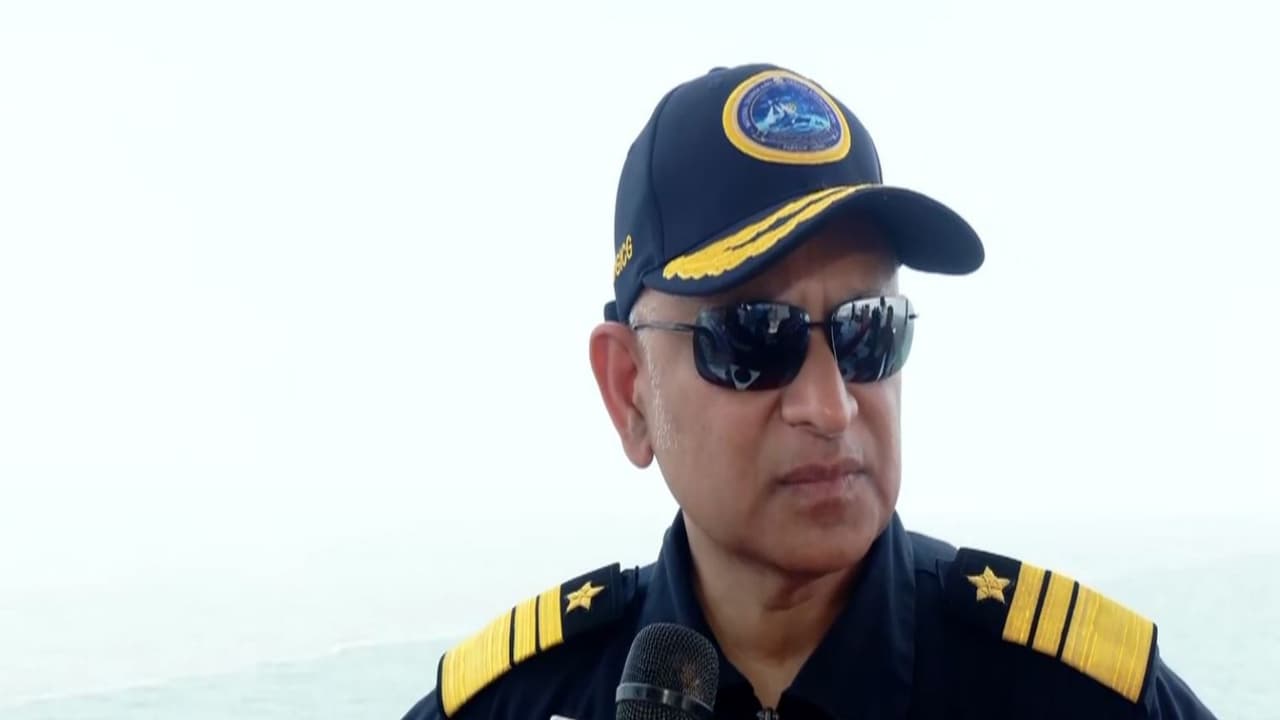
Director General of the Indian Coast Guard (ICG), S Paramesh Sivamani, said that 32 vessels are participating in the 12th National Maritime Search and Rescue Exercise (SAREX-2026) off Paradip, Odisha. The ICG Director termed it a crucial exercise in strengthening interoperability and inter-agency coordination, with the aim of minimising the response and reaction times in the event of a maritime incident.
He told ANI, “Today, we are witnessing the sea phase of the 12th edition of the National Maritime Search and Rescue Exercise. Approximately 32 vessels are participating, including ships from the Indian Coast Guard, the Navy, and Customs/Port authorities, as well as aircraft from the Indian Air Force. This is a crucial exercise aimed at strengthening our interoperability and inter-agency coordination; the goal is to minimise our response and reaction times in the event of a maritime incident, ensuring we can conduct search and rescue operations effectively.”
“We organised a ‘tabletop exercise’ for the international observers from friendly foreign nations. During this session, we explained the scenario currently playing out at sea and actively involved them in the search planning process. This is vital for helping them understand the mechanics of executing a search and rescue operation,” Flag Officer Sivamani added.
International Participation and Theme
SAREX-2026 was conducted under the aegis of the National Maritime Search and Rescue Board (NMSARB) on Thursday, said the Ministry of Defence. Under the theme “Leveraging Technology to Strengthen SAR Preparedness and Maritime Safety”, the exercise brought together maritime and aeronautical agencies to demonstrate operational readiness, interoperability and coordinated response to mass rescue operations at sea. 32 observers from 30 countries also participated in the exercise.
International Observers Praise India’s Capabilities
Australia and Tanzania lauded India’s vessel manufacturing capabilities. Blaise Taylor, Counsellor at the Australian Border Force (ABF), hailed the MoU between Australia and the Indian Coast Guard. Taylor said, “Probably the most striking thing is the level of capability that the Indian Coast Guard has for search and rescue. It’s a seriously impressive display today… The level of cooperation is good already. In the Australian context, we’ve just signed a new MoU with the Indian Coast Guard. That’s a historic milestone, and it’s a signal of our intent to cooperate more closely, not just on search and rescue but all kinds of maritime law enforcement issues. The Indian Coast Guard are doing similar things with lots of other nations around the world.”
On India’s sovereignty in manufacturing, he added, “India’s sovereign technology is very impressive. We’re on a vessel at the moment that is 70 per cent manufactured in India. That’s an incredible achievement and you’ve seen the vessel itself is quite incredible. The same is true for all the other assets that we’ve seen on the water today, Indian aircraft and helicopters as well. India is certainly a rising power in the world.”
Lt. Colonel Alann Bashaula from Tanzania described the exercise as an educational experience. He lauded the fact that most of the Indian ships in the exercise were manufactured by the host nation. Lt Col Bashaula said, “It was a good experience for me, and this exercise is very educational, appreciative, as well as demanding. The challenges are so many. One, in terms of personnel and facilities. We need our personnel to get different skills and to have some facilities which could help us to perform as Indians have done. That’s the one thing that remote buoys have never seen, which has been developed here in India. That’s a good thing. And I’ve been told that even the ships are manufactured here; they’re not from abroad. That’s a good thing, and they reduce dependence on other countries. And by doing so, they build capabilities.”
Mass Rescue Operation Drill and Assets Deployed
According to the Defence Ministry, the assets deployed included 15 Coast Guard ships, three Dornier aircraft, three Advanced Light Helicopters, one Chetak helicopter, IAF C-130J and Mi-17 aircraft, two Indian Navy ships, along with civil and state resources and shore-based support units.
Rescue Procedures and Technology Demonstration
The sea drill simulated a Mass Rescue Operation following a concurrent aeronautical and maritime distress emergency. As part of the scenario, a passenger aircraft carrying 228 persons ditched at sea near Paradip Port, with the fuselage impacting the container vessel MV Zumba, resulting in structural damage and fire. The exercise involved activation of the Incident Command Post, firefighting operations, helicopter evacuations, deployment of life rafts and air-droppable life rafts, Jason Cradle and Gemini recovery, rescue basket operations, and scramble net procedures. The exercise also included a demonstration of Remotely Operated Vehicle (ROV) capability.
Reaffirming Collective Resolve for Maritime Safety
SAREX-2026 reaffirmed the collective resolve of India and its international partners to build a faster, technology-enabled and seamlessly coordinated Search and Rescue framework, in line with the vision of SAGAR and the spirit of Mahasagar, the ministry said.
(ANI)
(Except for the headline, this story has not been edited by Asianet Newsable English staff and is published from a syndicated feed.)