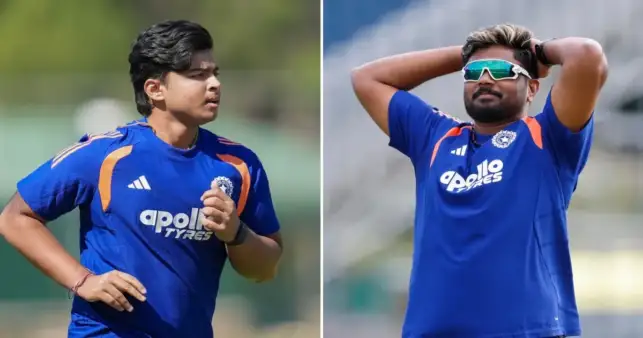
The decision between opening with Sanju Samson or handing teenager Vaibhav Sooryavanshi another opportunity is expected to be head coach Gautam Gambhir’s biggest selection dilemma when India face the West Indies in the opening T20 International in Lucknow on Tuesday.
India enter the series with confidence after their Asian Games campaign, while the West Indies arrive as a competitive side capable of challenging the hosts. The focus, however, is likely to centre on India’s top-order combination, with Samson, Sooryavanshi and Abhishek Sharma all offering different options. The choice will also provide an early indication of Gambhir’s tactical preferences after the change in India’s coaching personnel from VVS Laxman.
The transition from Laxman to Gambhir could bring a change in strategic approach, although both coaches place considerable importance on batting depth extending to the number eight position. That philosophy gives India flexibility when constructing their playing XI, particularly with all-rounders available in the lower middle order. However, Gambhir’s preferred template could make it difficult for India to accommodate both Samson and Sooryavanshi alongside Abhishek, who is regarded as an automatic selection at the top of the order. The competition for the opening positions therefore becomes particularly important, with the management needing to balance experience, current form and the potential of one of India’s most exciting young batters.
Laxman had previously found a way to include all three players during India’s matches at the Asian Games. On the tacky surfaces at Korogi Sports Park in Nisshin City, Sooryavanshi opened the innings alongside the world No. 1 T20 batter Abhishek Sharma, while Samson was pushed down to No. 3. The decision was influenced by the conditions, with the slower and more difficult surfaces making batting depth and additional scoring options important. Having Samson in the XI allowed India to strengthen the batting without necessarily changing the established opening combination. That approach proved useful in circumstances where accumulating runs on challenging tracks required a different strategy from playing on a conventional high-scoring surface.
The conditions in Lucknow could lead Gambhir to make a different call. The Ekana Stadium is expected to offer a better batting surface than the tracks India encountered during their Asian Games campaign, potentially making an attacking opening combination more attractive. Gambhir could be tempted to restore Samson to the opening position, particularly with all-rounder Nitish Kumar Reddy available to provide additional batting depth lower down the order. Such a combination would allow India to retain their aggressive approach while giving Samson the opportunity to bat in a position where he has previously enjoyed success. The decision would also mean leaving Sooryavanshi out despite the teenager’s growing reputation and the experience he gained during the Asian Games.
Samson’s performances at No. 3 in the two games he played during the Asian Games did not suggest that the position brought out his best. His record in sub-continental conditions, however, gives the team management another reason to consider him at the top of the order. Samson scored two half-centuries during India’s most recent home T20I series against Afghanistan, demonstrating his ability to make a substantial contribution when opening the innings. His experience and ability to accelerate against spin and pace could therefore prove valuable against the West Indies. At the same time, Sooryavanshi’s presence offers India the chance to continue investing in a teenager who has already attracted significant attention with his aggressive batting.
The opening T20I will consequently offer an early glimpse into how Gambhir intends to shape India’s batting order following the coaching transition. Abhishek’s place appears secure, while the contest between Samson and Sooryavanshi could determine the remaining structure of the top order. India also have the flexibility to use Nitish as a lower-order batting option, allowing the management to pursue greater depth without sacrificing a specialist batter. With the Asian Games champions now turning their attention to the West Indies, the selection call in Lucknow will be watched closely, particularly because it could establish the template India use for the remainder of the series.