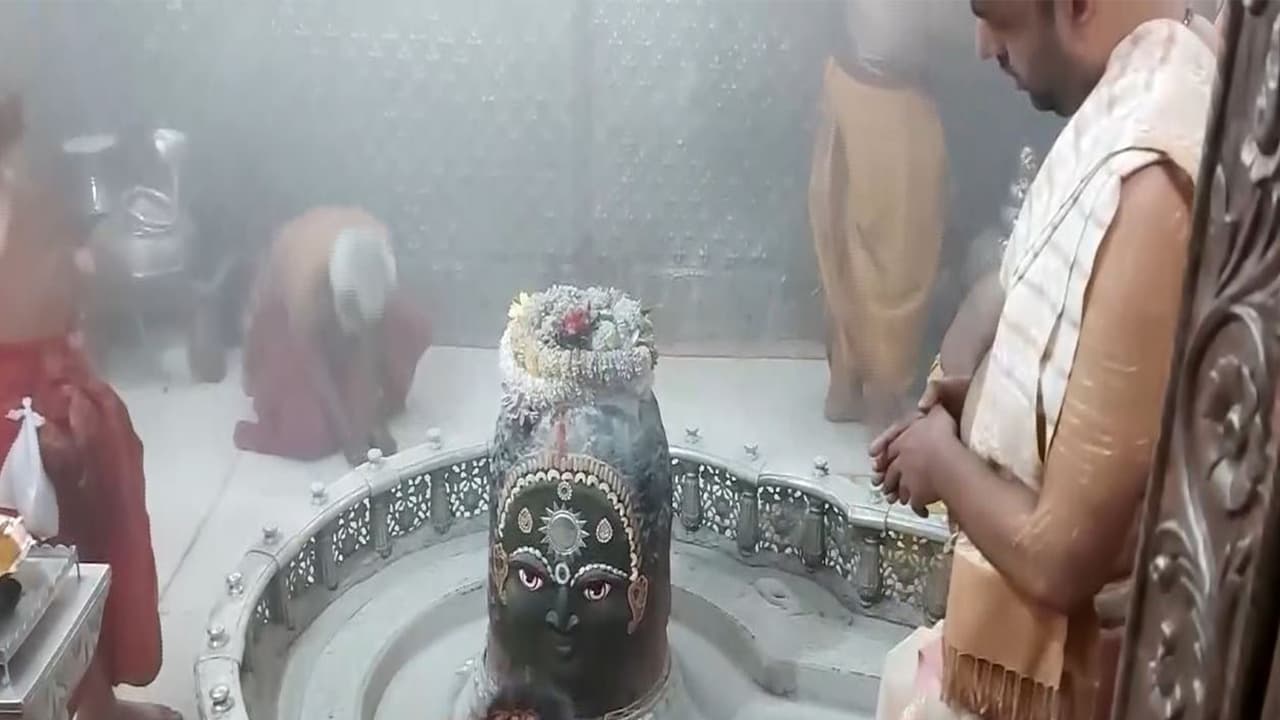
Large crowds of devotees gathered at the Mahakaleshwar Jyotirlinga Temple in Ujjain to witness the sacred Bhasma Aarti. The divine ritual for Lord Shiva was performed in the early morning hours, filling the temple with spiritual fervour.
The sacred Bhasma Aarti was performed at the Mahakaleshwar Jyotirlinga Temple in Ujjain on Wednesday, drawing large crowds of devotees who gathered in the early hours to witness the divine ritual dedicated to Lord Shiva. The temple premises reverberated with Vedic chants, conch shells, temple bells, and devotional hymns, creating an atmosphere of deep spiritual fervour.
The Bhasma Aarti, an offering made with holy ashes, is one of the most revered rituals of the Mahakal Temple. It is performed during the Brahma Muhurta, between 3:30 and 5:30 am, a time considered highly auspicious in Hindu tradition. According to religious beliefs, devotees who attend or participate in the Bhasma Aarti are believed to have their wishes fulfilled and receive the divine blessings of Lord Mahakal.
The Ritual of Bhasma Aarti
As per temple traditions, the ritual begins with the opening of the temple doors in the early hours, followed by a holy bath for the deity using Panchamrit, a sacred mixture of milk, curd, ghee, sugar, and honey. After the bath, the Shivling is adorned with hemp and sandalwood paste, signifying purity and sanctity.
The ritual continues with the performance of the unique Bhasma Aarti and Dhoop-Deep Aarti, accompanied by the rhythmic beats of drums and the resonant sounds of conch shells. The aarti symbolises the cycle of life and death, representing the eternal presence of Lord Shiva as the destroyer of evil and the embodiment of time.
Historical and Spiritual Significance
Shri Mahakaleshwar, one of the twelve sacred Jyotirlingas in India, holds immense significance in Hindu spirituality. The grandeur and spiritual aura of the Mahakaleshwar Temple have been beautifully described in the ancient Hindu scriptures, including the Puranas. Eminent Sanskrit poets, beginning with Kalidasa, have extolled the magnificence of Lord Mahakal and the temple’s divine energy in their compositions.
Historically, Ujjain was regarded as the central point for the calculation of Indian time, with Mahakala considered the presiding deity of the city. In all his splendour, Lord Shiva – as the Lord of Time – reigns eternal in Ujjain.
The towering shikhara and the imposing facade of the Mahakaleshwar Temple against the city skyline evoke deep reverence and awe among visitors. People from across the country visit the temple throughout the year to witness the Bhasma Aarti, believing that attending the sacred ritual brings divine blessings, protection, and fulfilment of desires.
(Except for the headline, this story has not been edited by Asianet Newsable English staff and is published from a syndicated feed.)