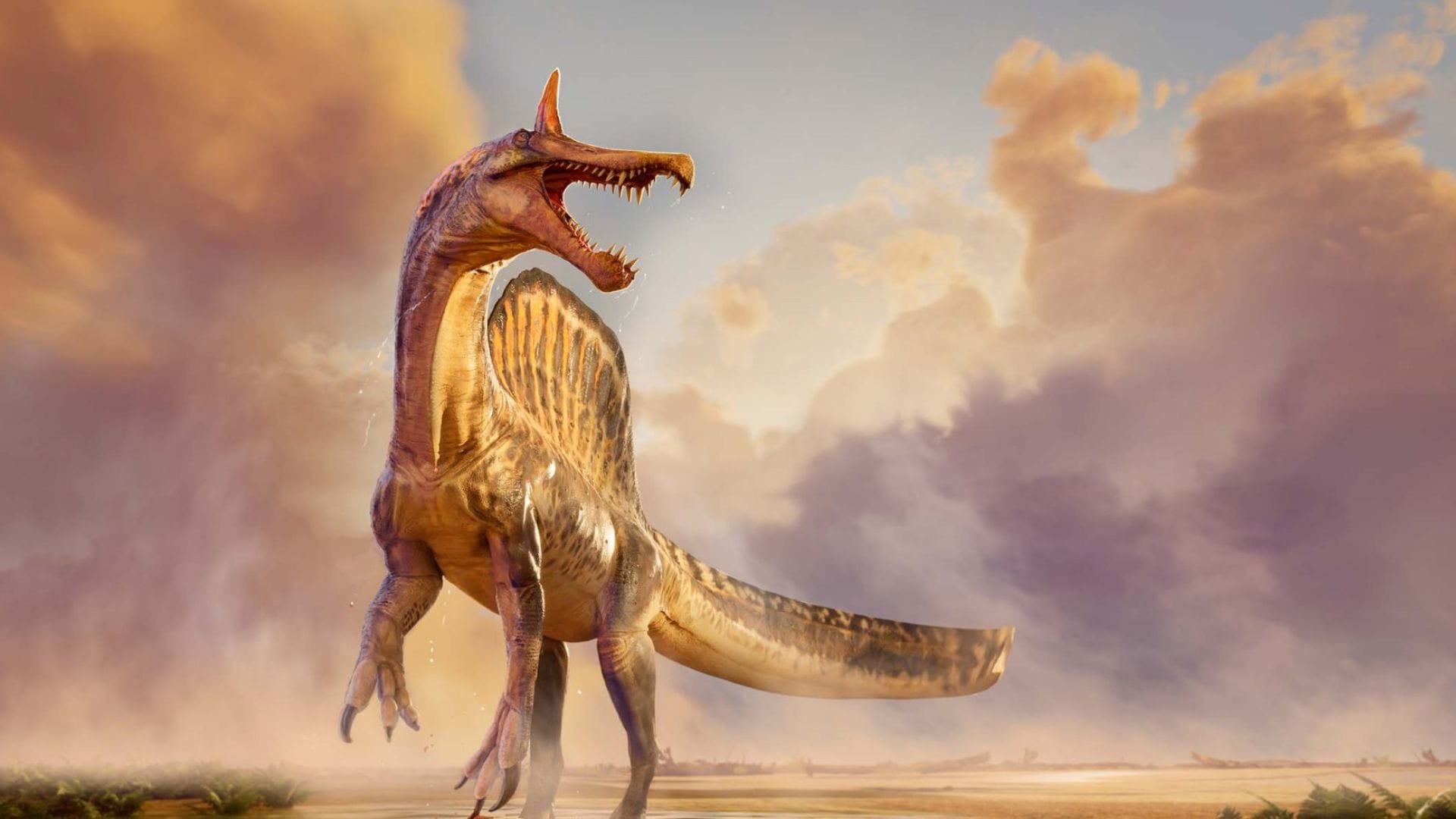
New Delhi: Fossils discovered in the Sahara Desert have been used to identify a new species of Spinosaurus. The creature, named Spinosaurus mirabilis had a striking scimitar-shaped crest, that was probably used to compete with rivals and attract mates. When the scientists first encountered the remains in November 2019, the crest and jaw fragments were so large and unexpected, that they did not recognise the animal. A larger team returned in 2022, finding two additional crests. The researchers generated 3D digital models of the bones and assembled them into a skull, on a solar-powered laptop in the middle of the Sahara, which is when they realised the novelty of the animal.
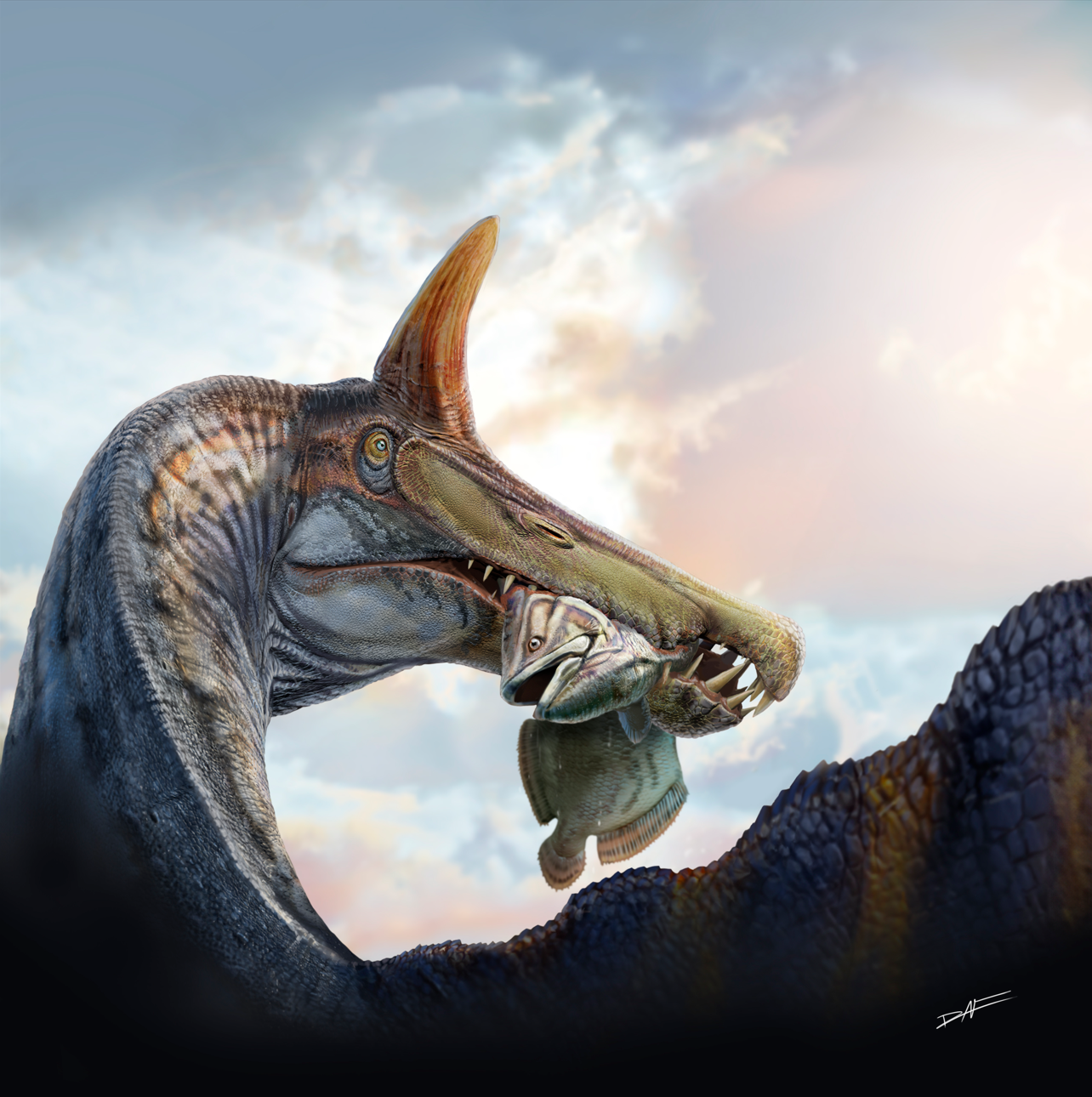
Another reconstruction of Spinosaurus mirabilis, chomping on a coelacanth. (Image Credit: Dani Navarro).
Based on the surface texture and interior vascular channels, scientists believe that the crest was sheathed in keratin. The scientists also suspect that this crest was brightly coloured. The upper and lower rows of teeth are interdigitating, which makes a deadly trap for fish. Interdigitating teeth are where the teeth of the lower jaw protrude outwards between the upper teeth, is a well-known adaptation among fish-eaters in the fossil record, including semi-aquatic crocodiles, airborne pterosaurs and aquatic ichthyosaurs, that all lived alongside the dinosaurs but are not dinosaurs. Among dinosaurs, such mouths are found in the Spinosaurus.
The remains were found far from the sea
Previously, spinosaurid bones had been discovered mostly in coastal deposits, leading some scientists to propose that these fish-eating theropods were fully aquatic. The new fossils in Niger reveals that the animals were living far inland, at least 500-1000 km from the nearest shore. The remains were all buried in river sediments, indicating a forested inland habitat dissected by rivers. The researchers have CT scanned the teeth and bones, and have reconstructed a digital rendering of the skull for the science paper, along with a detailed physical 3D model. A paper describing the new Spinosaurus species has been published in Science.