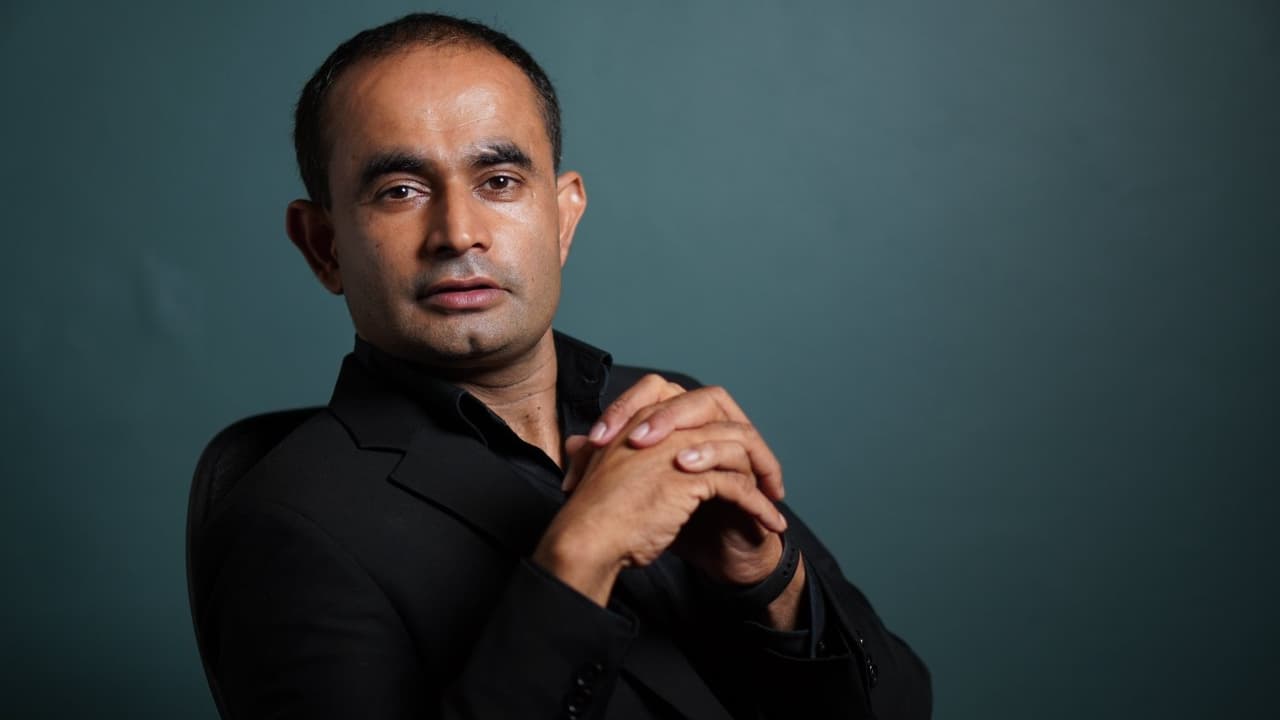
Sabeer Nelli has consistently been a presence at some of the world’s most influential forums – most recently at Davos and COP30 – where global decisions on finance, climate investment, and economic policy are shaped.
Kerala has always known how to produce ambition. For generations, that ambition left – to the Gulf, to Bengaluru, to wherever opportunity moved. Malappuram, more than most, knows that arithmetic. But Sabeer Nelli, a Manjeri native who went on to build Zil Money – a US-based fintech platform processing over USD 100 billion in transactions annually – has come back to the town that raised him, not to retire, but to build a global engineering centre right in its heart.
The Road That Led Back
Born and raised in Manjeri, Sabeer Nelli developed an entrepreneurial mindset from a young age, managing small ventures as a teenager. After moving to the U.S. to pursue aviation studies, a medical issue led him to pivot his career. He shifted focus to the fuel distribution industry, founding Tyler Petroleum, which grew into a $60 million business. However, the scale of Tyler Petroleum exposed the inefficiencies in the payment infrastructure – frozen accounts, fragmented providers, and eroded trust. This frustration led him to create Zil Money, a platform to streamline and unify business payments.
Zil Money consolidates services like check printing, ACH transfers, wire payments, and virtual cards into a unified system. Today, it processes over $100 billion in transactions and serves over one million U.S. business accounts. Sabeer’s vision extends globally, with plans to expand internationally, bringing his innovative payment platform to businesses worldwide. What began as a solution to a personal frustration has evolved into a global fintech platform.
Yet, despite his global reach, Sabeer’s heart remains in Kerala. His journey resonates deeply with Kerala, as he works to transform Malabar into a global innovation hub, creating opportunities for local talent to thrive and inspiring a shift from remittance-based to innovation-driven growth
The Question Nobody Expected Him to Answer
When Sabeer began planning a global development centre for Zil Money, the obvious choices were Bengaluru, Hyderabad, Pune – cities with established tech ecosystems and global brand recognition.
He chose Manjeri.”People asked why Manjeri,” he has said. “Because that’s the point.” The answer is not sentimental. It is sharply strategic. Malappuram’s deep educational infrastructure produces technically capable graduates who leave – because they must. The talent exists. What had always been missing was the destination. Silicon Jeri is that destination.
Spread across 30,000 square feet in the heart of Manjeri, Silicon Jeri houses Zil Money’s global development centre alongside co-working spaces and digital innovation facilities. The centre currently employs over 200 professionals, with the infrastructure and capacity to scale to 1,400 employees. For a town like Manjeri, this is not incremental change. It is structural. Silicon Jeri is not a passive employment provider. It integrates startup incubation through the ZilCubator accelerator, offering local entrepreneurs mentorship, funding pipelines, and access to global markets.
Young professionals working inside Silicon Jeri are not doing auxiliary work. They are building the infrastructure that serves American businesses processing billions of dollars in transactions. The work is real, consequential, and it is happening in Malappuram.
The 100-Acre Vision
Silicon Jeri is, by Sabeer’s own reckoning, only the beginning. The long-term vision is Zil Park – a 100-acre campus that Sabeer describes as an Indian answer to Apple Park. Research laboratories. Incubation spaces. Vocational academies. Collaborative workspaces. Recreational infrastructure for professionals and their families.
The underlying logic is deliberate: the revenue generated by Zil Money’s global operations is to be reinvested, not expatriated. Rather than extracting value from Kerala and routing it elsewhere, the model feeds back into the very community that produced its founder.
This is a significant departure from how diaspora capital has traditionally functioned. Remittances sustain households. Zil Park, if realized at scale, would sustain an ecosystem.
Reversing the Current
Kerala’s dependence on Gulf remittances has been, for decades, both its economic lifeline and its quiet vulnerability. Demographic shifts and a changing geopolitical landscape are already straining that model. The question of what replaces it has hovered uneasily over policy conversations for years.
The phrase Sabeer uses is “reverse brain drain” – a term that carries real weight in a state where the departure of its brightest young people is so normalized it barely registers as loss anymore. His argument is not that everyone must return. It is that they should have the choice to return – and that choice requires infrastructure, opportunity, and ambition to already be present when they arrive.
In Silicon Jeri, Kerala’s youth are not asked to lower their expectations in order to stay. They are asked to raise them – and to do so here, in the towns and districts that educated them.
The Rooms He Walks Into
Sabeer Nelli has consistently been a presence at some of the world’s most influential forums – most recently at Davos and COP30 – where global decisions on finance, climate investment, and economic policy are shaped. Yet, the insights he shares at these high-stakes global platforms are equally impactful when he steps into school auditoriums and college campuses across Kerala. His speeches, filled with lessons on entrepreneurship, innovation, and resilience, inspire and influence the next generation of students. This movement – between the world’s most influential stages and Kerala’s own classrooms – offers a clear glimpse into how Sabeer views his role: as a bridge between global thought leadership and local empowerment.
There are many ways to measure what Sabeer Nelli has built -revenue, transaction volumes, employment numbers. By any of these measures, the metrics are substantial. But the more enduring measure may be simpler: a native of Manjeri, having built a fintech company of global significance, has returned – and is now building the infrastructure so that the next generation doesn’t have to make the same choice he once did.
Kerala has exported its people for long enough. One of its own has returned, with a plan to export its ideas instead.