Bangladesh’s media faces deadly mob attacks as journalists say survival now outweighs free speech. UN flags rising violence, lynchings and threats to minorities ahead of elections.
Last week in Bangladesh’s Dhaka, flames climbed the walls of two of Bangladesh’s most respected newsrooms. Inside, journalists and staff waited on rooftops, unsure whether help would reach them in time — or whether they would survive the night. For Bangladesh’s media, the crisis has moved far beyond censorship or political pressure. Editors now say the most basic right — the right to live — is under direct threat.
Newsrooms Under Siege
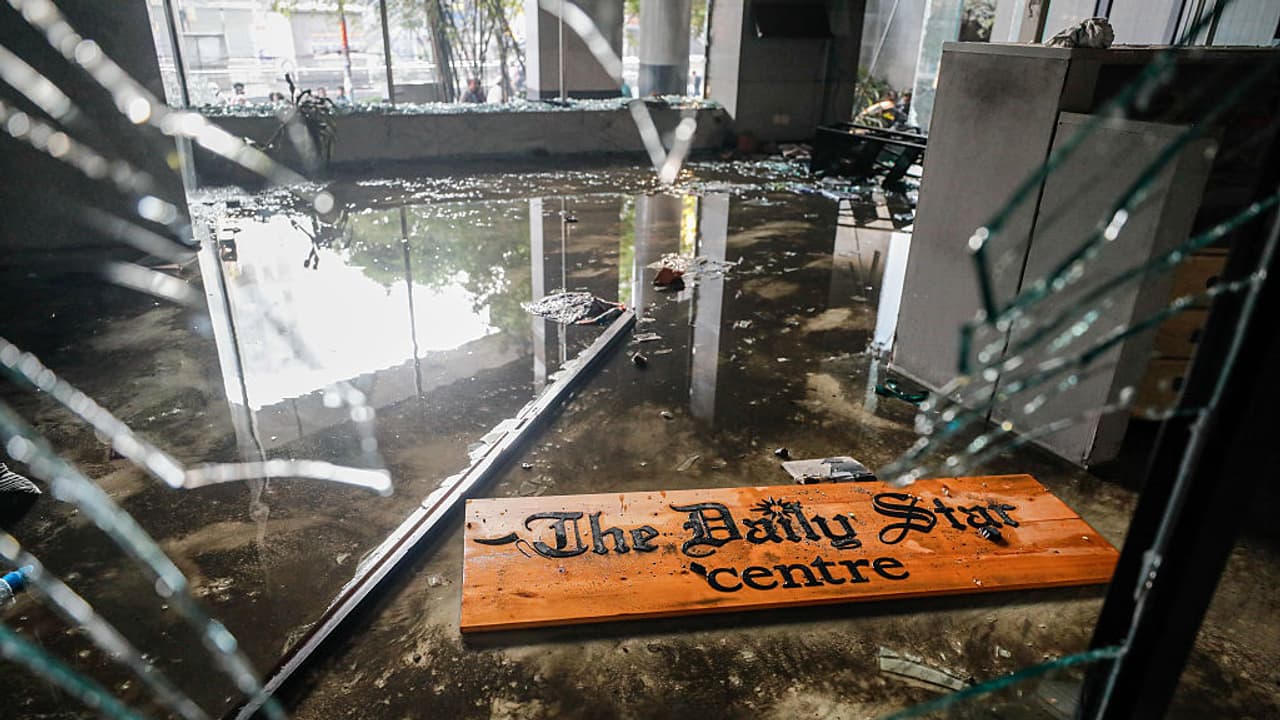
Mobs vandalised and set ablaze the offices of Prothom Alo and The Daily Star last week, trapping journalists and employees inside for hours as police and fire services were initially unable to reach the scene.
The attacks sent shockwaves through the country’s media fraternity.
“Freedom of expression is no longer the main issue. Now it is about the right to stay alive,” The Daily Star editor and publisher Mahfuz Anam said at a press conference attended by senior politicians, business leaders and media owners.
“The media in Bangladesh is facing a fight for survival,” he added.
Anam said the nature of the violence suggested an intent to kill, not merely to intimidate. He pointed out that had the attackers been targeting specific newspapers, journalists would have been warned to leave before the buildings were set ablaze. Instead, 26–27 media workers were left trapped on the rooftop as fire engines were blocked from accessing the site.
Calls to Kill Journalists
The threat, editors say, did not end with the fires.
Anam cited social media messages allegedly calling for journalists from the two dailies to be hunted down and killed in their homes — a chilling escalation that has left many reporters fearing for their families as much as themselves.
While the Dhaka Metropolitan Police (DMP) defended its delayed intervention, the explanation has done little to ease concerns.
“The reason we could not go into action there was to ensure that no human life was lost,” DMP Additional Commissioner Nazrul Islam told reporters, arguing that immediate intervention could have worsened the situation.
Political Undercurrents and Accusations
The attacks followed the death of Sharif Osman Hadi, a radical right-wing youth leader and spokesperson of Inqilab Mancha, who died while undergoing treatment in Singapore last week after being shot.
Hadi, a staunch critic of India, had been a prominent figure in last year’s pro-democracy uprising that ousted former Prime Minister Sheikh Hasina’s Awami League government on August 5, 2024. He was also a candidate in the upcoming February 12 general elections.
The mobs accused the targeted newspapers of “serving the interests” of India and the deposed Hasina regime.
The interim government led by Muhammad Yunus said nine people have been arrested so far in connection with attacks on the two newspapers as well as cultural organisations Chhayanaut and Udichi Shilpi Goshthi. While condemning the violence, the government described the perpetrators as fringe elements — a characterisation criticised by rights groups and journalists, who say authorities failed to act despite prior appeals for protection.
UN Raises Alarm as Violence Spreads
Concern over Bangladesh’s deteriorating security situation has now reached the United Nations.
“Yes, we’re very concerned about the violence that we’ve seen in Bangladesh,” Stephane Dujarric, spokesperson for UN Secretary-General Antonio Guterres, said at a daily briefing in New York.
“Whether it’s in Bangladesh or any other country, people who don’t belong to the ‘majority’ need to feel safe, and all Bangladeshis need to feel safe,” he said, adding that the UN expects the government “to keep every single Bangladeshi safe.”
The UN’s concern extends beyond attacks on journalists.
Lynching Highlights Minority Vulnerability
Last week, Dipu Chandra Das, a 25-year-old Hindu garment factory worker, was lynched to death by a mob in Baluka, Mymensingh, over alleged blasphemy. His body was later set on fire.
With two more arrests made on Sunday, 12 people have now been detained for their alleged involvement in the killing, according to The Daily Star, citing police and Rapid Action Battalion (RAB) sources.
The killing has intensified fears among minority communities already on edge amid political instability.
Human Rights Chief Warns of Escalation
UN High Commissioner for Human Rights Volker Turk said he was “deeply troubled” by the killing of Sharif Osman Hadi and warned against further violence.
“Retaliation and revenge will only deepen divisions and undermine the rights of all,” Turk said.
He urged authorities to conduct a “prompt, impartial, thorough and transparent investigation” into the attack that led to Hadi’s death and ensure accountability.
With national elections approaching, Turk stressed that safeguarding journalists is essential.
“I urge the authorities to uphold the rights to freedom of expression, peaceful assembly, and security of journalists at this critical time, and prevent further escalation of unrest,” he said.
A Profession on the Frontline
For journalists in Bangladesh, the profession now carries risks once associated only with war zones. Many newsrooms have tightened security, reporters are avoiding bylines, and families are urging loved ones to quit.
What began as political unrest has spiralled into something darker — a climate where telling the truth can cost lives.